

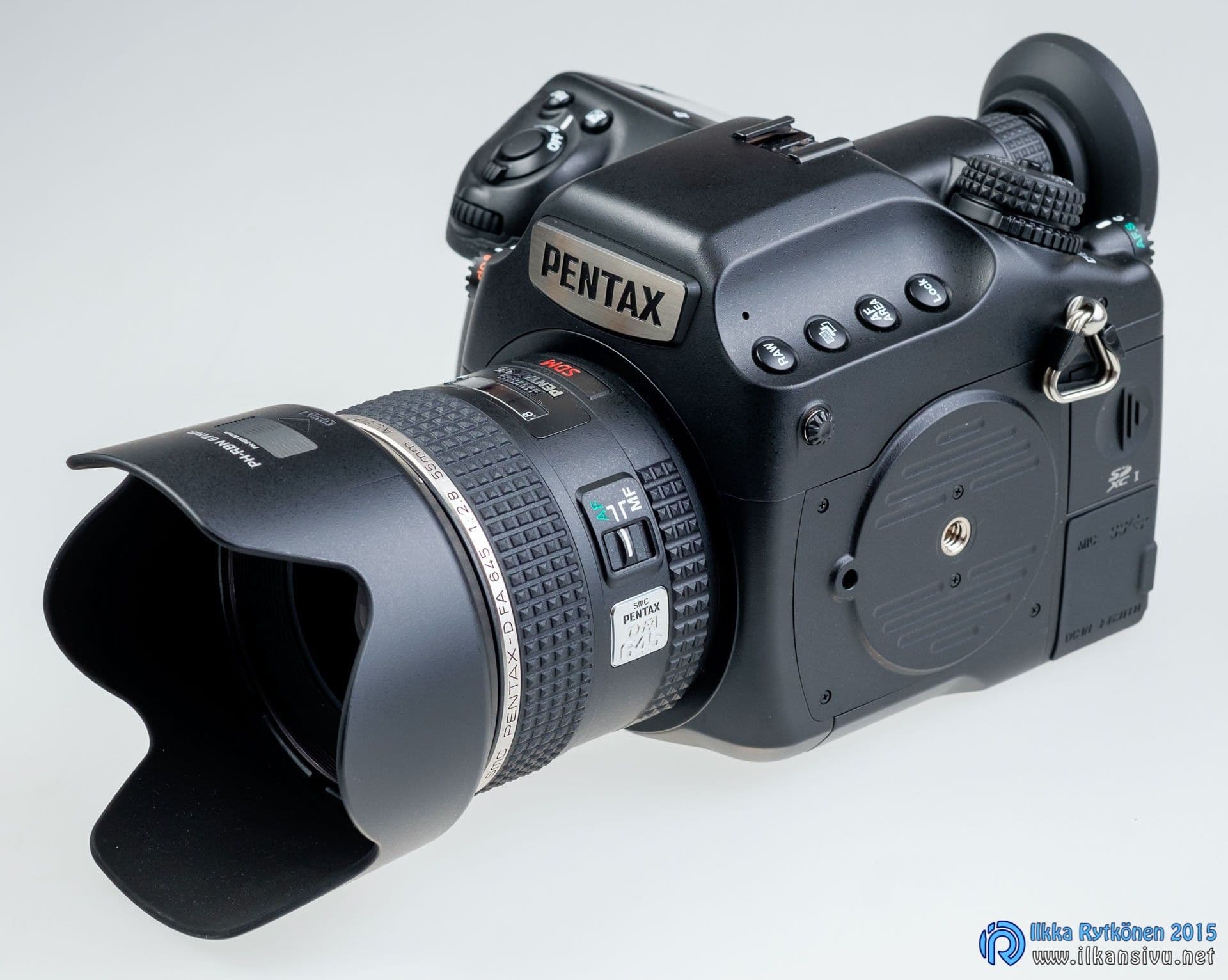
Pentax 645Z + smc D FA 645 55mm f/2.8 AL [IF] SDM AW in an extensive test
What is it?
The Pentax 645Z is the manufacturer's second version of this medium format body. The sensor is thus larger than in a full-frame camera. This adds its own touch to shooting and also to the familiar angles of view of focal lengths. The crop factor is 0,79, so the 55mm lens that came with it has an angle of view corresponding to about a 43mm lens on a full-frame camera. The low-pass filter has naturally been left out to achieve maximum sharpness.
As a package this is sold for ten grand, so we are certainly not talking about a random Sunday photographer's set.
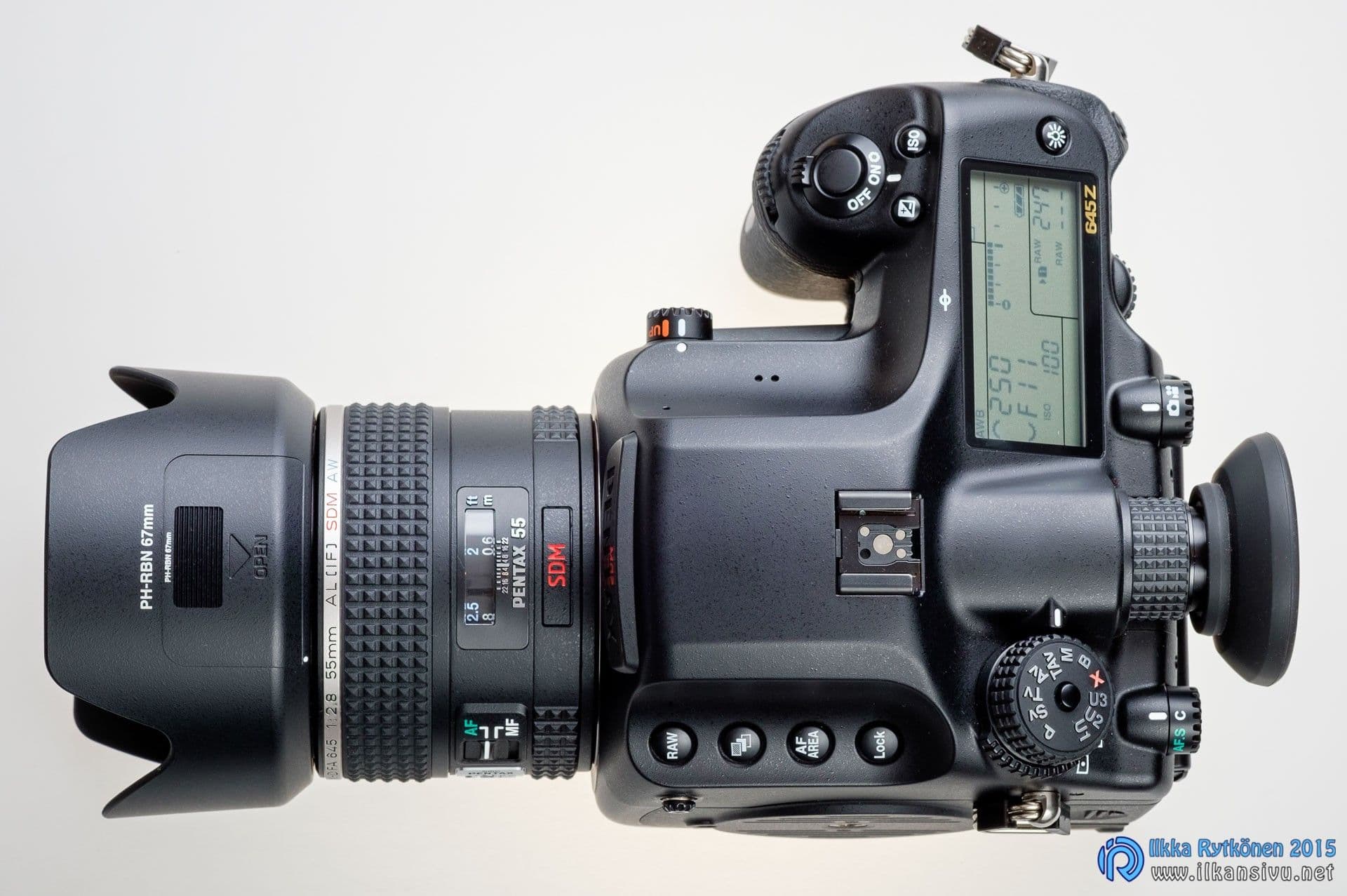
The sensor's pixel count is huge, 51 megapixels. This is enough for high-quality large prints. The mount is 645, so you cannot get glass for this body from just any shop. The optics also cost a four-figure sum of money, except for the 75mm f/2.8 lens corresponding to a normal focal length.
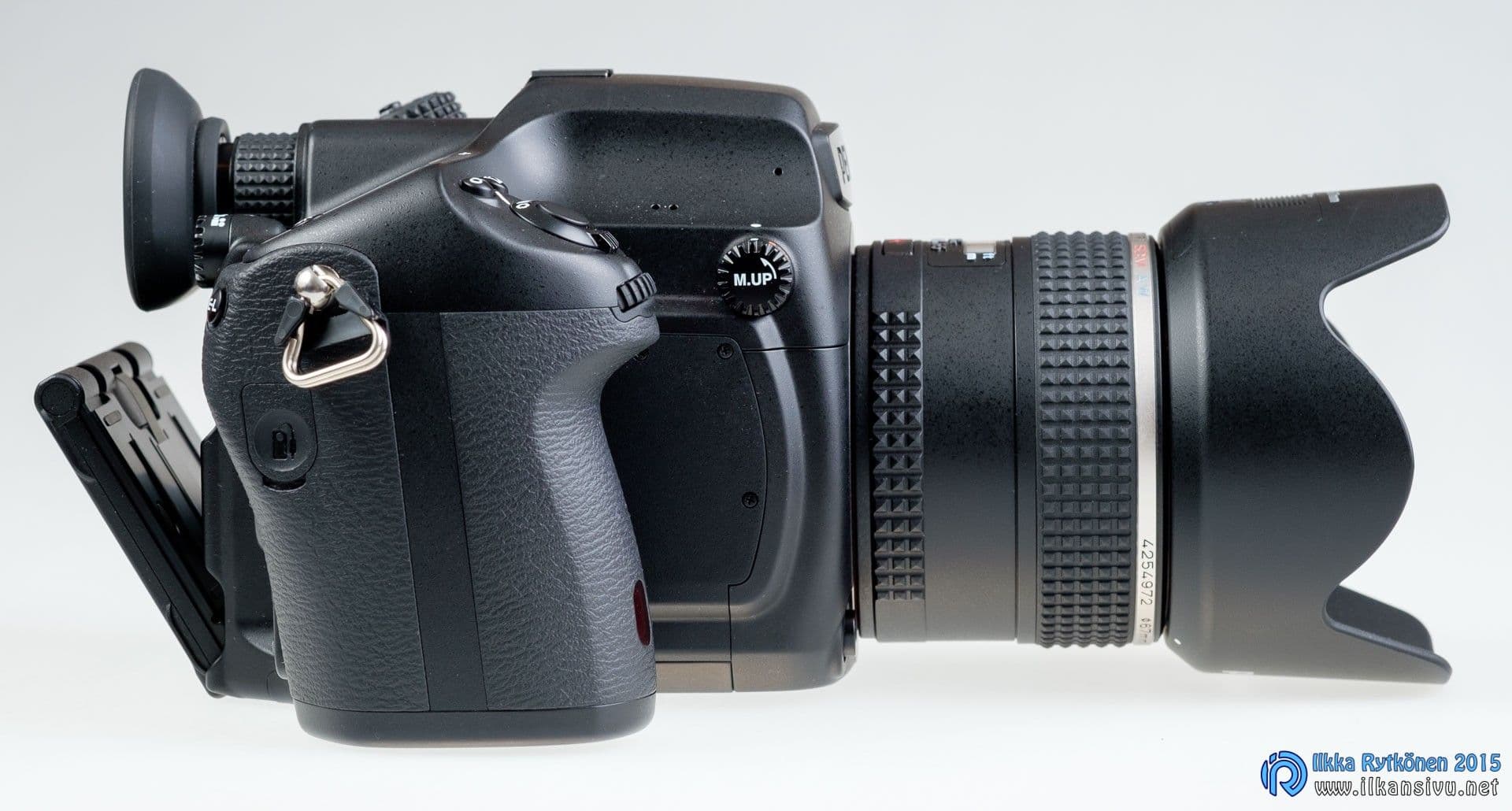
Along with the body I had a 55mm f/2.8 lens to try. As a package this is sold for ten grand, so we are certainly not talking about a random Sunday photographer's set. For a medium format device, however, this is cheap.
Who is it for?
This camera is for the calm photographer who needs large files and large image sizes as prints or in other demanding use. Image quality is at a high level, but making use of all of the potential requires familiarization and professional skill. Medium format cameras are easily thought of as only studio cameras, but with its weather sealing the Pentax 645Z is certainly also an interesting product for landscape photographers. Optics are also available weather-sealed.
Image quality is at a high level, but making use of all of the potential requires familiarization and professional skill.
A sensor larger than full frame brings a new challenge to controlling the depth of field. The area that renders sharp is clearly narrower than what one is used to with smaller sensors.
Pentax 645Z depth of field
Depth of field comparison f/2.8 vs f/10
Use and feel
The camera's user interface is clear and logical. Those who have shot with another brand of camera have to browse the menus for a while, but after getting used to it the things you want start to turn up. In addition to the familiar modes, the mode dial has the markings X, SV and TAV. The dial has a lock to prevent the shooting mode from changing accidentally.
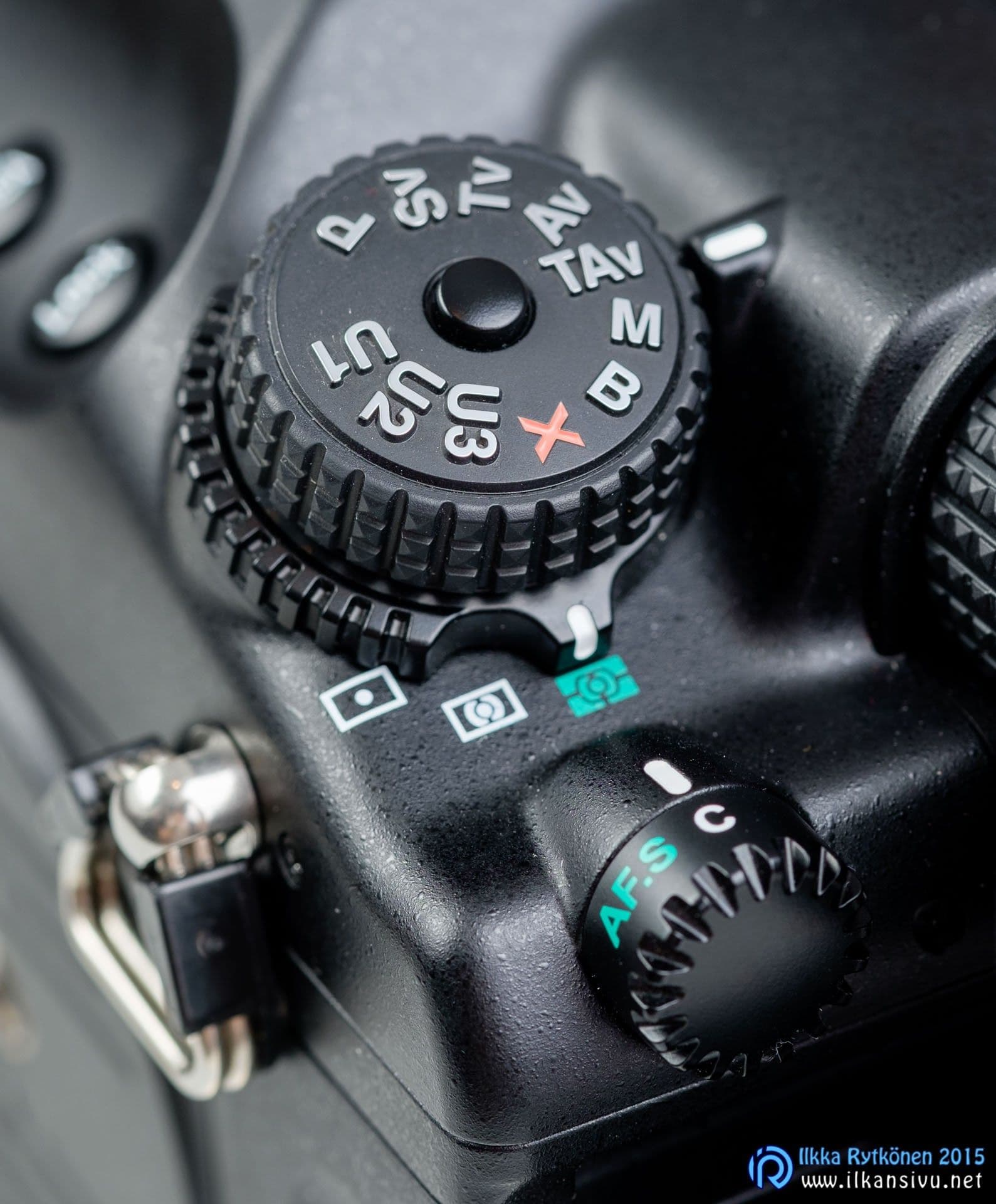
The X position sets the camera's shutter speed to the fastest flash sync speed, which in this case is 1/125 s. The time is reasonably long and a photographer shooting environmental flash portraits easily ends up needing neutral density filters. For someone shooting in a studio, however, this is no drawback.
Contrary to what the box-like appearance might suggest, the camera feels good in the hand
The SV mode (sensitive value) is a preselection of sensitivity. The photographer chooses a suitable ISO value and the camera chooses a suitable time and aperture for the chosen sensitivity. The most suitable for my own use felt like TAV (time and aperture value), in which a suitable shutter speed and aperture are chosen. The camera keeps the exposure in order by automatically varying the ISO sensitivity.
The menus have plenty to adjust and the customization options are almost commendable. With automatic exposure modes (e.g. TAV) in mind, the shutter speeds can be biased with a preset toward the shorter or longer side.
The camera is large and even shovel-sized hands get a proper grip on it. Contrary to what the box-like appearance might suggest, the camera feels good in the hand. The camera can also be used reasonably comfortably with gloves on, except for the cluster of buttons on the rear panel.
Focusing
There are 27 focus points, of which 25 are cross-type. Three of these points are especially good in low light. All the points are placed tightly in the middle of the image area. In many situations one would wish that at least a few points had been placed closer to the edge of the image area. This would make composing easier.
The four-way controller on the rear wall is numb to the touch when wearing gloves, and moving the focus point is not very smooth.
The four-way controller on the rear wall is numb to the touch when wearing gloves, and moving the focus point is not very smooth. There could be a better control for moving the focus point, e.g. a joystick or some other similar type of solution, as in Canons or Nikons. Considering the size of the body, there would certainly have been room to make the buttons larger, similar to those of the mirror lock and focus mode selection knobs.
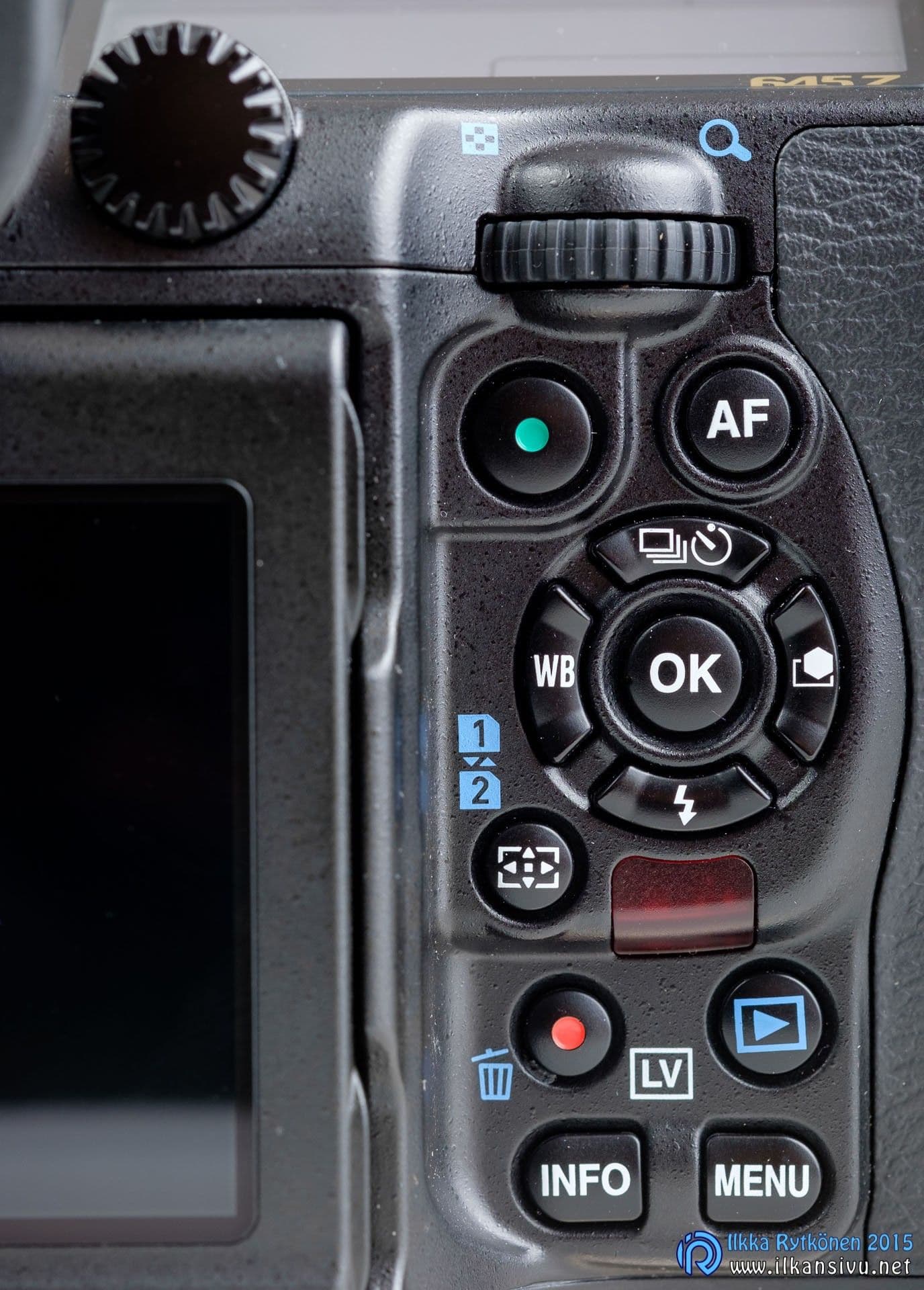
Fortunately the point movement can be set so that it starts moving directly with the four-way controller without pressing other buttons. This is an important detail, because I myself like to switch the focus point to different places even from frame to frame.
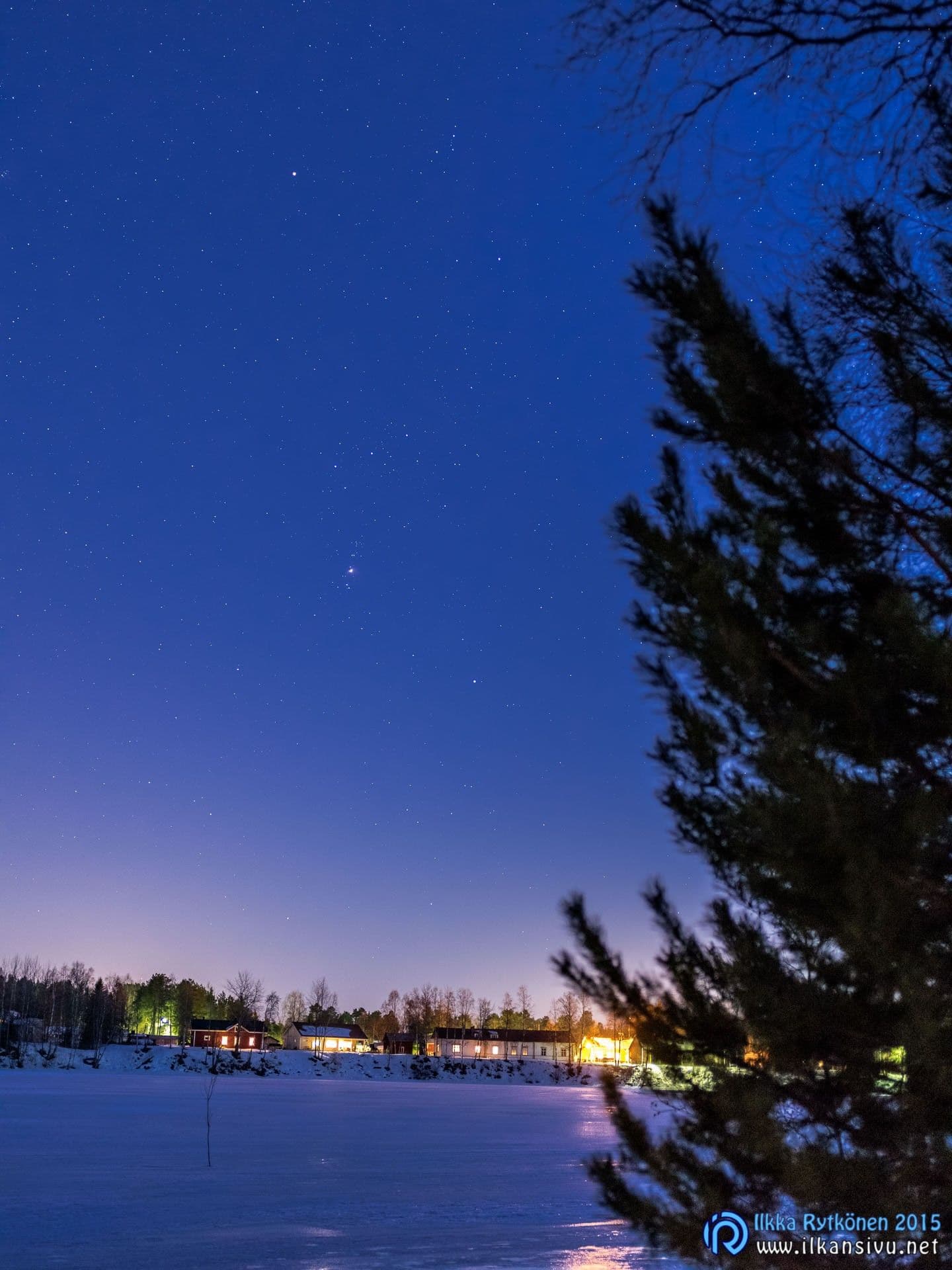
Considering the nature of the camera, the focusing system is surprisingly fast and, like in an SLR, the focus spot is a sufficiently small point. Focusing works well even in low light without hunting, so in that respect everything is fine. Focusing locks on even to the stars shining in the sky.
I would gladly have tried the speed and continuous focusing with some telephoto lens, but none was available this time. On the other hand, there are other devices for burst-shooting moving subjects. Another point in favor of this is that the Pentax's shutter life is promised to be only 100 000 shots.
Manual focusing through the rear display is effortless thanks to the excellently working highlight color. There is certainly no doubt about where the focus has been set. That is how it should be, and other manufacturers could learn from this.
While shooting
The shutter sound is convincing, even downright street-credible. It is not a sharp one, as in e.g. the Nikon D4, but a more restrained kind. You can almost imagine the sound by looking at the camera's appearance, so it suits this camera well.
The shutter sound is convincing, even downright street-credible.
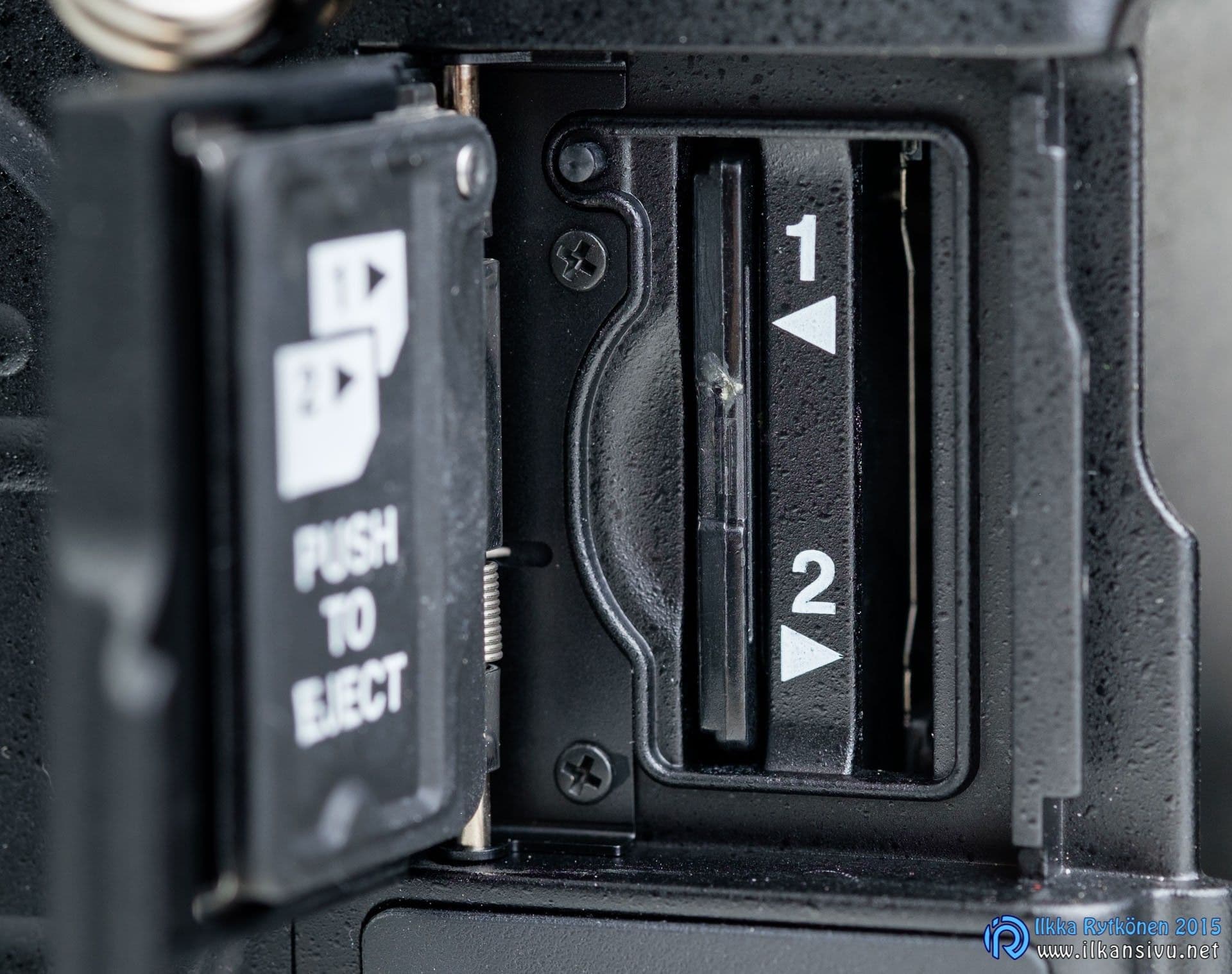
The 645Z cannot make use of fast memory cards, which is a pity. The sizes of DNG-format RAW files are around 70-80 megabytes and it takes about five seconds before the picture is on the card. The time is long in fast situations if you want to check whether the exposure or focus succeeded. But for calmer shooting it suits well. The camera's character is at its best in a slower pace, when deliberate shots are being taken.
The viewfinder is very large and shows 98 % of the image area. The large viewfinder is also bright and you can see everything much better through it than through a normal full-frame viewfinder. I was amazed that even all the stars in the sky were distinguishable when peeking through the viewfinder. I then took a smaller-sensor SLR and a Fuji mirrorless for comparison. In these cameras too the stars were distinguishable when you looked carefully. The difference was just clearly in the Pentax's favor.
The sizes of DNG-format RAW files are around 70-80 megabytes and it takes about five seconds before the picture is on the card.
The rear display tilts up and down and the image shown on the display is sharp and clear. Even on a sunny day the image can be made out, but a higher maximum brightness would not hurt. One click of the rear dial shows the image at a 100 % view in playback mode. The blown-highlight warning color blinks in all display modes, which pleases me greatly. In other brands of cameras, blown highlights are usually shown only in a certain view, and not, for example, when magnified. So evaluating image sharpness and exposure works brilliantly.
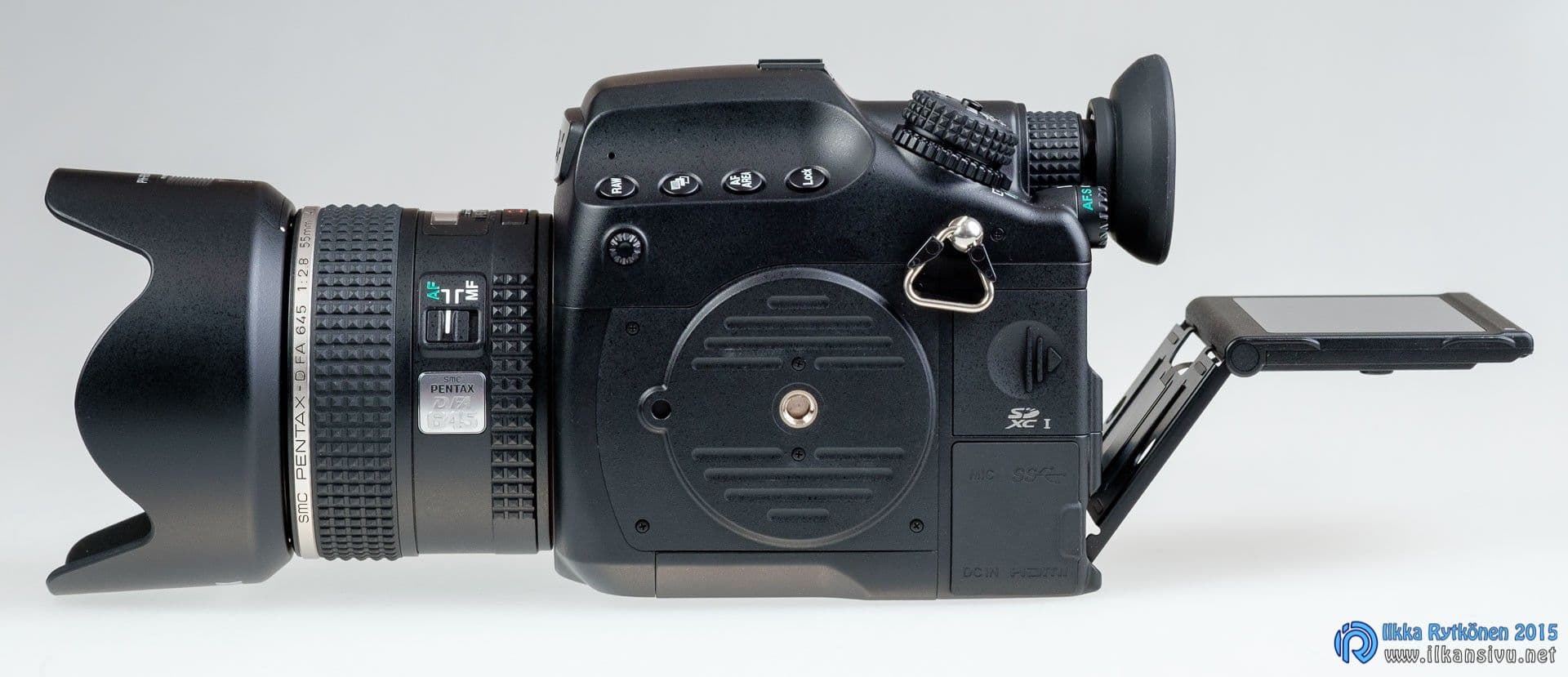
The battery is the same as in some other Pentax models, that is, the D-Li90. There was nothing to complain about in battery life and a spare battery is not a mandatory accessory in every use.
Canon's remote releases work directly with the camera, so the 2,5mm round connector is the same on both brands. Canon flashes can also be used in manual mode. The YongNuo YN560-TX radio transmitter also proved compatible with the Pentax, so it can be used to fire radio flashes of the same brand or flashes of other brands with suitable receivers. On the other hand, I could imagine that those shooting with a medium format digital camera do not often bother to use small flashes, but a somewhat heavier studio set is operated instead.
Image quality
Image quality is excellent and the processing latitude of the standard DNG-format RAW files is large. There seems to be dynamic range at least adequate for most purposes. If it feels right, the pictures can be exposed fairly carelessly under so that the tones of the bright areas are preserved. In editing you can then open up the shadows as needed. The adjustment headroom at the dark end is, in my opinion, decent up to about ISO 3200.
Image quality is excellent and the processing latitude of the standard DNG-format RAW files is large.
Pentax 645Z dynamic range


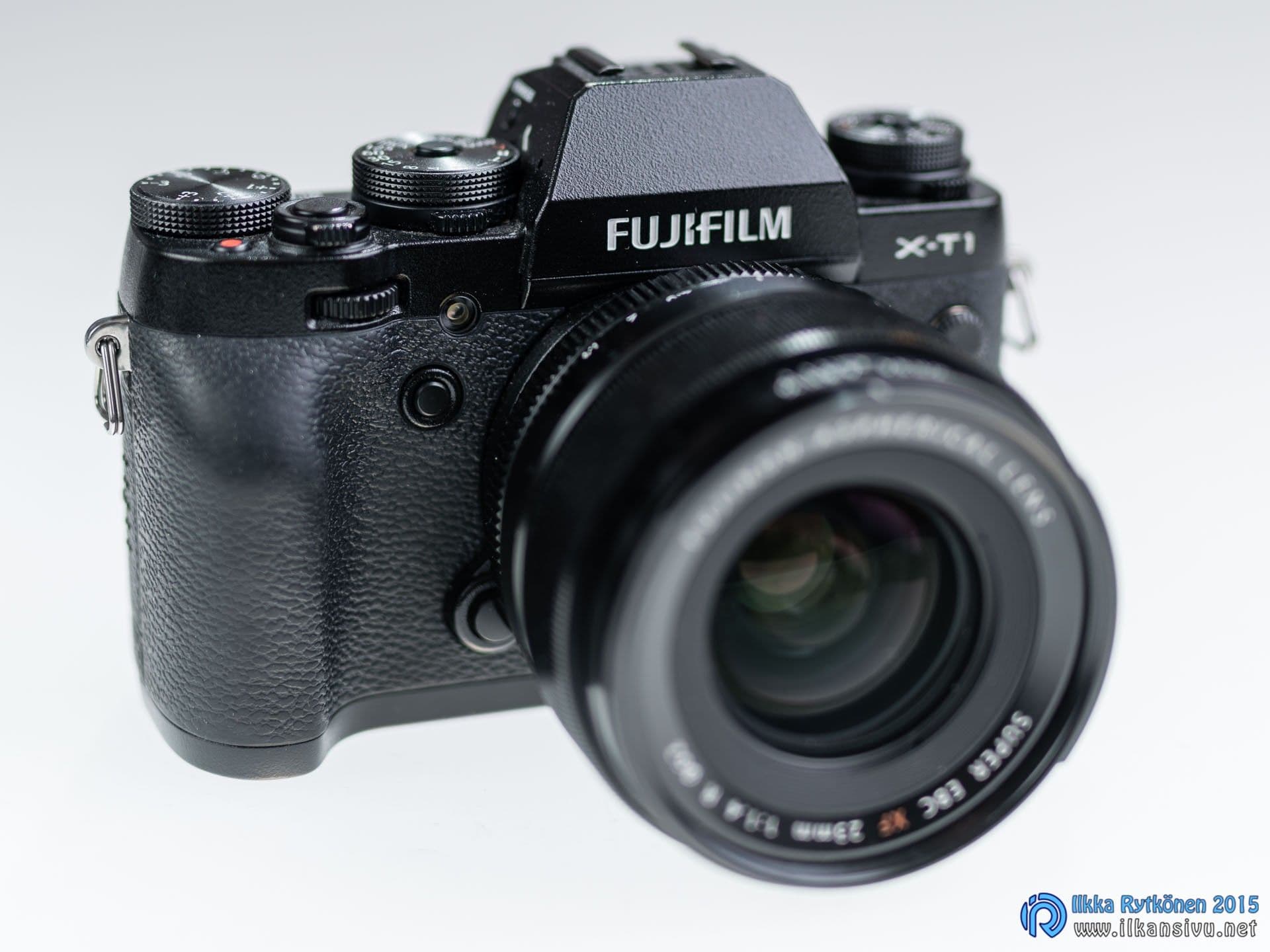
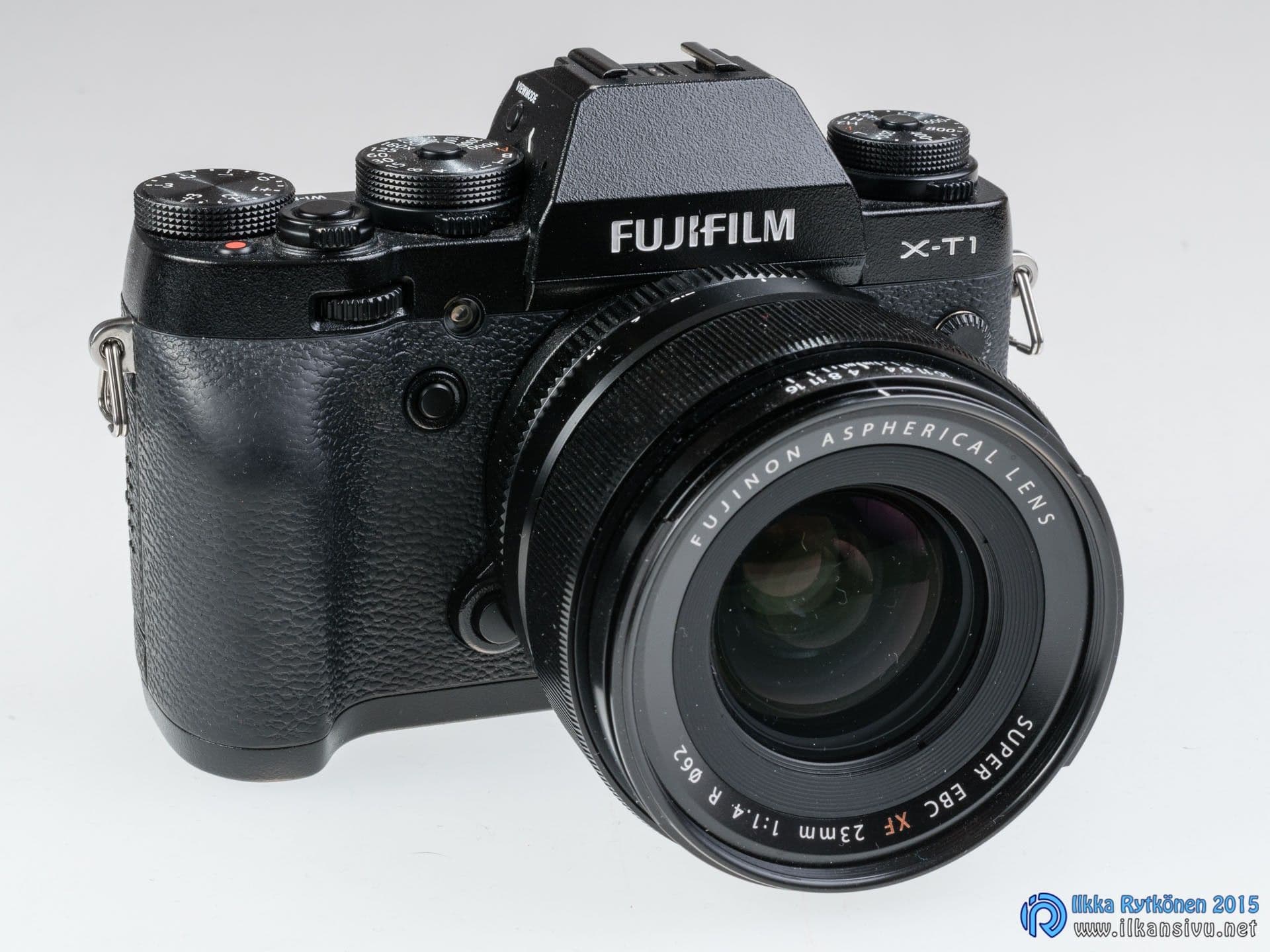
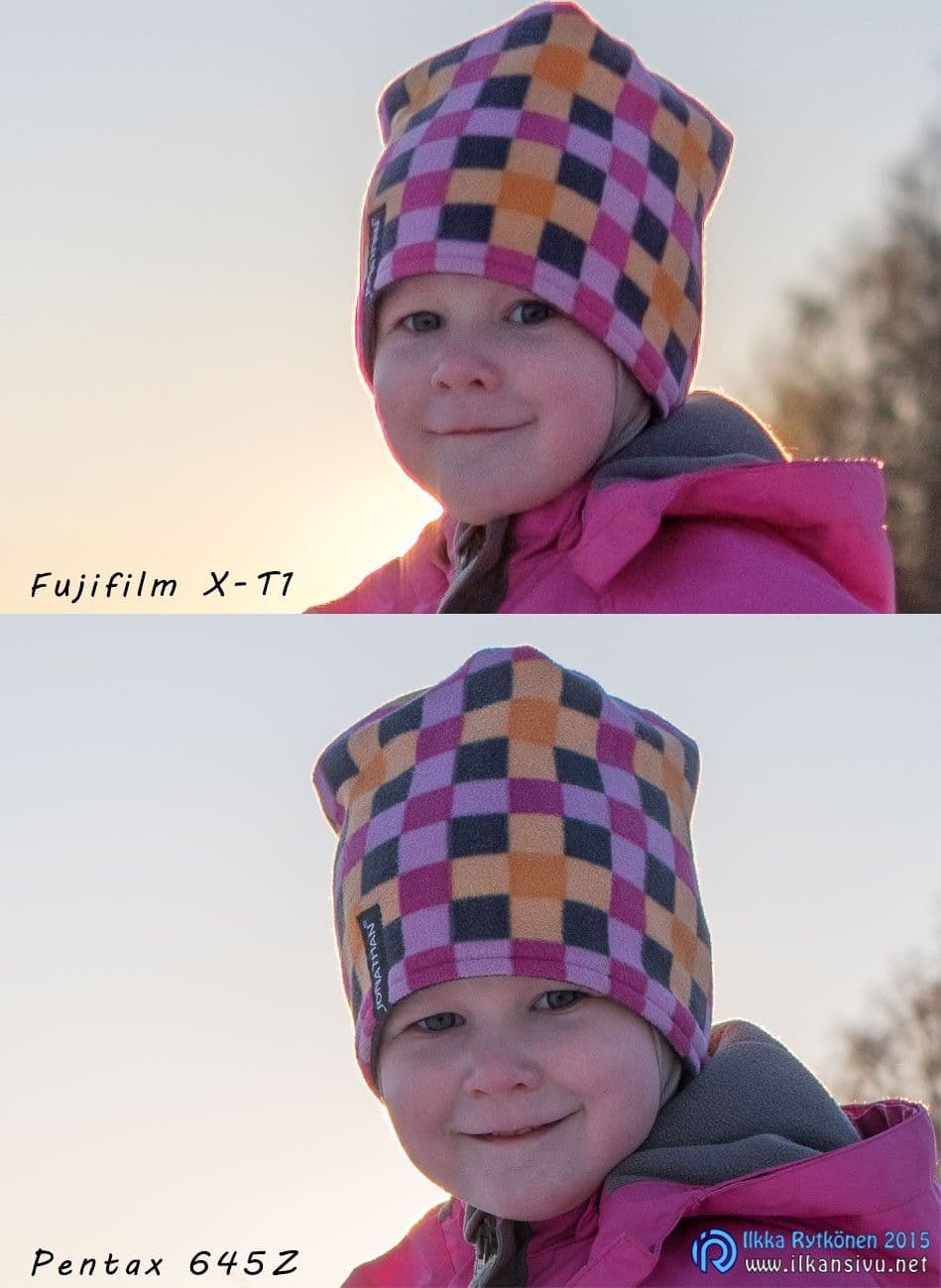
I compared the dynamic range in the same conditions with the Fujifilm X-T1, and as the accompanying pair of images shows, the Pentax clearly won the match. The pictures are exposed according to the tones of the sky and the shadows have been opened up vigorously in post-processing.
In terms of noise, sensitivity can be raised with a generous hand, depending on the purpose, even up to ISO 12800. Of course, when seeking top quality one has to settle for somewhat more moderate values. As an emergency I could resort to ISO 64000, but I would not go higher than that.
The large resolution places demands on image quality in a completely different way than has traditionally been the case. Even small errors tend to show up in an emphasized, large way when the picture is viewed at 100 % size. Pentax has apparently succeeded in making the mirror mechanism very good, because with a good shooting stance it is possible to get sharp shots handheld even at shutter speeds of about 1/30 s … 1/60 s (with the 55 mm lens).
PENTAX smc D FA 645 55mm f/2.8 AL [IF] SDM AW
The lens included in the test was the PENTAX smc D FA 645 55mm f/2.8 AL [IF] SDM AW. It is a fitting focal length for general use. The lens has a little barrel distortion, but it is corrected in Lightroom with the press of a button. Longitudinal chromatic aberration is plainly visible in suitable conditions at apertures f/2,8 – f/4. At aperture f/5.6 the phenomenon has already disappeared.
I did not shoot any test chart, but at aperture f/2,8 sharpness is at a good level at least in the center of the image area. Owing to the nature of the camera, the depth of field at the widest aperture is very narrow, so judging edge rendering is difficult and to a large extent pointless as well. Stopping down clearly brings extra sharpness, and sharpness keeps improving as you stop down all the way to around aperture 8. At around aperture 18 the best sharpness begins to disappear.
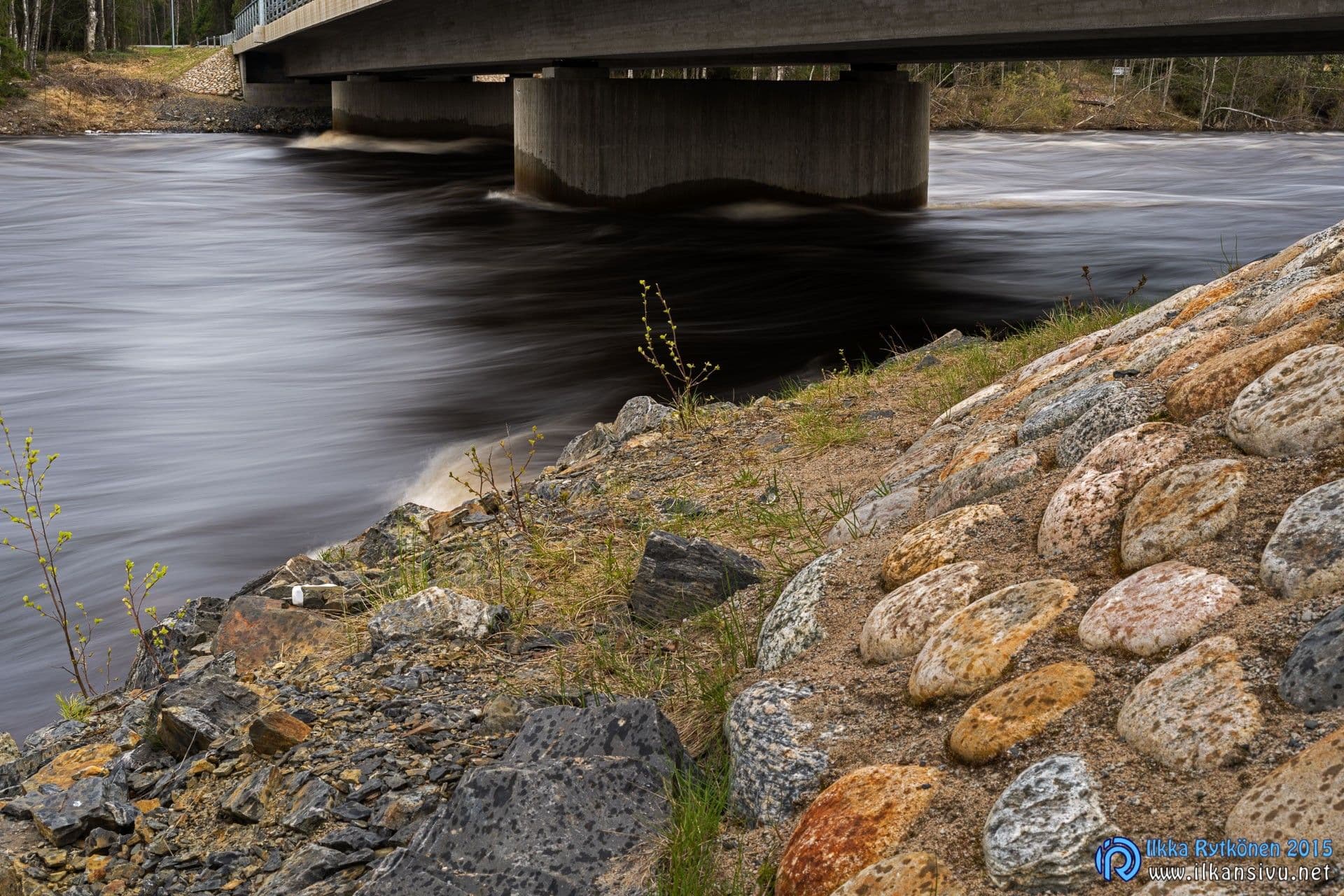
A buyer of the 645Z should consider buying the package with precisely this 55mm lens, in which case it is obtained at the package price. The lens is also weather-sealed.
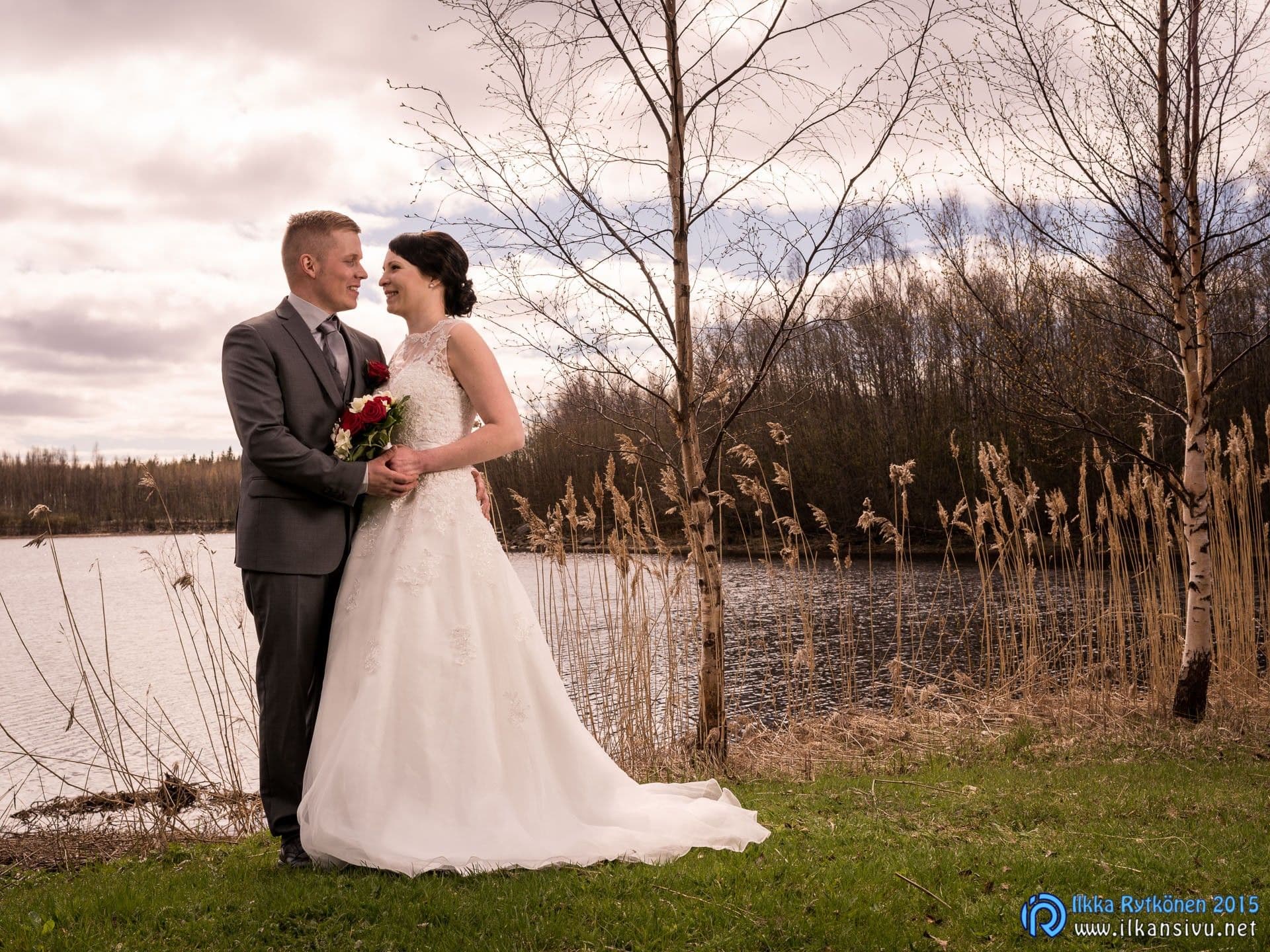
It would have been interesting to get to shoot with some portrait focal length, but unfortunately that was not possible. The camera was along at one wedding shoot as well, but because of the wide focal length, portraits remained in the background with this device this time.
Final conclusions
The Pentax 645Z is the right camera for a photographer who needs uncompromising image quality and a large image size. The camera is not a gadget for a burst shooter, but a tool for a calm and deliberate photographer. The camera gives a very high-quality impression and operation is precise.
The Pentax 645Z is the right camera for a photographer who needs uncompromising image quality and a large image size.
The worst shortcomings are the slow saving of images to the memory card, the placement of the focus points in the middle of the frame, and the tightly packed rear panel.
If you liked the article, you can share it with the buttons below. Rating the article by clicking a star is also easy and quick. You can present your own views in the comment field.