

The X-T1's little brother
Fujifilm has released new models at a suitable pace, and the X-T1 has been to the taste of those who take their photography more seriously. The X-T1's price has perhaps been a little too high for some who dream of owning the camera, and the X-T10 now under test lightens the wallet by about five hundred euros less. But what does about 700 euros get you, and what do you miss out on?
For the active photographer
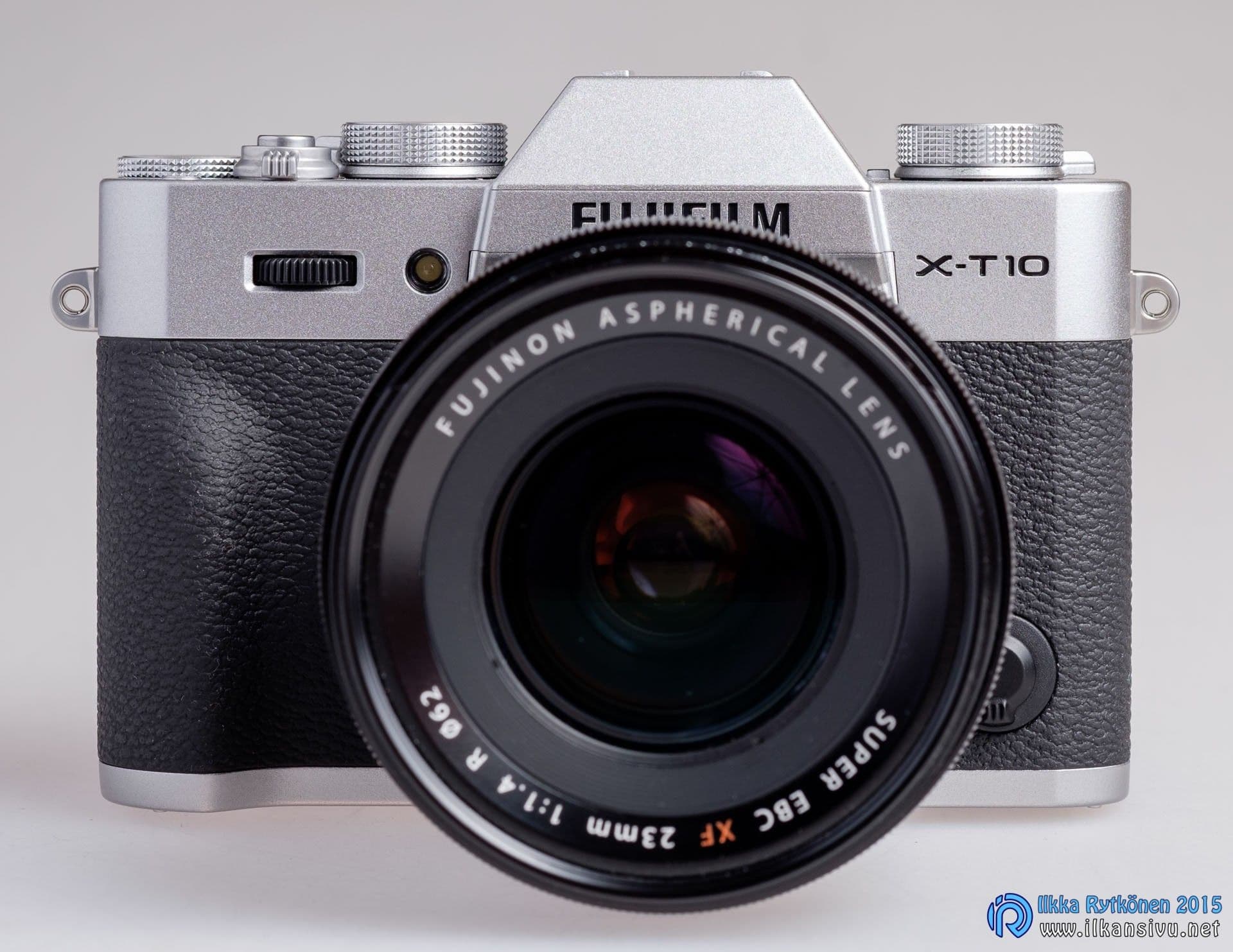
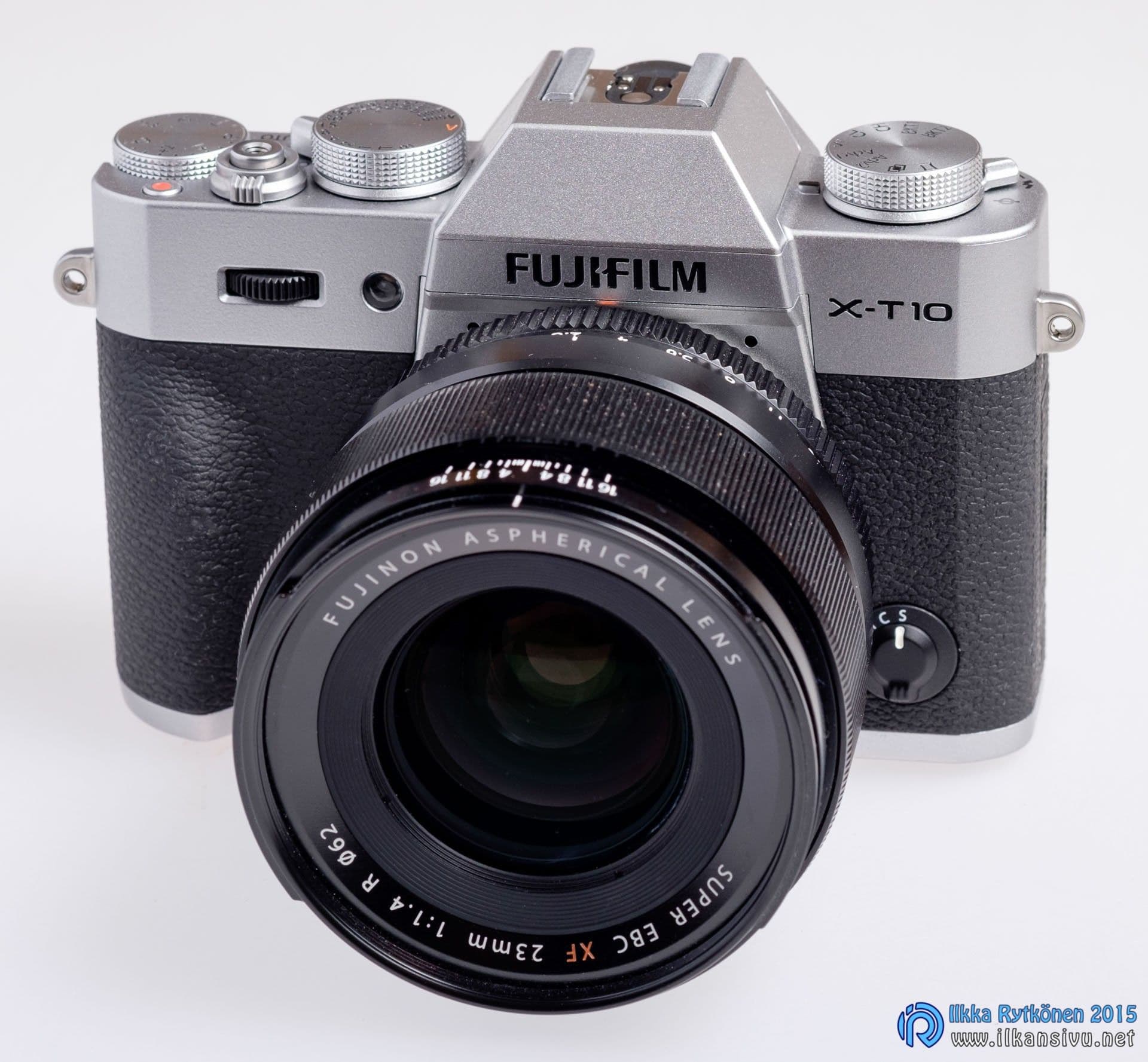
The body's design is the retro style typical of Fuji, and the materials and buttons feel pleasantly solid. In addition to the silver colour I had on trial, a fully black version is available. The front and rear dials do feel clearly flimsier than the X-T1's dials because of the push-button function. All the important controls except ISO sensitivity are on top of the body. The aperture is selected with the lens's aperture ring, or the same ring can be used to leave this to the camera. The exceptions are the XC lenses and the XF27mm pancake, whose aperture is adjusted with the dials on the body.
In my opinion the body cannot be any smaller than this if usability is to be kept decent.
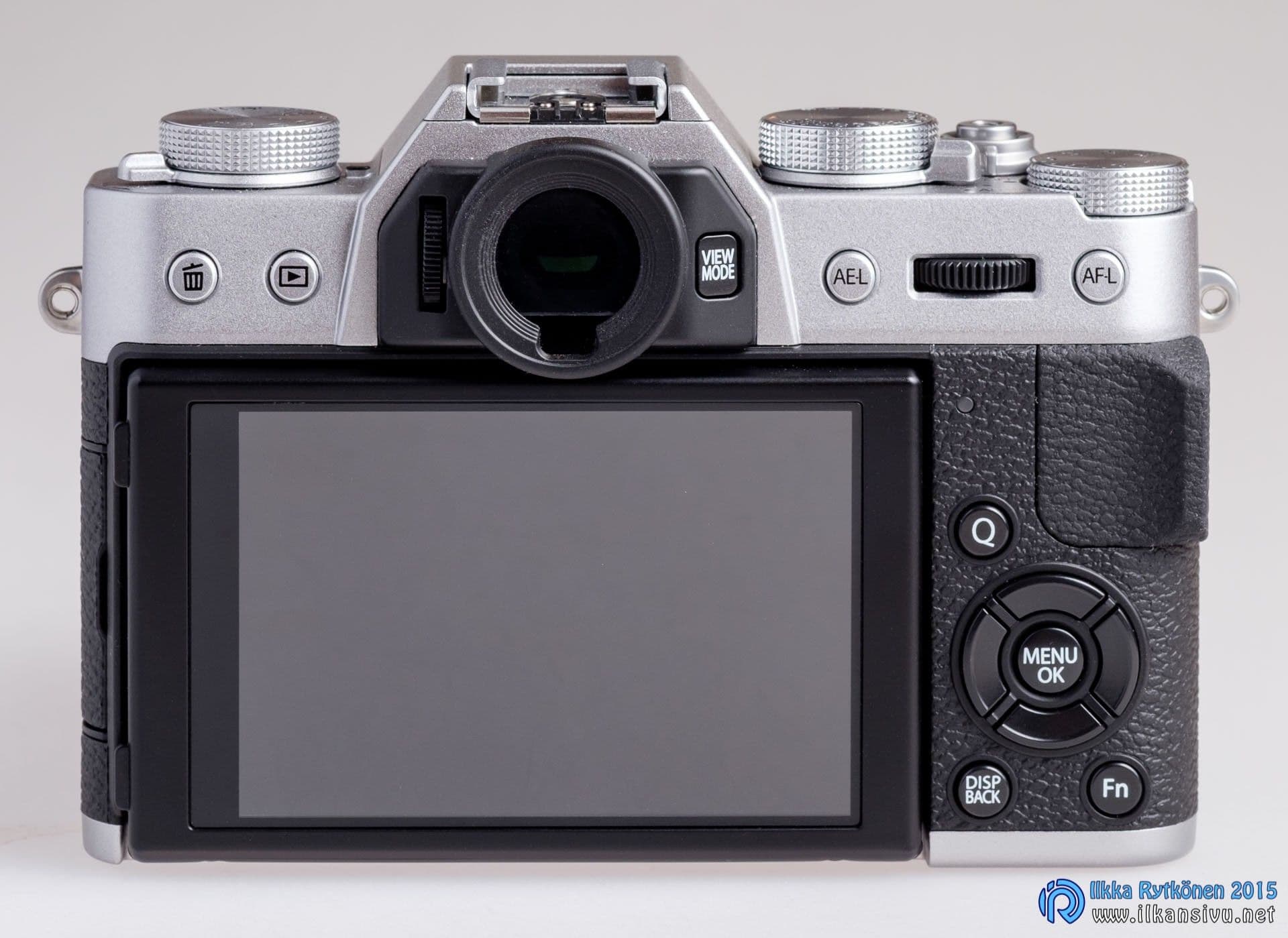
The electronic viewfinder is in the middle on top of the body and the display tilts vertically. The flash shoe is the standard type. Other connections include a combined 2,5 mm microphone and remote release connector, as well as microHDMI and microUSB connectors. The battery is charged with the separate battery charger that comes with the camera; USB charging is not possible.
For small hands
The body looks smaller than the X-T1 and is also smaller in practice. For someone with large hands the grip is a little small, but you still get a sufficiently secure hold of the body. In my opinion the body cannot be any smaller than this if usability is to be kept decent. There are roughly as many buttons and controls as on the larger model, but they are arranged slightly differently and with different functions.
Even though the buttons on the back are close to the edge, accidental presses do not easily happen. The design can therefore be considered successful.
The body does stay comfortably in the hand thanks to the small grip and the thumb support. It is most comfortable with small and light lenses, but it also copes with e.g. the XF16-55mm f/2.8. An additional grip of course helps.
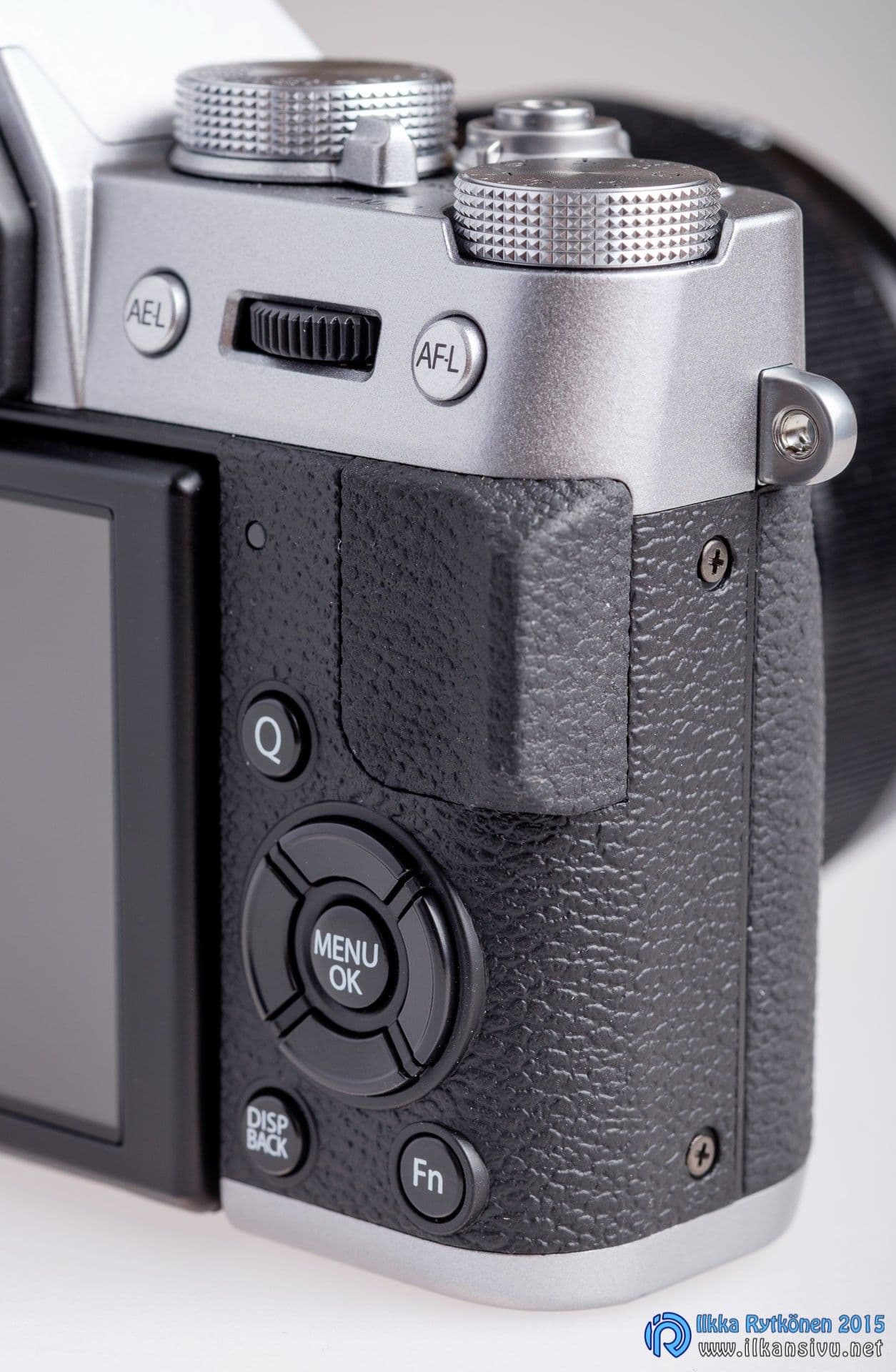
If you configure the four-way pad to move the focus point, three customizable buttons remain. Namely, the video button can now also be changed to whatever you want. Differently from the others, this button has to be pressed for longer than normal for the desired function to take place. The front and rear dials now also work as push buttons. It would be desirable to be able to change the functions of the AF-L and AE-L buttons as you like.
The Fn button switches wifi on by default, but to be safe I changed it to ISO sensitivity adjustment instead. After all, if wifi is accidentally switched on in the middle of shooting a decisive moment, the moment has time to pass. But ISO sensitivity adjustment appearing in the viewfinder does not slow down shooting. Even though the buttons on the back are close to the edge, accidental presses do not easily happen. The design can therefore be considered successful.
Stripped down, but not too much
Compared to the X-T1, the X-T10 differs in other ways besides size. One is weather sealing, which has been left out of the cheaper model. Both have very high-quality OLED viewfinders with the same pixel count, but the X-T10's image is clearly smaller, the same size as in the X-E2's viewfinder.
One of the most important controls is the exposure compensation dial, and it is in a good place under the right thumb.
The ISO sensitivity dial has disappeared, so to adjust sensitivity you have to go into the menu or configure one of the function buttons for the job. Automatic ISO still does not take the focal length used into account and adjust the shutter speed accordingly. There are now three automatic sensitivity settings available. In each of these you can save your own default sensitivities, maximum sensitivities and shortest shutter speeds. Fortunately exposure compensation is now also available in manual exposure mode if ISO sensitivity has been set to automatic. This also came as an update to the X-T1.
In place of the ISO dial there is now a dial from which you can choose single shot, continuous shooting, panorama mode, multiple exposure, bracketing or various effects. There are now two each of bracketing and effects on the dial. Their functions are set in advance from the depths of the menus, so a particular effect or bracketing can then be used quickly. Personally I do not find this very necessary; a single exposure bracketing setting is enough for my own needs.
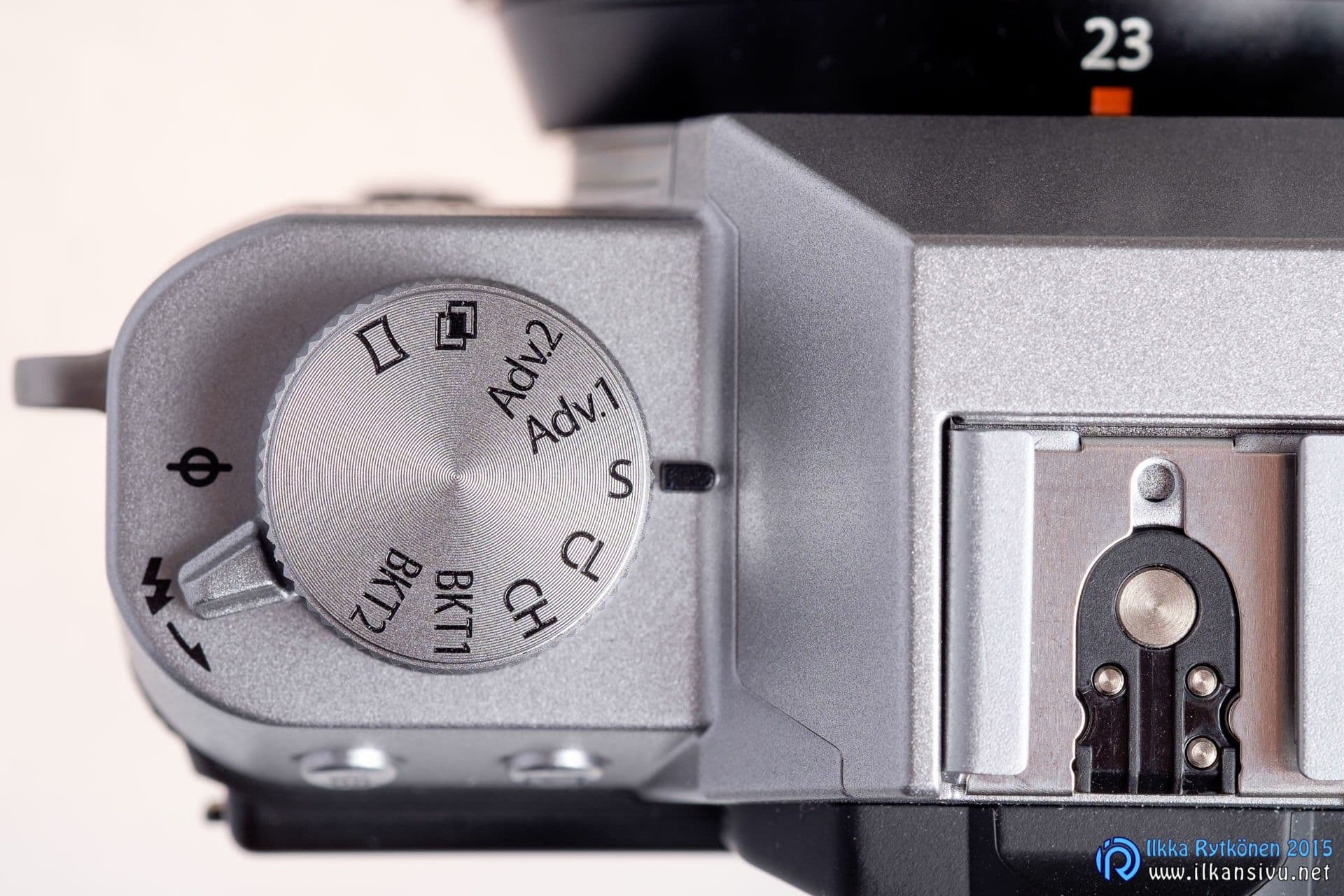
One of the most important controls is the exposure compensation dial, and it is in a good place under the right thumb. This is a control that you normally have to use all the time. The light varies and comes from different directions in different pictures. The exposure metering tries its best, sometimes succeeding. Often the exposure the camera wants differs from the photographer's vision, and then exposure compensation gets things sorted quickly.
The camera's user interface seems to suffer from a slight lack of processing power. The menus react to button presses with a longer delay than on the X-T1. There is delay on the larger model too, but it does not bother in the same way as on the X-T10. But once the settings are in order, this does not bother so much in practical shooting situations. It only shows up when adjusting sensitivity.
Improvements
Small changes for the better have been made to the user interface. E.g. pressing the Display button changes the view immediately, not via a pop-up menu. For the viewfinder you can choose automatic brightness adjustment, which is sometimes a good thing. There is no automatic adjustment for the rear display's brightness, but there are five brightness options towards darker and the same number towards brighter. Now the brightest setting shows the images well and does not blow out the light tones the way the X-T1 does. The rear display's reduced pixel count is not noticeable. The display tilts up and down, and it has no touch support.
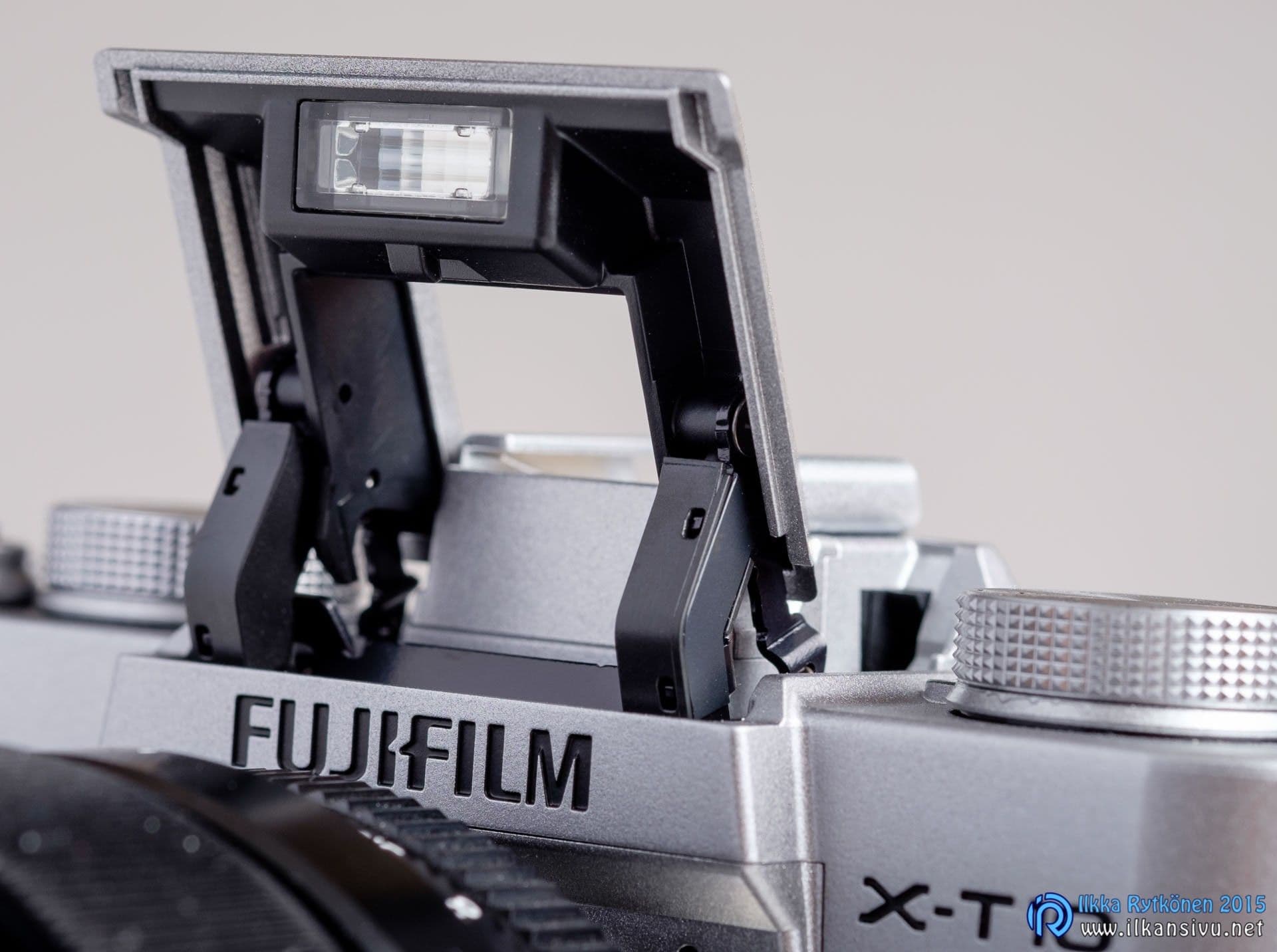
Instead of a detachable flash, the body has a small built-in pop-up flash. With it you can give a little fill light when needed.
Shared strengths
The X-T10 has many of the same features as the X-T1. Shared are e.g. the same proven X-Trans sensor and the autofocus. This model can therefore also, with good likelihood, be used to shoot moving subjects. That is left to guesswork for now, but the X-T1's corresponding autofocus is sufficient even for photographing rallying. The fast phase-detection focus points are, however, in both models only in a limited central area. This will probably not improve before Fuji's next top model is introduced.
The continuous shooting speed is 8 frames per second in both, which is probably enough for most people. The X-T10's buffer memory is just clearly smaller compared to the larger model. The first one keeps going roughly twice as long once the ten's buffer gets full. The X-T1 also seems to write images to the card faster, which is probably due to UHS-II support. The X-T10 supports the slower UHS-I standard, and cards marked UHS-II do work, but without the speed benefit. The X-T10's write speed is nevertheless no problem, at least in ordinary shooting.
In addition to the mechanical shutter there is an electronic shutter, with which the camera can be made completely silent.
In addition to the mechanical shutter there is an electronic shutter, with which the camera can be made completely silent. This is a good feature, e.g. for shooting in a church or another similar place. With the electronic shutter, very fast shutter speeds are also available, all the way up to 1/32000s. The electronic shutter cannot be used for long exposures or for flash photography. Artificial light may also cause problems.
In terms of noise, the camera can be used quite carefree up to somewhere around ISO 3200. ISO 6400 is still usable after noise reduction.
Room for improvement
In fast situations, and why not in not-so-fast ones too, I would wish for a warning colour in the viewfinder to tell about overexposure, as there is for example in Olympus and Sony cameras. Hopefully this will change with future updates. Overexposure now has to be judged visually or with the help of the histogram. Visual observation is good in itself, but if the display or viewfinder has been set too bright or too dark, it cannot be fully trusted. Checking the histogram, in turn, takes attention away from the shooting itself and from following the situation, and it does not tell precisely which parts of the image are blown out. A warning colour shown on the image is one of the best inventions and aids for this matter.

Even though modern cameras already have good sensitivities and even if fast lenses are available, in dim-light work the exposure times tend to stretch to the extreme. And when cameras and lenses are lighter, you have to shorten the shutter speeds a little compared to larger cameras in order to get sharp results handheld. In this situation in-body stabilization would be a big thing. All Olympus models have a stabilized body, and now also the newer versions from Sony and Panasonic.

The flash system is still a bit unfinished. Fuji has a few TTL models available, as does Nissin, at least the i40. In the flash menu there is soon a commander, which apparently means a remotely controllable TTL flash. But there are no such flashes for Fuji on the market yet, if anyone is wishing for them. Usually you get by in other ways, however. The flash on the flash shoe can be used as fill light e.g. outdoors in sunshine, when shadows need to be opened up. In fast situations you do not have time to adjust a manual flash quickly enough, so in that situation there is a place for a TTL flash.
Fuji does, however, have a standard flash shoe, so manual flashes can be used directly, or even a Canon or Nikon flash used as a manual one. Canon's flash triggers and the camera's remote releases with an E3 plug also work. When releasing the camera remotely, you must note that the Canon trigger does not wake the Fuji from power-saving mode. If there is a longer break in shooting, the camera's power-saving mode has to be turned off, or the camera has to be woken up when shooting starts.
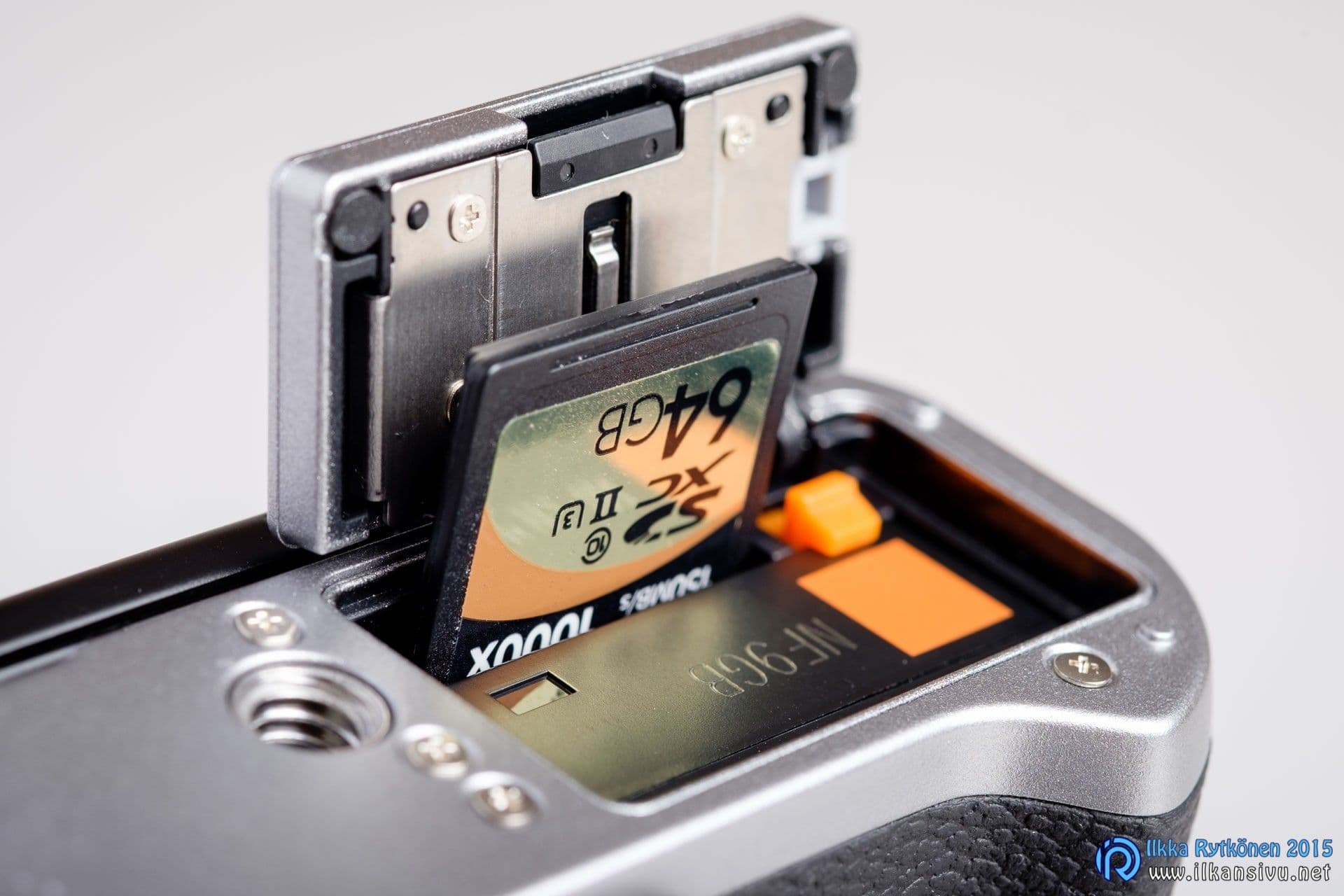
Remote releases bring us to tripod shooting. The tripod screw is right up against the battery door. The memory card also lurks under the same door, so neither can be reached while a quick-release plate is on the camera. It would be good if the memory card slot were on the side of the camera like on the X-T1. As an accessory the camera can be given the MHG-XT10 grip, which also has an integrated quick-release plate. It also has a hatch through which the battery and card can be changed without detaching the grip from the camera.
If and when shooting on a tripod with the 2 or 10 second self-timer, there is one bug in this function, or perhaps it is a feature. Namely, if the camera has gone into power-saving mode or has been switched off for a long enough time, the camera forgets the self-timer setting and it has to be switched on again every time. This is an annoying thing especially when shooting in wintry conditions with gloves on. A strange thing, since the camera's other settings do not change when the camera is used with the power off.
If the camera has gone into power-saving mode or has been switched off for a long enough time, the camera forgets the self-timer setting and it has to be switched on again every time.
Wifi is a good feature in modern cameras. You can bring a picture or pictures wirelessly to a mobile device, and the camera can be controlled remotely, for example with a phone. But getting the camera's wifi into use sometimes feels cumbersome compared to the wifi of some other brand of camera. Sometimes it takes several attempts before the connection is established. NFC, the use of a QR code or something similar could help with this. A good thing about the remote control is that e.g. shutter speed, aperture and sensitivity can be adjusted remotely.
GPS is one feature that seems to be taken out of new models for some reason. It would sometimes be nice if the feature were directly in the body, so that pictures would get a location tag without any fuss. With Fuji, geotagging works with the help of a phone, but then the connection between the camera and the phone has to be on all the time.
When aiming for better quality, one always shoots in RAW format. Here one limitation strikes, namely that the sensor's native ISO sensitivities range from 200-6400. At ISO 100 and 12800 you can only shoot JPG images. Even though the JPGs Fuji produces are of very high quality, it would be great to get RAW files of shots taken at high and low sensitivities too.
The clock has only a 12-hour display. A 24-hour display would be a nice addition, though not exactly a necessity. It would just be so easy to put right. When setting the clock you can only set hours and minutes, but not seconds. This makes things slightly harder for a photographer who shoots with several cameras, since the clocks of all the cameras should be synchronized to the same time.
Also with full auto
Fuji's X-series cameras are aimed at active photographers, and the bodies have lacked an automatic setting and all kinds of cat and dog shooting programs, apart from the X-M1 and X-A1 models. Now a fully automatic mode has been brought to a higher-end body too, even though for the majority of this camera's users this feature will probably prove useless. Perhaps Fuji thinks that a beginning photographer can now buy a better body and then gradually move on to learning to master their own shooting.

The good things
- A good sensor with excellent image quality
- A versatile body for the active photographer that also suits a beginner
- A high-quality lens selection
- A good electronic viewfinder
- Wifi
- The same battery as in Fuji's other system cameras

Things still to be improved, or shortcomings
- Small buffer memory
- No warning colour for overexposure in shooting mode
- No 24h clock
- Not all settings stay in memory after the power is cut
- No native ISO 100 and 12800 sensitivities (RAW missing)
- In-body stabilization would be nice
Summary
The Fujifilm X-T10 is a successful new camera, albeit with small shortcomings. The shortcomings are not serious and, relative to the price, this is a good buy. If you long for budget-class lenses, there are hardly any available for Fuji, unless you count the two lenses in the XC series or Samyang's manual options. But the system already offers the active photographer a good range of different quality glass.
Would I buy this camera for my own use? Well, why not, though as a second body alongside the X-T1. You would of course manage well with the X-T10 even if it were your only body, but in places you would certainly miss the X-T1's features.
I would gladly have put X-T10 pictures from a wedding gig here. The couple's wish was that I not publish pictures online, so I quickly put together other test pictures here instead.