

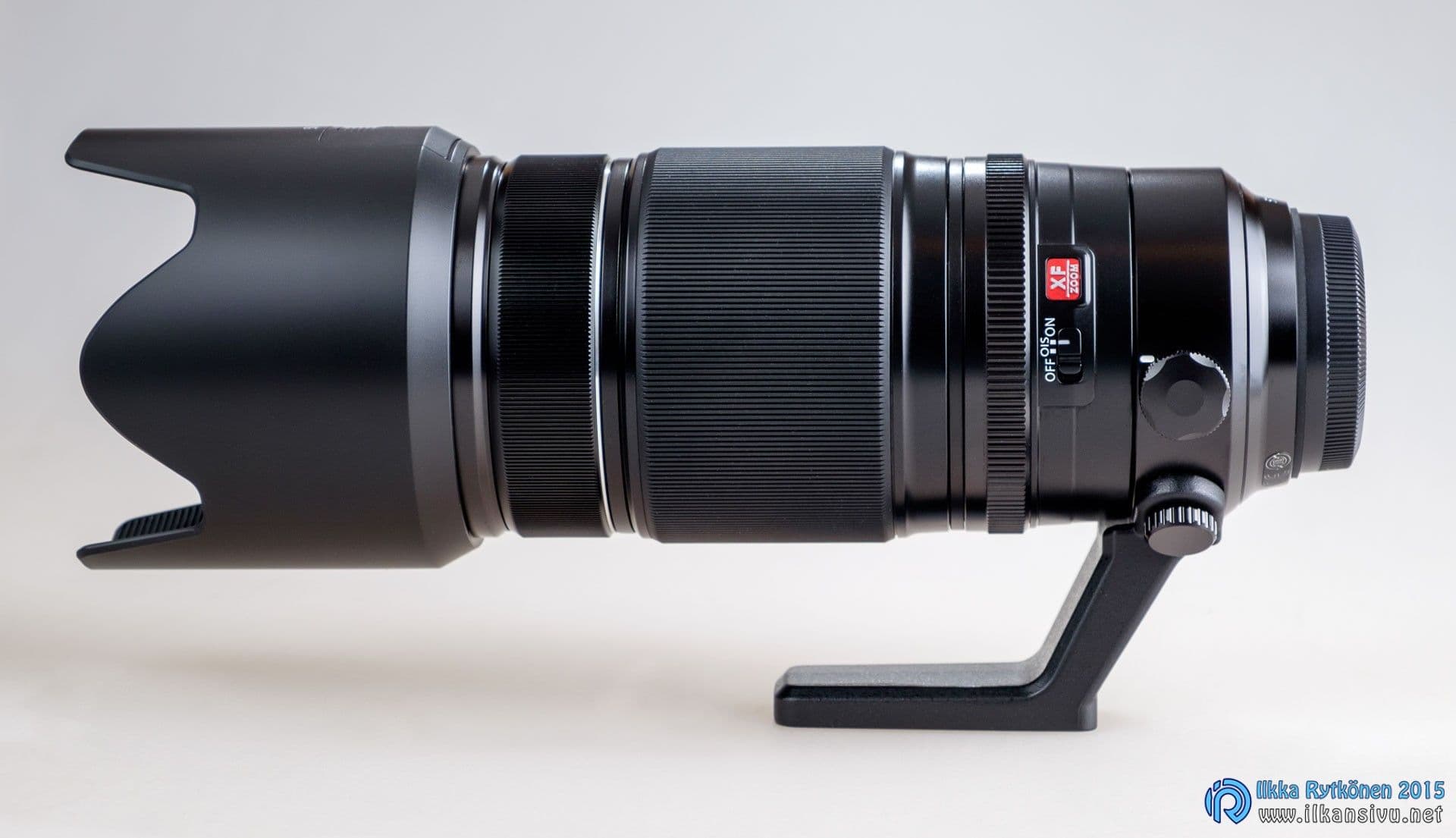
A fast, weather-sealed basic tele
Fujifilm has developed the lens selection of its X mount at a commendable pace. Enthusiast and professional photographers appreciate a high-quality and comprehensive range of glass, and at the moment it is already quite comprehensive. On the telephoto side there have previously been only the hobbyist model XC50-230mm F4.5-6.7 OIS and the higher-quality XF55-200mm F3.5-4.8 R LM OIS. Not that the earlier options wouldn't also be workable telephoto lenses, but they lack weather sealing and their light-gathering simply isn't enough everywhere.
In angle of view this corresponds to the familiar full-frame 70-200mm lens, which is a great focal length for many situations.
A little over a year ago the long-awaited fast, weather-sealed XF50-140mm F2.8 R LM OIS WR telezoom with image stabilization came on the market. The weather-sealed X-T1 got a worthy telephoto companion. I tested this tele specifically with the X-T1.
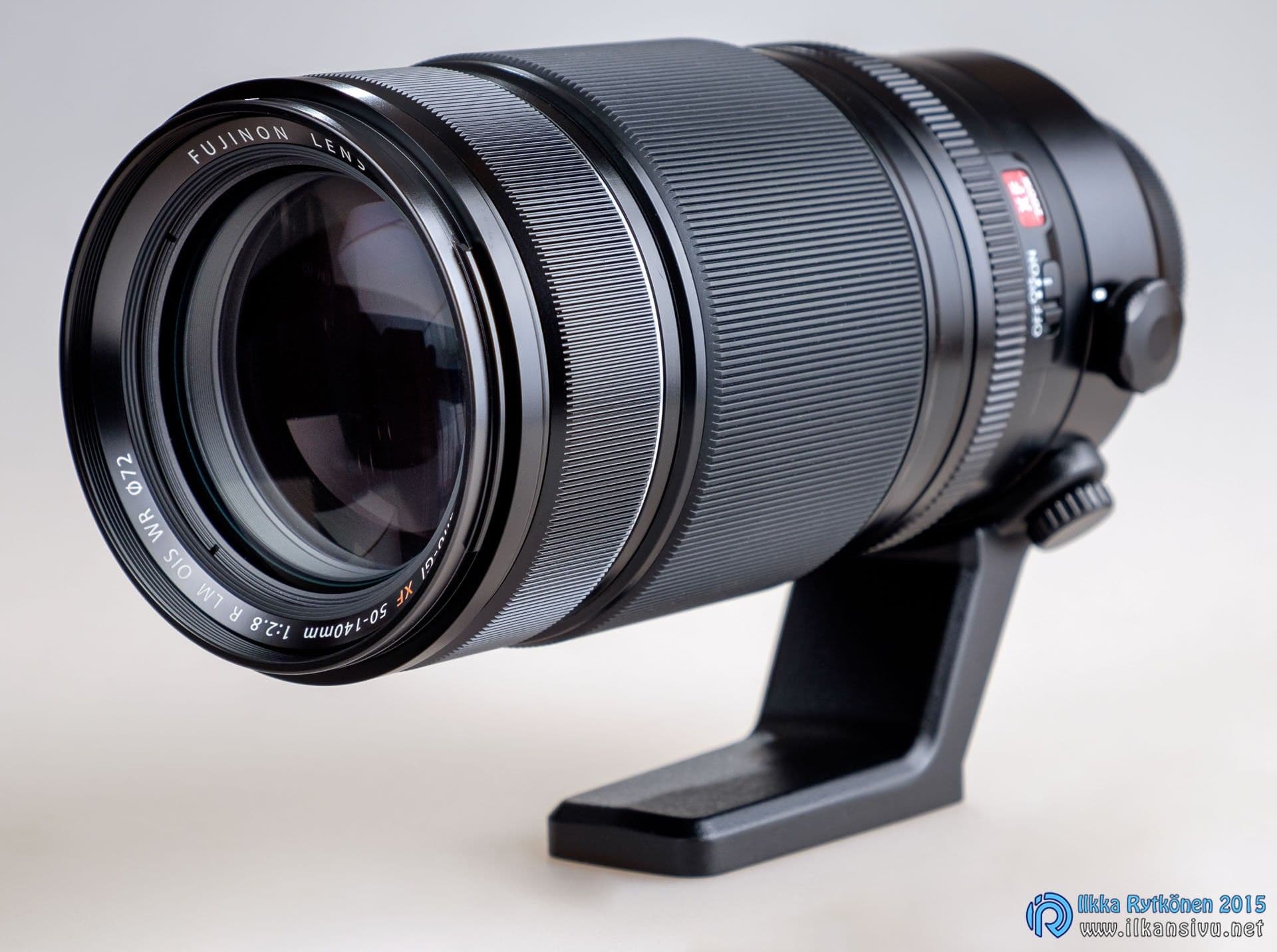
In angle of view this corresponds to the familiar full-frame 70-200mm lens, which is a great focal length for many situations. Anyone who has shot with one knows the strengths of that lens.
Feel
The lens feels high-quality and is well finished. The zoom, focus and aperture rings work precisely and all movement happens internally within the lens. The aperture ring is suitably firm and does not turn easily to the wrong position by accident. It is not so stiff, however, that it couldn't be turned with one finger while in shooting position. The tripod collar and lens hood are included in the sales package.
The aperture ring is suitably firm and does not turn easily to the wrong position by accident.
The tripod collar is removable and can also be rotated when needed, so a photographer using a tripod or monopod can easily take portrait-orientation pictures. The lens hood has a hatch which, when removed, lets you rotate a polarizing filter into the right position when using it.
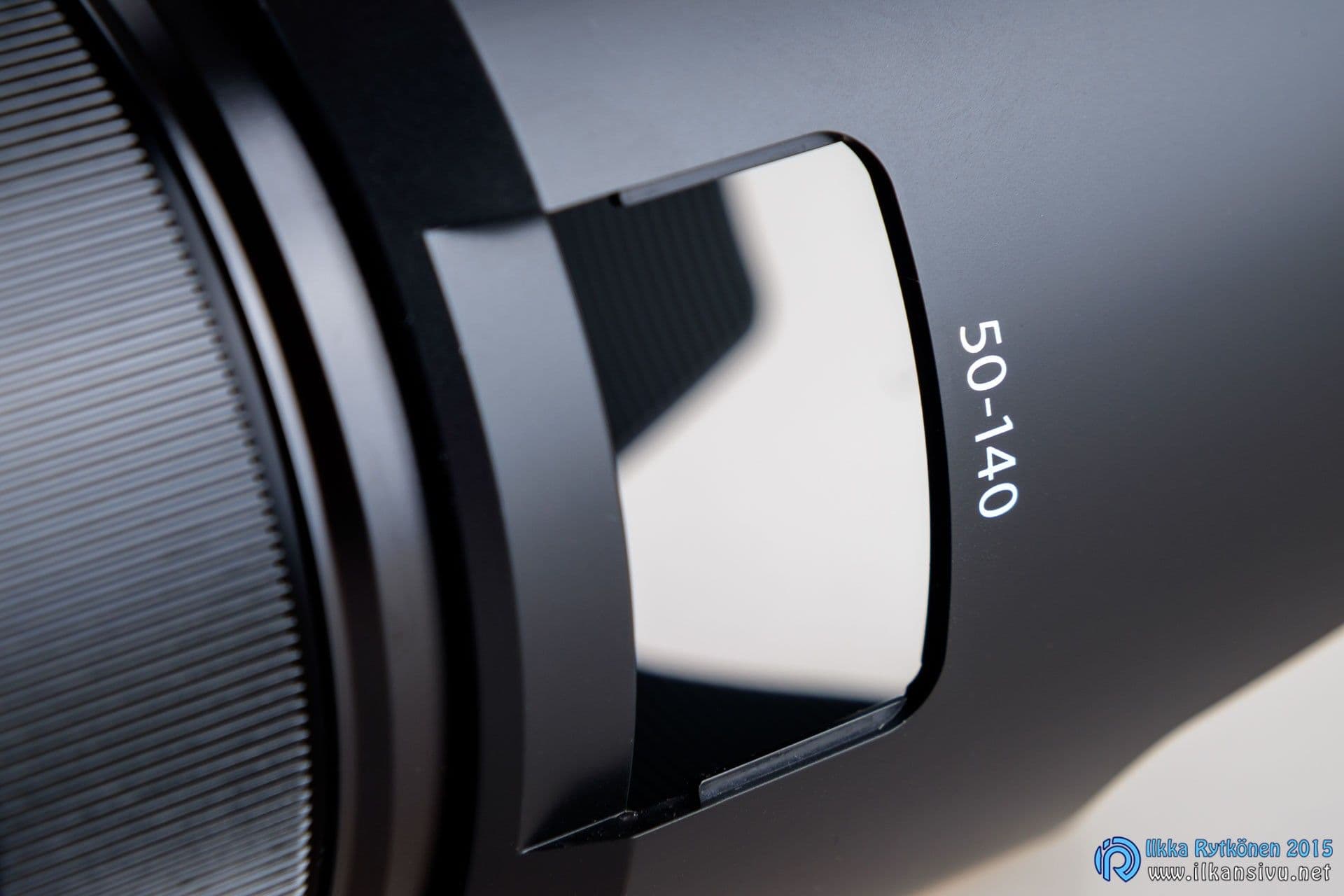
Unfortunately this lens hood, too, does not slip into place easily in all situations. The same phenomenon has occurred with several Fuji lenses. When you then force the hood into place in a hurry, plastic gets cut off the hood's plastic bayonet. On the other hand, this makes it easier to attach the hood in future onto the ”wrong threads”.
When the camera is not powered on, some part inside the lens can be felt moving. Probably it is a part related to the stabilizer or focusing, and the rattle presumably belongs to the design. The same phenomenon has been encountered in some lenses of other brands.
Stability and light-gathering
Alongside fast aperture, an image stabilizer is standard fare in this type of lens. The stabilizer adds usability, because f/2,8 light-gathering does not always suffice. This is the case, for example, in wedding photography, when in a dark church you should get a close-up of the couple and the priest at the altar. The stabilizer also calms the viewfinder image nicely, so precise framing and composition become easier. The image stabilizer can be switched on or off with the switch on the side of the lens.

Fast aperture is also needed when you want to blur the background or when using a teleconverter. The 1,4x teleconverter that fits the lens has just recently gone on sale, and a separate article about it is coming to the blog later.
At the 50mm focal length without the stabilizer, it is still occasionally possible to get sharp results at a 1/25 s shutter speed, but the longest usable shutter speed is 1/80 s. Correspondingly, with the help of the image stabilizer sharp results are occasionally possible at a shutter speed of approx. ½ second and more consistently at approx. 1/20 s.
At the 140mm focal length the image stabilizer makes it possible to take a sharp picture standing on one's feet even at a 1/8 second shutter speed. More regularly accurate results begin to appear at shutter speeds of approx. 1/30 s. Without the stabilizer a sharp frame may still click at 1/50 s, but a sharp end result is more certain using 1/100 s or a faster time.
The filter thread is 72mm, i.e. a little smaller than in its full-frame equivalents. The lens is also slightly smaller and lighter for those used to full-frame gear. On the other hand, the size is quite suitable with the X-T1. In a longer session one does miss an extra grip on the body, so this is by no means a pocket tele.
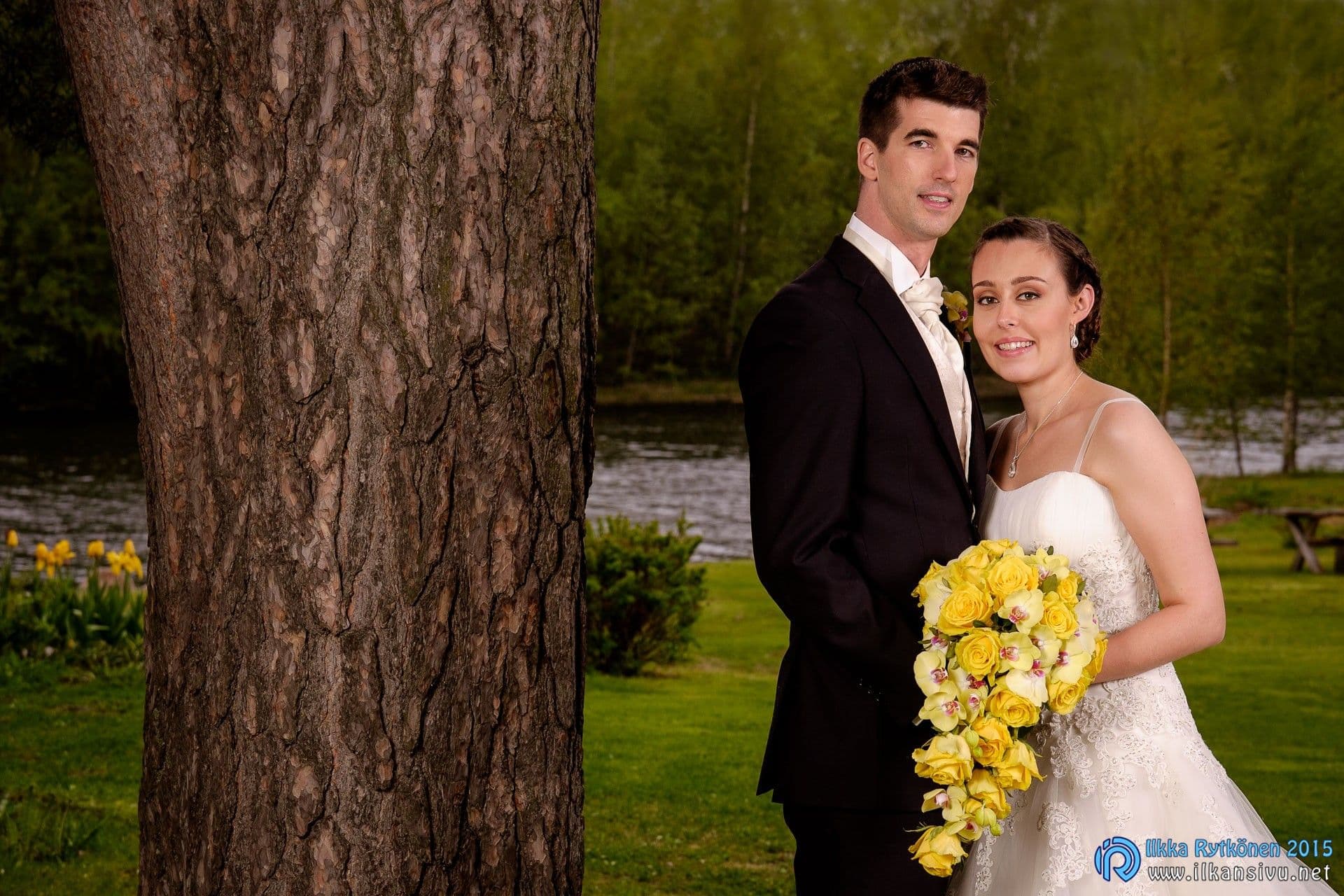
A sensor smaller than full frame means that at the same aperture the background does not soften in the same way from a full-frame shooter's point of view. Hence a flash photographer often has to dig a neutral density filter out of their back pocket to avoid overexposing the background and to separate the subject from it. But the longer the tele, the smaller the need for an ND filter, so this is excellent for portrait photography too.
Brisk focusing
Focusing, at least with the X-T1, is reasonably fast and keeps up surprisingly well with a moving subject. It is no problem to photograph a couple walking toward you down a church aisle, or even a rally car coming toward the camera. At close range, however, fast-moving subjects are tricky for this one too. Focusing is aided by a linear motor and is practically silent.
Focusing, at least with the X-T1, is reasonably fast and keeps up surprisingly well with a moving subject.
Stationary subjects are focused at sufficient speed. On the other hand, in dim light there may be a little hunting, but that tends to be the case with many systems.
If you compare focusing speed with Olympus's 40-150mm f/2.8 telezoom on an E-M1 body, the Olympus wins. The difference is not impossibly large, but it is noticeable even without measuring instruments.
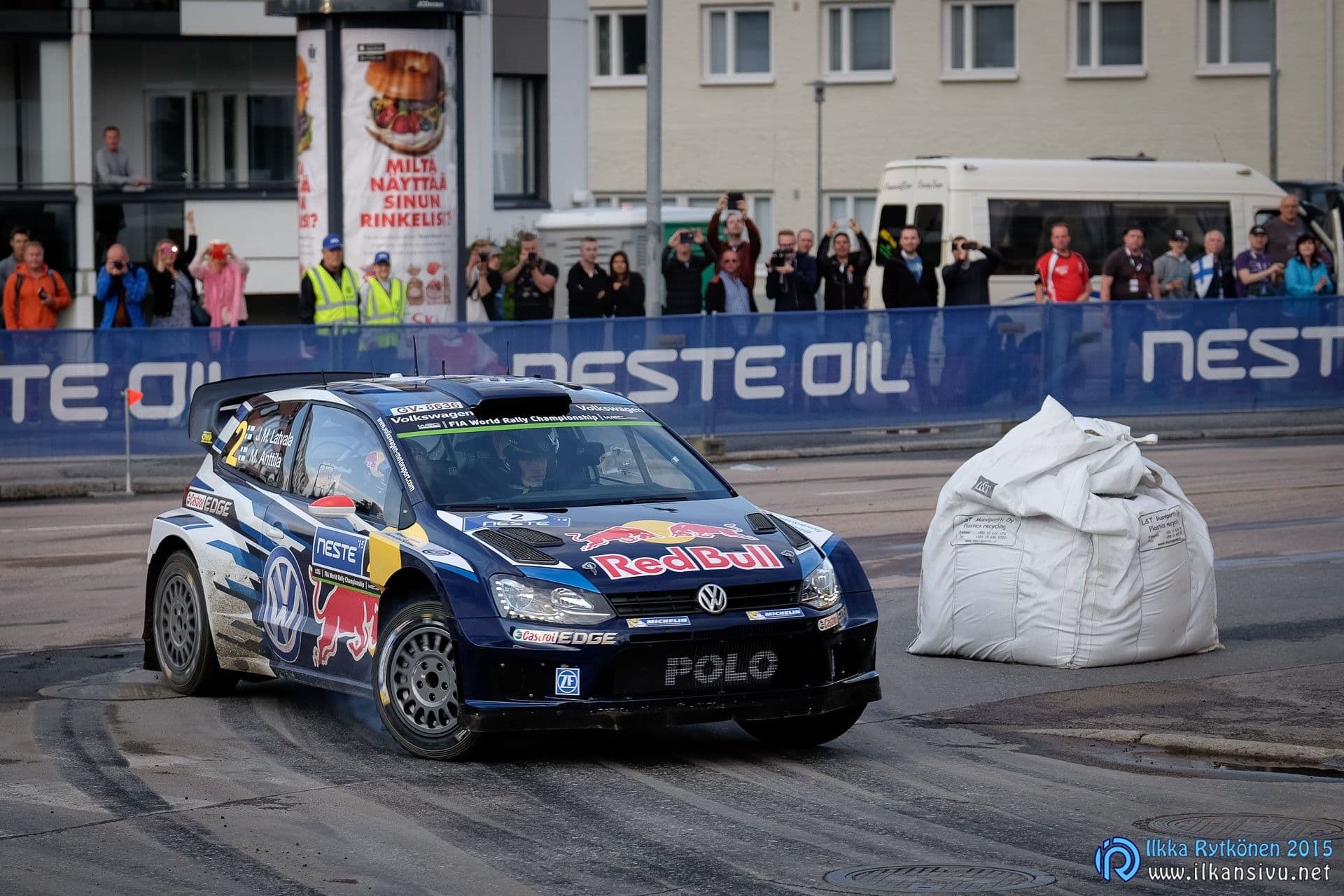
Although the focusing is fast, in a mirrorless camera it always has a different character compared to mirror-based gear. When a corresponding lens on a capable mirror body has focused on the subject almost faster than thought, a mirrorless cannot match it. But once focusing gets going, it is astonishingly sure and accurate. Phase detection gives the focus motor the direction and contrast detection ensures the final touch. There is no need for focus fine-tuning.
If you mainly photograph fast-moving subjects, perhaps switching to mirrorless should still be held back. But there are many subjects and ways of shooting, so it is worth trying in practice where possible. I bought this tele for myself, however, because this focal length and light-gathering ability is needed in practice on every wedding gig and in many other places too. Rally or other similar situations are not my main subject, but this gear copes with them too. Much development is happening in mirrorless cameras right now, and at this pace mirror-based systems may end up in history as outdated surprisingly quickly.

Image quality
The rendering is very good from full aperture onward, and it is hard to detect changes in the rendering of the central area. Edge rendering improves when stopped down, though even at the widest aperture it is nothing smudgy. f/4 is already very good and rendering is probably at its best around f/8. At smaller apertures, from approx. f/13 onward, diffraction begins to soften the image throughout. Rendering is weaker at the extremes of the focal range, so that 140mm seems to be slightly weaker than the 50mm position. The image is sharpest at approx. 70mm focal length.
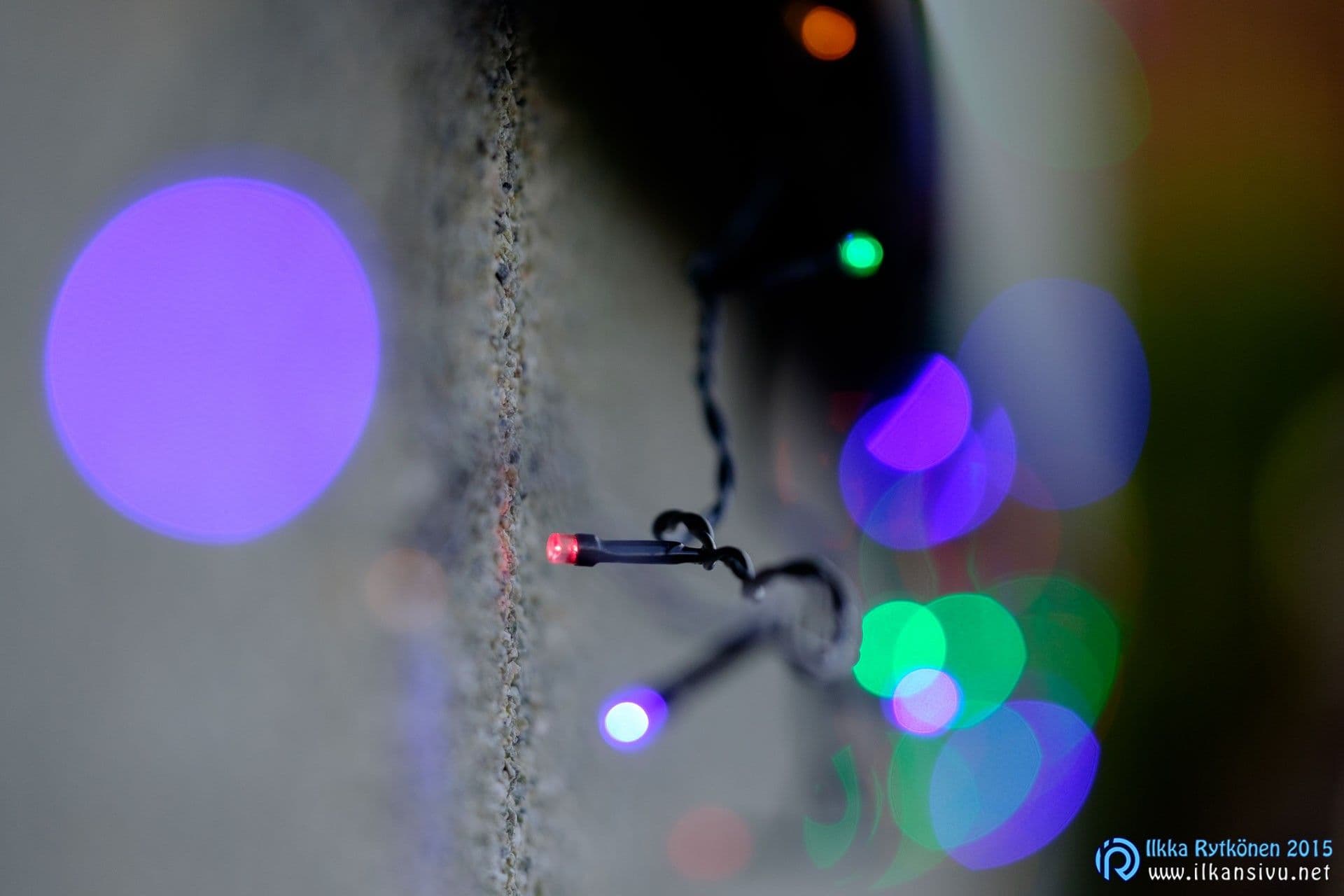
Other optical flaws do not catch the eye, but then again Lightroom uses the correction profile built into the RAW file. So the minor flaws practically never even show anywhere. In any case the optical quality is top class.
The bokeh is stylish and comparable to the XF56mm portrait lens. At f/2,8 this renders point-like light sources even more stylishly than the prime.
Conclusions
For Fuji men and women this is almost a must-buy if there is a need for a telephoto in poor light or bad weather. Optically everything is in top shape, as is Fuji's habit.

The price of this beauty is approx. 1500 euros, so we can't really call it a cheap product. But if you compare it with full-frame equivalent 70-200mm f/2,8 lenses, the price no longer feels so bad.
A buyer should consider this as a package with the teleconverter, in which case the converter costs a few hundred. If you feel like getting the converter later, it is considerably more expensive bought separately.