

A serious telephoto option
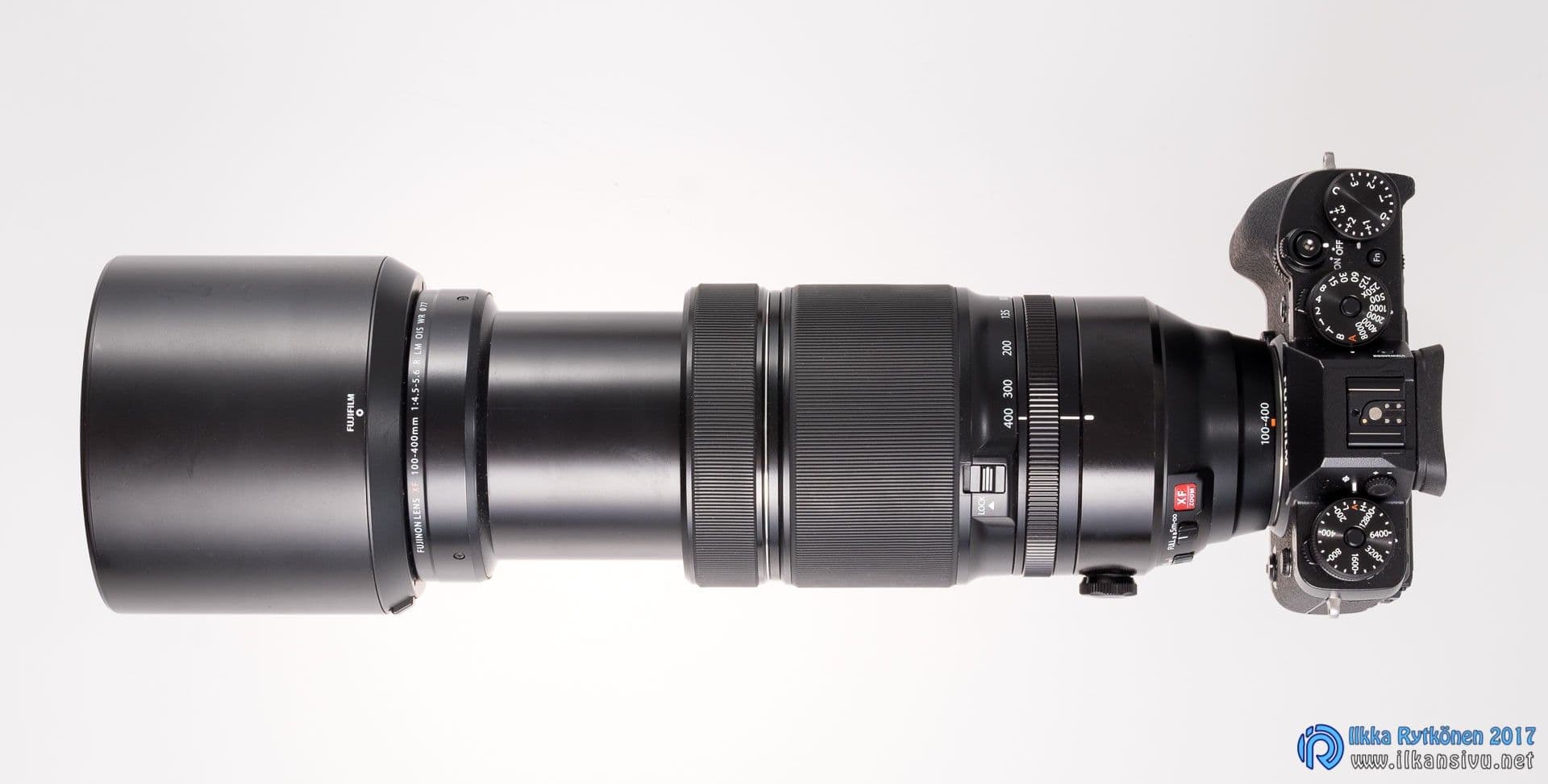
Fujifilm has been expanding the X-system lens range at a good pace. Once roughly all the basic lenses had been released, it was the turn of a longer telephoto: a zoom covering 100-400 mm. Fujifilm calls it a super-telephoto, and at least in focal length that is fair. It does not boast an enormously wide maximum aperture, but it has plenty of reach. With a crop factor of 1,5, its angle of view corresponds to a 152-609 mm telephoto on full frame. At that focal length, there is rarely a need for an even narrower angle of view. If there is, it is compatible with 1,4x and 2x teleconverters. The lens is weather-sealed and includes image stabilisation. A tripod collar is naturally standard. The optics have received attention: alongside ED glass, Super ED glass is used and should reduce chromatic aberration.
- Focal length 100-400 mm (full-frame equivalent 152-609 mm)
- Maximum aperture 4,5-5,6
- Weight 1375 g
- Filter thread 77 mm
- Minimum focusing distance 1,75 m
- Weather-sealed
- Cold resistance -10 °C
- Optical image stabiliser (5 stops)
- Compatible with teleconverters
From theory to practice
On paper, this Fuji telephoto sounds attractive: the package is suitable for a wide range of telephoto photography, provided enough light is available. It does not require an enormous backpack, and its weight permits handheld shooting. Add a five-stop image stabiliser, fast autofocus and weather sealing, and things become rather exciting.
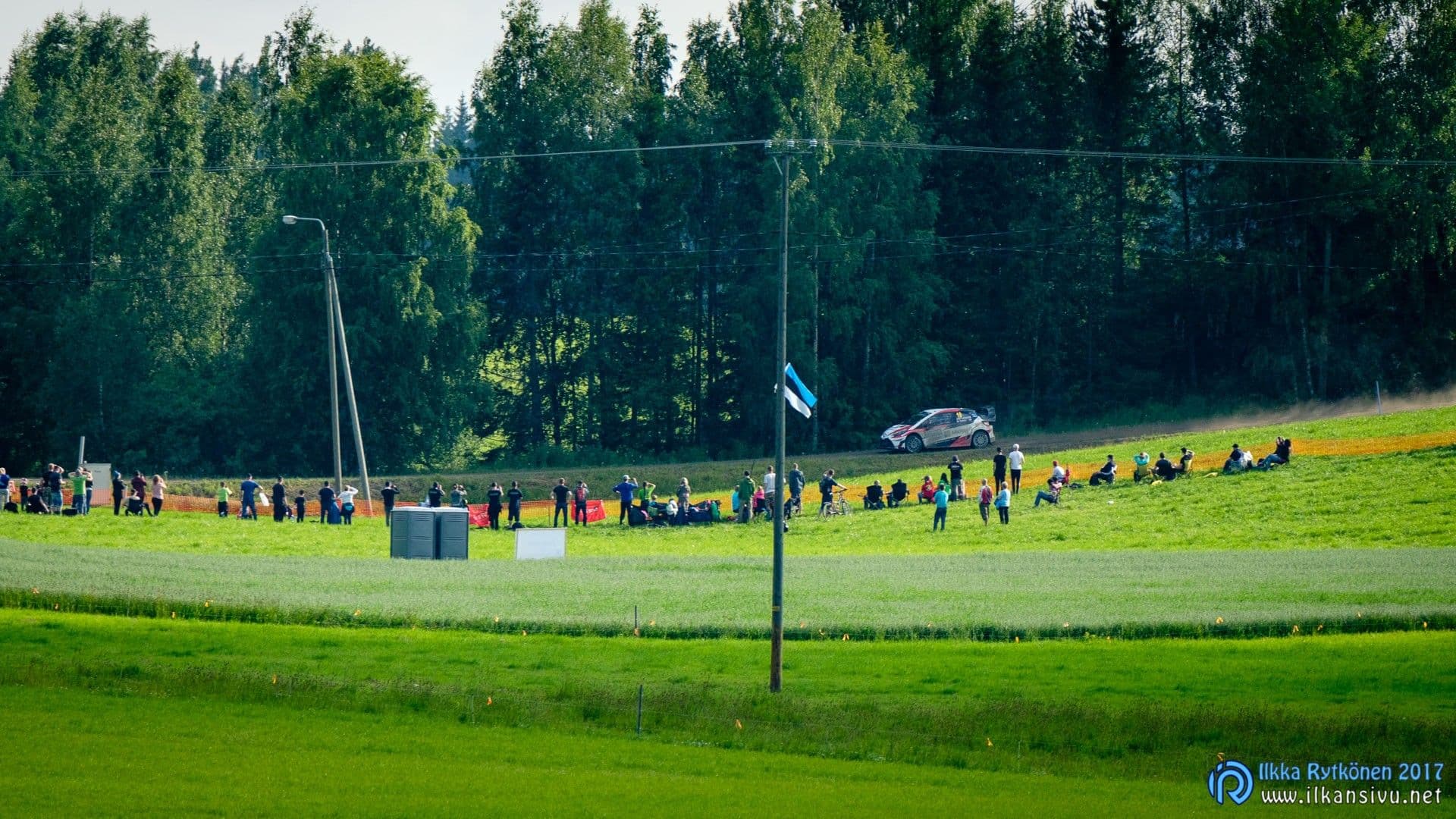
A battery grip is essential with this lens.
I previously owned Canon’s older 100-400 mm push-pull zoom and have tried the newer version too, so I have comparable experience. I have also used long prime telephotos. When Fuji brought its own 100-400mm telephoto to market, I saw videos of someone photographing circuit racing with it. It was praised extravagantly for autofocus speed and other features. That made me wonder whether there was some exaggeration. Mirrorless systems have developed enormously in recent years, and I have found Fuji’s X-T1 suitable for action photography with some reservations. Even so, in autofocus and viewfinders they had not yet caught up with traditional DSLRs. I had bought Fuji’s X-T2 earlier in the summer, so it was particularly interesting to borrow this relatively new telephoto for the World Rally Championship event in Jyväskylä.
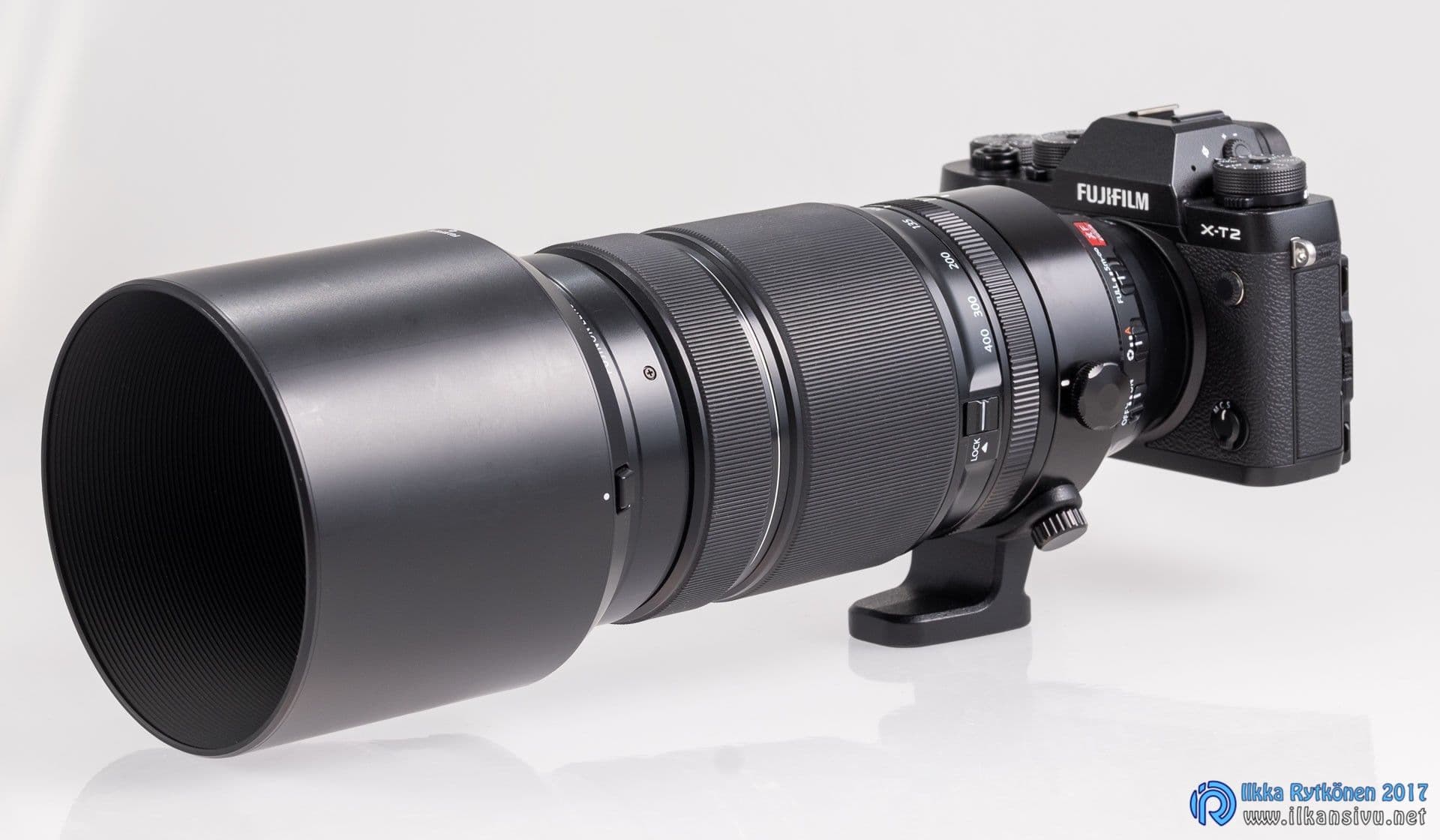
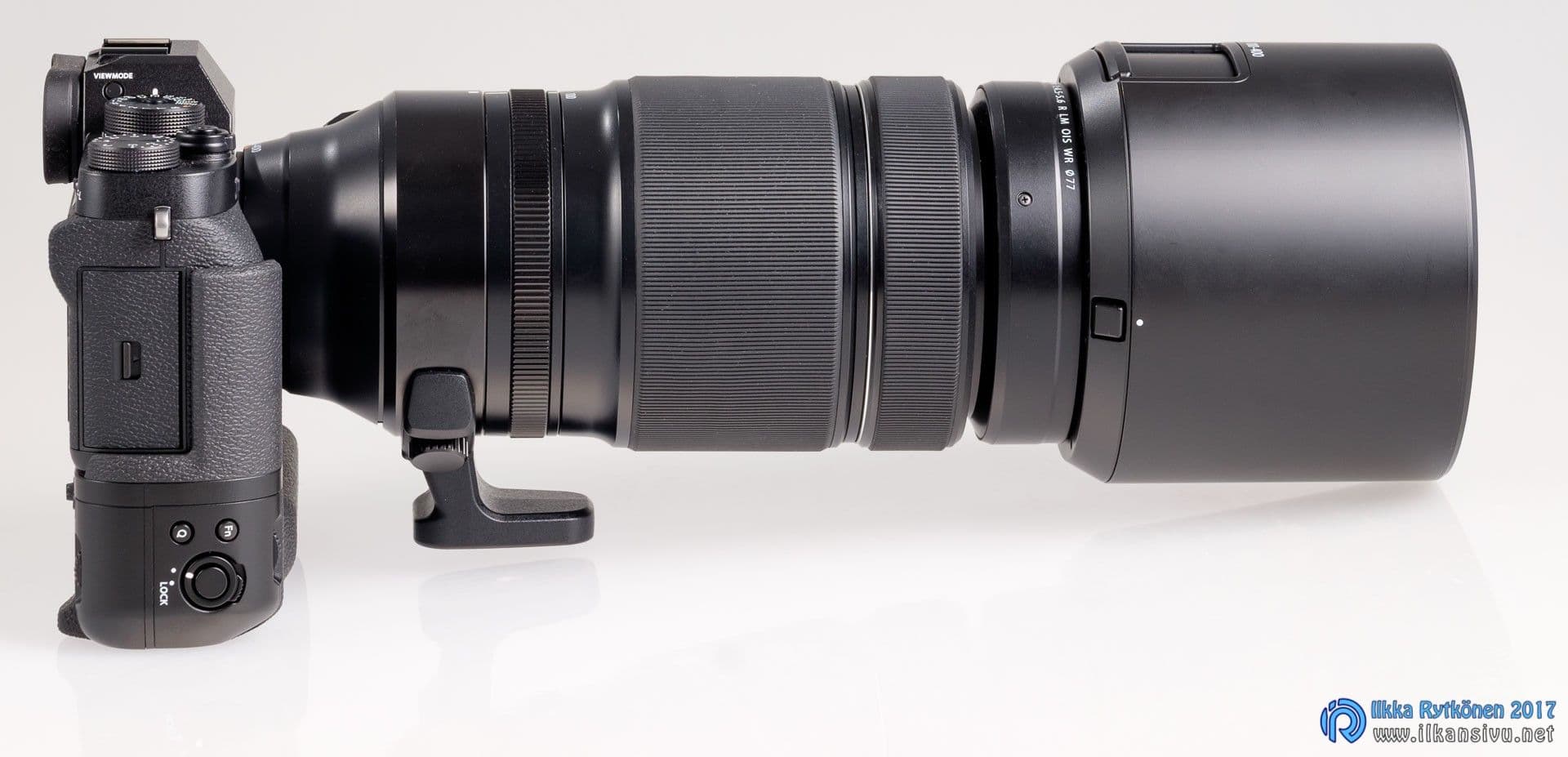
Fujifilm’s long telephoto is currently the largest lens in the system, larger than its faster cousin, the XF50-140mmF2.8. When I first mounted it on the X-T2, the combination felt slightly unsteady. The body is rather small relative to the lens, and handling felt awkward. This was accentuated by a little rotational play in the mount. Nearly all cameras and lenses have some similar play, but I had never noticed it affecting practical shooting. Fortunately, the battery grip I had ordered arrived at the beginning of the test and improved the handling of the whole package considerably. I would say a battery grip is essential with this lens. Besides extra power and size, it provides a second set of control dials, a shutter button and other controls for portrait shooting. It also raises the X-T2’s burst speed to 11 frames per second, reduces shutter lag, speeds up autofocus, increases the viewfinder refresh rate and reduces viewfinder blackout during bursts. A proper booster indeed!
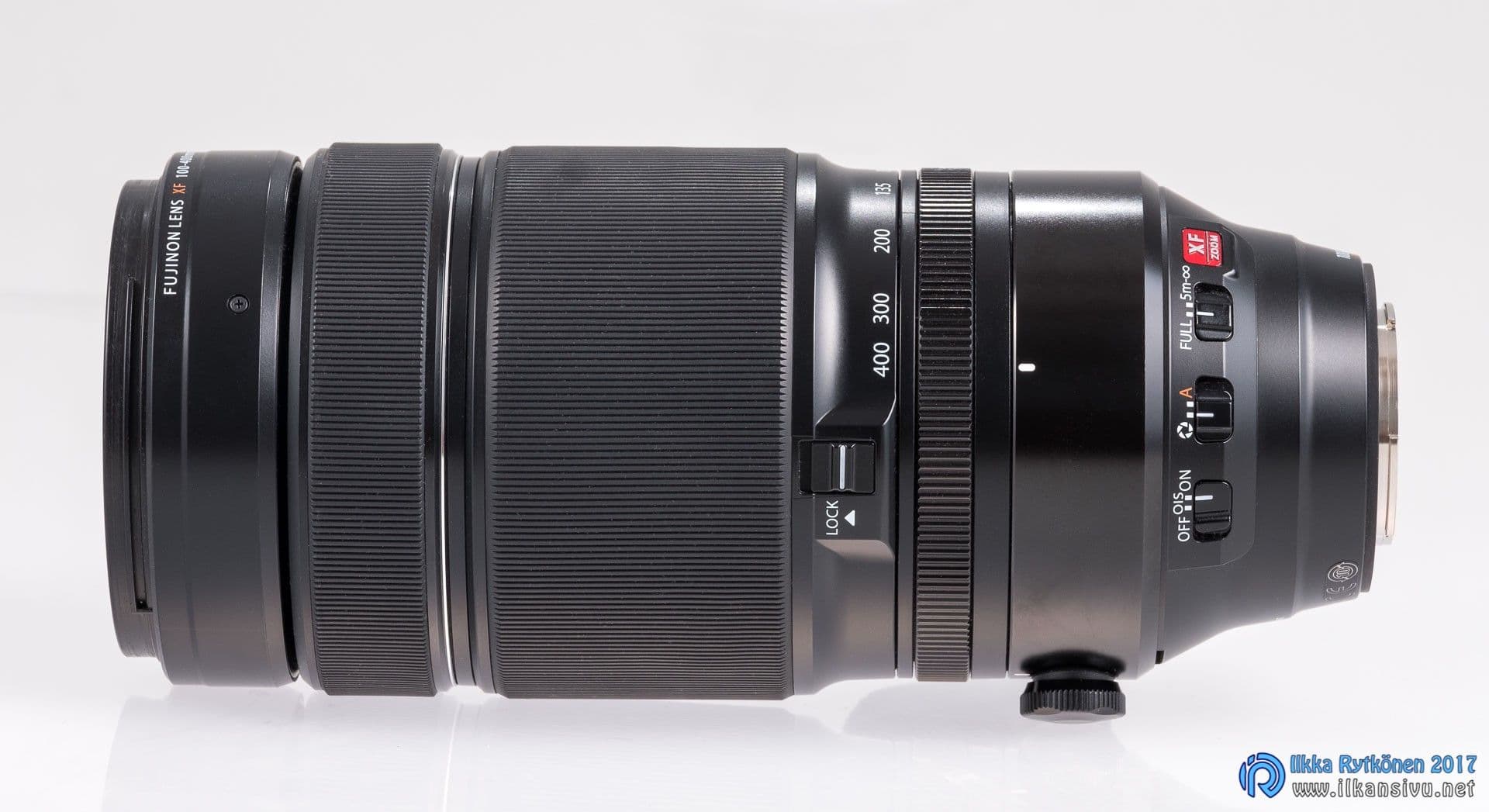
The aperture ring has nicely judged detents and does not easily turn to the wrong setting.
Fujifilm XF100-400mm and X-T2 with and without a grip
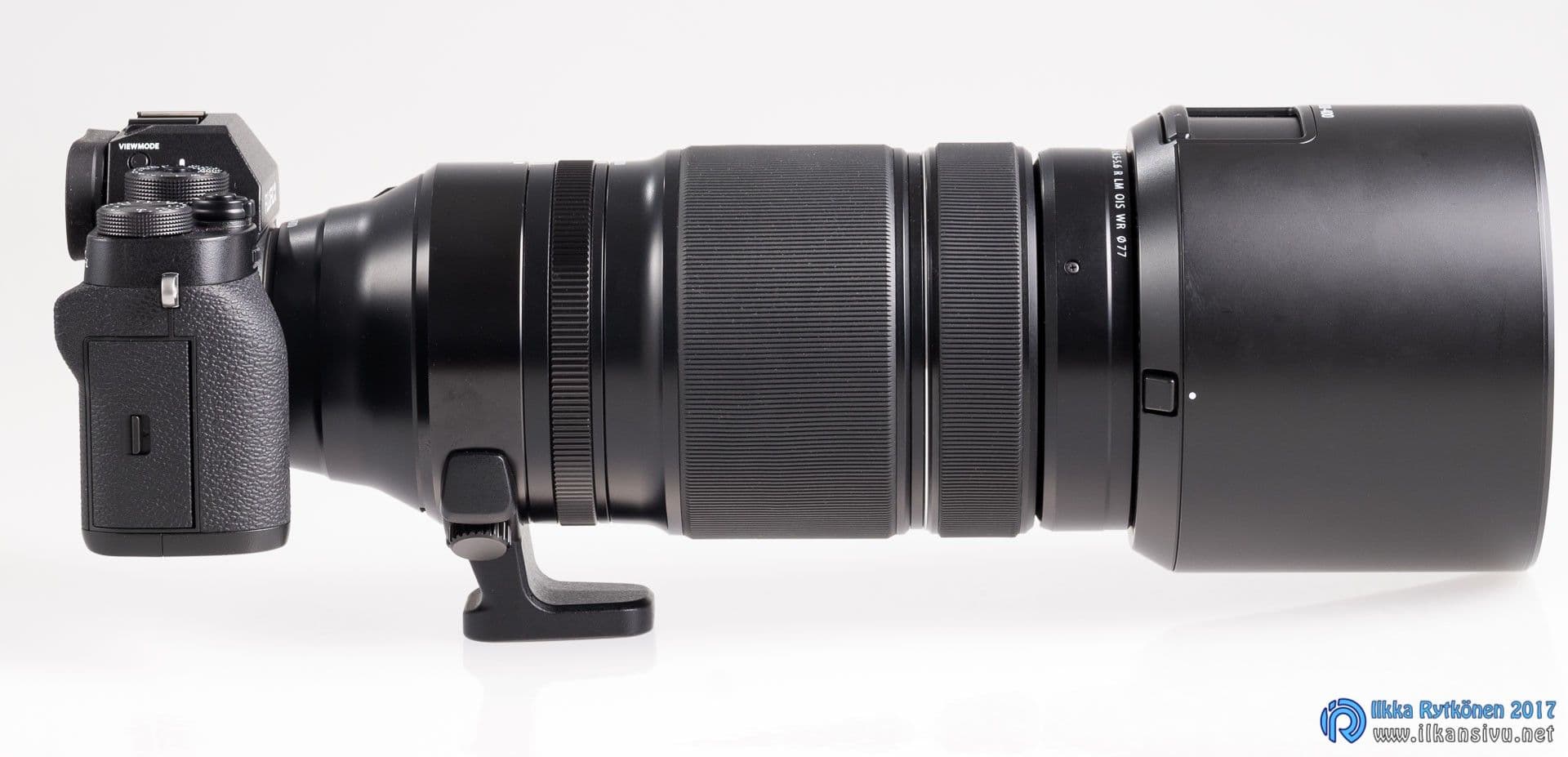
Solid mechanical construction
The zoom ring is firm, and its feel does not change across the focal-length range. The aperture ring has nicely judged detents and does not easily turn to the wrong setting. Since maximum aperture varies with focal length, aperture values are not marked on the ring. Other controls are an image stabiliser on/off switch, an automatic/manual aperture switch and a focus limiter. In the distant setting, minimum focusing distance becomes 5 m rather than the normal 1,75 m. The zoom can also be locked at 100 mm, but I never used that. At least when new, the zoom is firm enough not to need a lock.
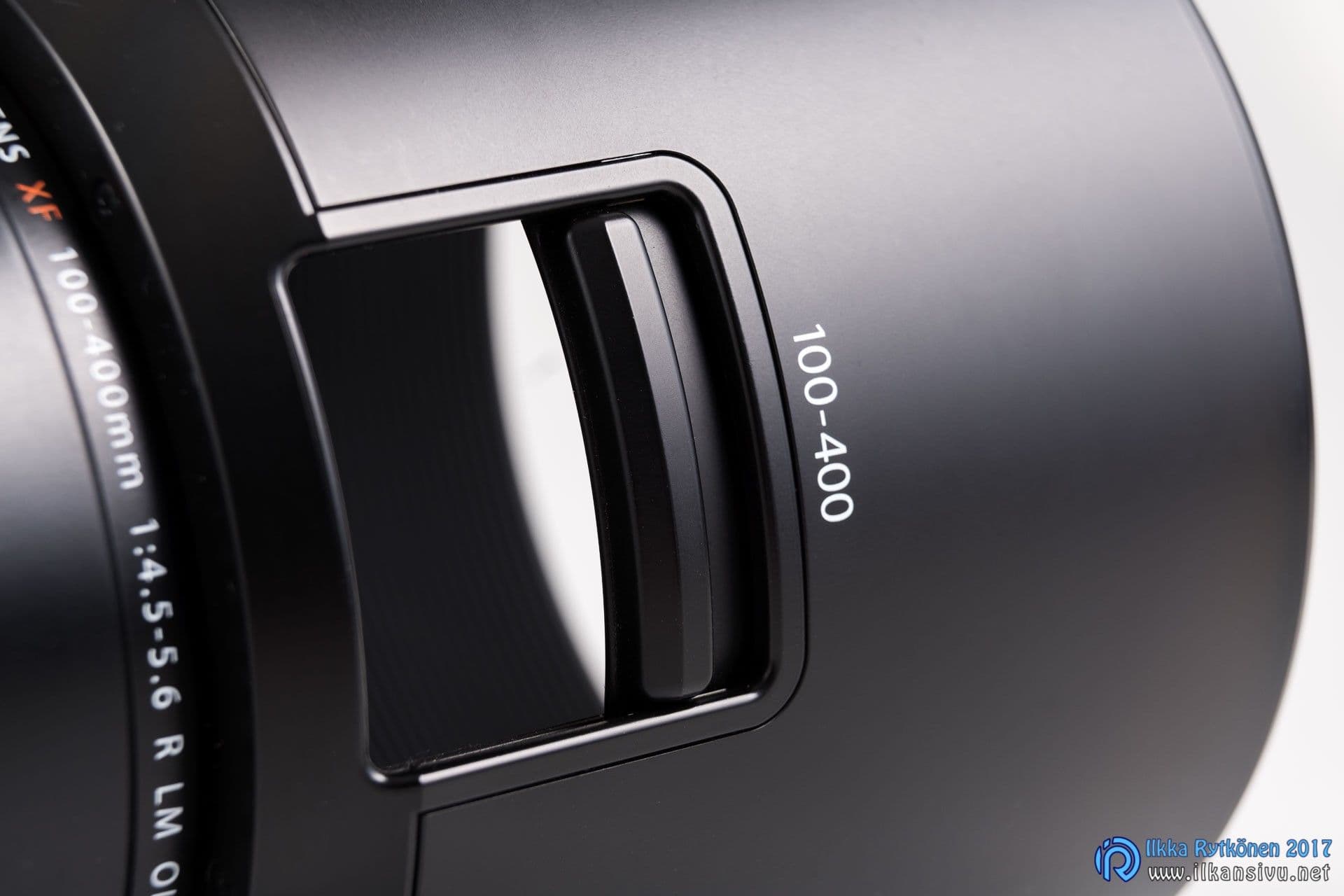
The hood is unquestionably Fuji’s best so far. It clicks into place beautifully and has a lock. A hatch in the hood lets you turn a polarising filter, for example. The hatch slides aside rather than falling off. Canon’s newer 100-400 mm telephoto zoom has a similar system. A polarising filter really does turn through this hatch without the sticking experienced with the 50-140 mm telephoto. Could we get this kind of hood for that faster telephoto too?
Action!
The camera was still fairly new to me, so I had not explored all its finer points, particularly continuous autofocus. I had experience of corresponding Canon settings, however, which gave me a starting point as I drove towards Jyväskylä. Fujifilm advised me to put the AF-C setting on three, for accelerating or decelerating subjects. That did not give particularly good results: four, for a suddenly appearing subject, was considerably better. It deals better with a subject suddenly entering the frame, which is often what rally photography involves. Ahead of you is a spot chosen beforehand, where you compose the car in your mind. You hear it coming well in advance, but must guess exactly when it will enter the frame. Once the car appears, focusing must react immediately before the decisive moment escapes. In other situations, the subject is clearly visible all the time, and choosing the setting suited to that situation gives the best result. You can photograph everything with the general setting, of course, but more frames will be incorrectly focused.
Photographing the rally with this 100-400 mm telephoto was a pleasure. It worked better than I had dared expect.
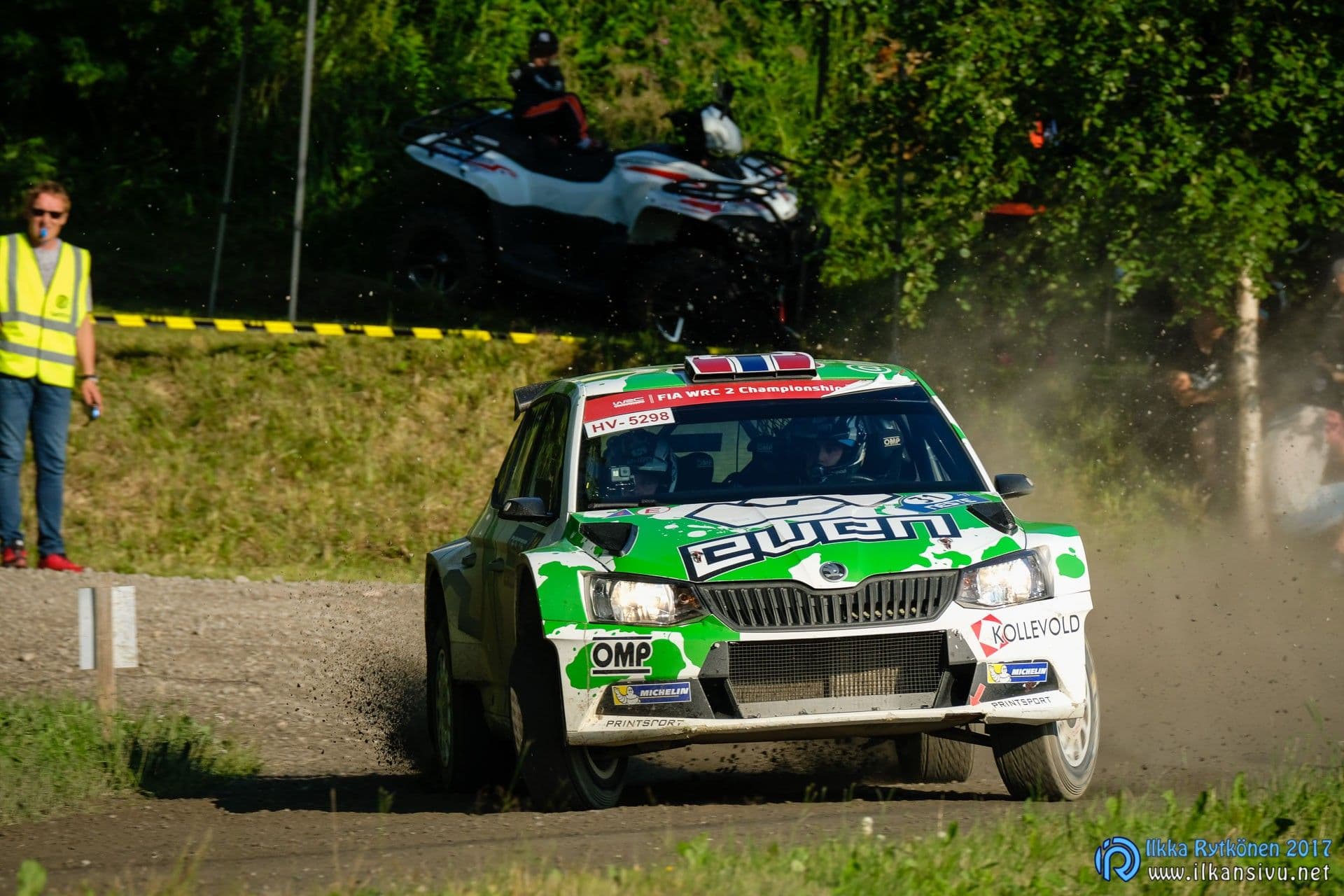
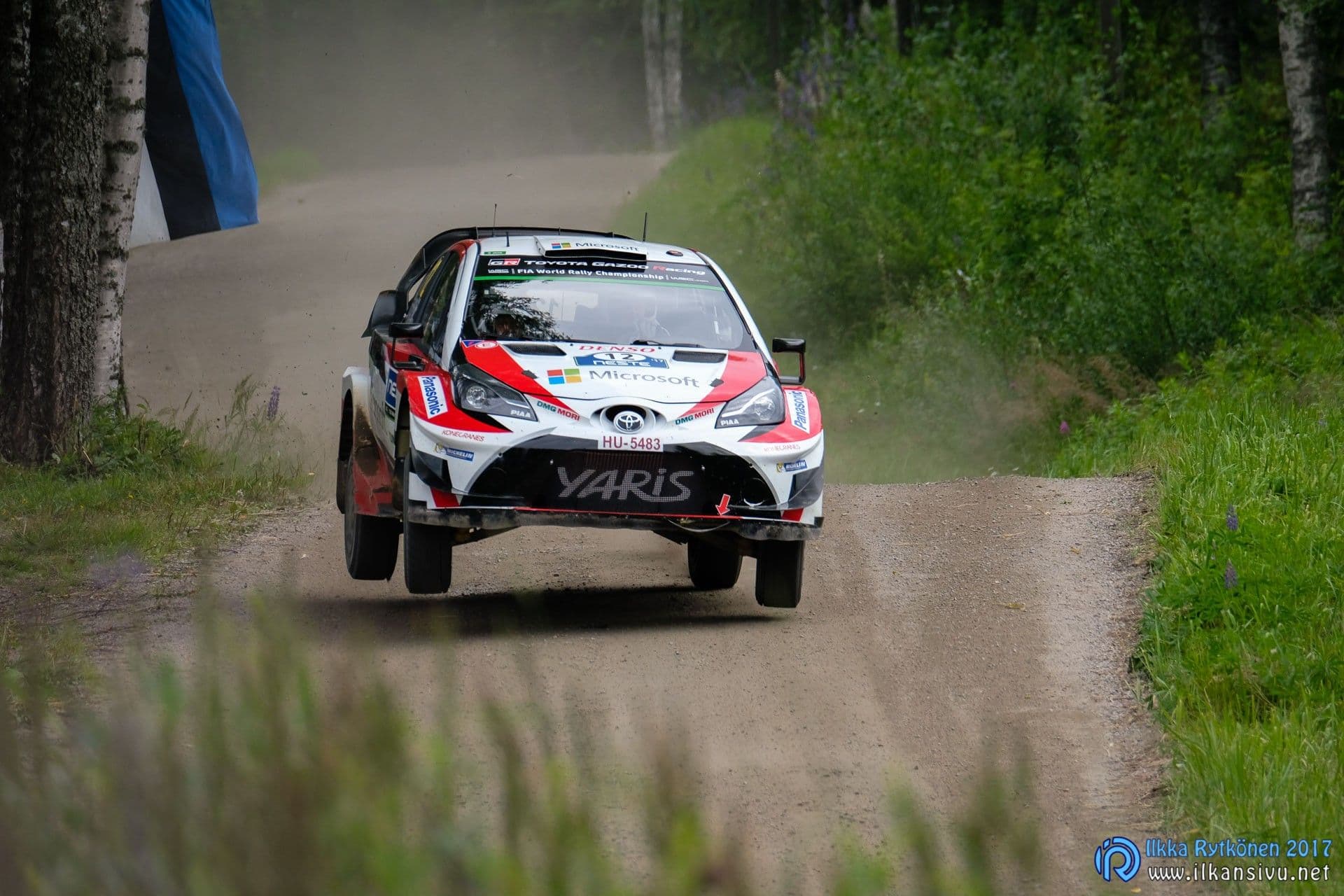
Enough theory: on to practice! Photographing the rally with this 100-400 mm telephoto was a pleasure. It worked better than I had dared expect. With the right settings, focusing is extremely fast, and missed shots can only be blamed on me. Sometimes an approaching car caught me by surprise, almost costing me the moment. Once I lifted the camera to my eye, however, the burst started immediately and autofocus had the situation under control. I had not experienced focusing this fast since using Canon DSLRs some time earlier. Traditional DSLR systems may still have a slight lead here, but it is no longer significant. Based on this experience, I would now take Fuji to photograph almost any kind of action. In very low light, though, Fuji still lacks long, fast telephotos. That is set to improve: in 2018 a 200 mm telephoto with an impressive f/2 aperture is coming. Together with the fast 8-16mm ultra-wide angle arriving around the same time, it gives Fuji photographers reason to be pleased.
The hood is unquestionably Fuji’s best so far.
When photographing a rally with a telephoto, subjects are not right next to you. It is worth setting the focus limiter to a minimum of 5 metres. Focus then cannot wander too close. If it did reach a short distance, the autofocus system would have a long way to move back to the correct position, costing that moment.
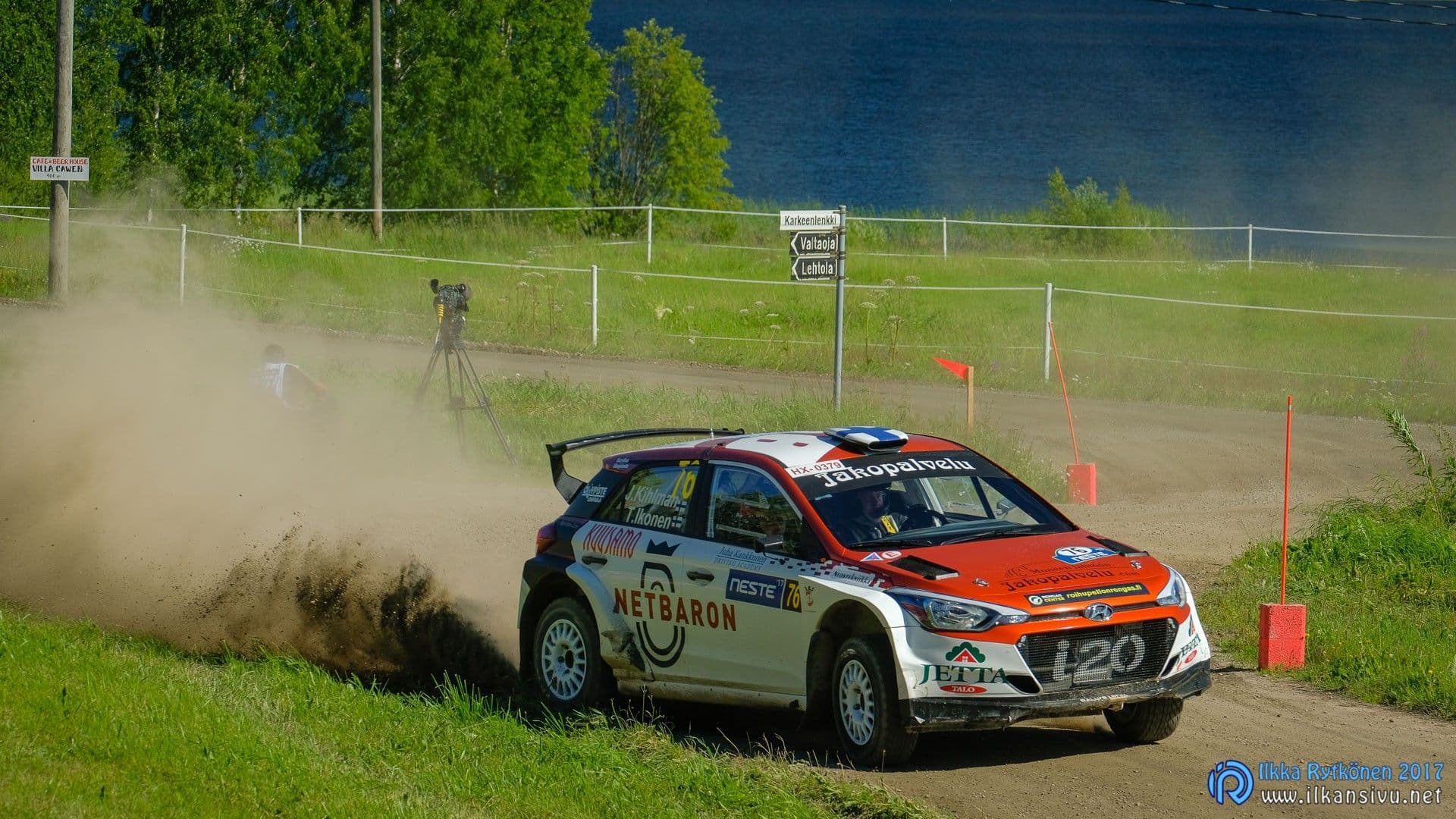
The zoom ring has a relatively long travel, so changing focal length from one extreme to the other with a single wrist movement is not easy. This is no great drawback, although I sometimes want to zoom during a burst. If you try this, the shutter speed must be faster than usual. Zooming while panning with the subject tends to interfere with both movements, producing more wasted photographs. The zoom ring’s position almost in the middle of the lens adds to this. If it were closer to the front element, simultaneous zooming and panning might be easier.
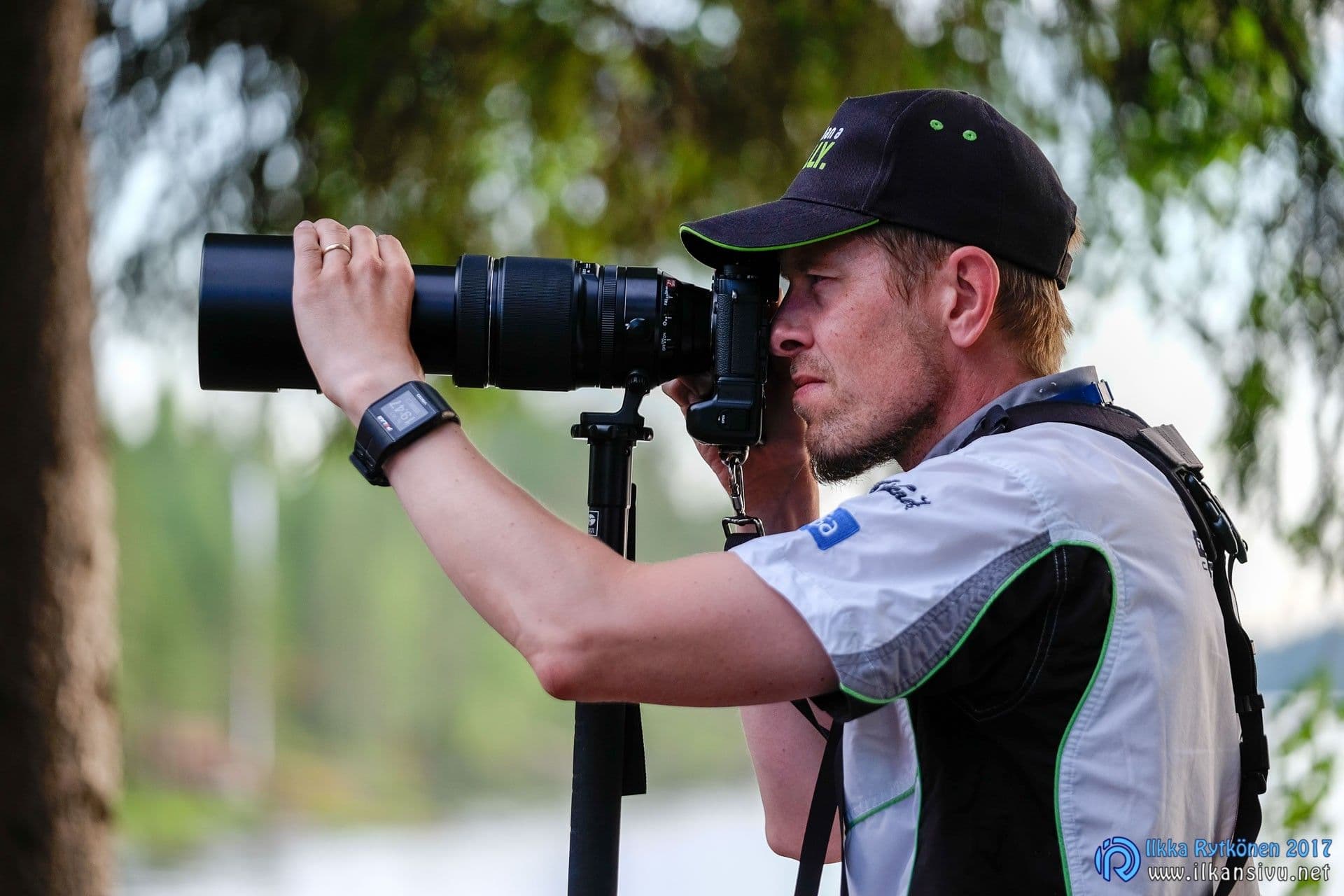
At focal lengths this long, correct shooting technique becomes more important. Even keeping the subject in the viewfinder can be difficult for a beginner. A monopod makes panning easier. Following the subject is easiest when holding the lens hood: that gives the longest lever arm and smoother panning. Fingers inside the hood are no problem and will not appear in the photograph. A tripod collar is standard, which is good because it is needed. During long sessions, it is tiring to support a lens weighing just under 1,5 kg with your arms alone. A monopod can therefore help with quieter photography too. The collar has a screw that can be loosened to turn the camera into portrait orientation. Sometimes it would be pleasant to leave the collar slightly loose for quick changes between portrait and landscape. The lens then wobbles a little inside the collar, though, which is unpleasant. To avoid it, you must remember to tighten the collar each time. The two screws holding the collar must also be tightened firmly, as they otherwise tend to loosen during the bustle of shooting.
At a quieter pace
A long telephoto is also excellent for stationary subjects. Although it is not often thought of as a portrait lens, this one works for portraits in suitable situations. A long telephoto helps separate the subject from the background even without an exceptionally wide aperture.
The image stabiliser seemed to work excellently, making slow shutter speeds possible.

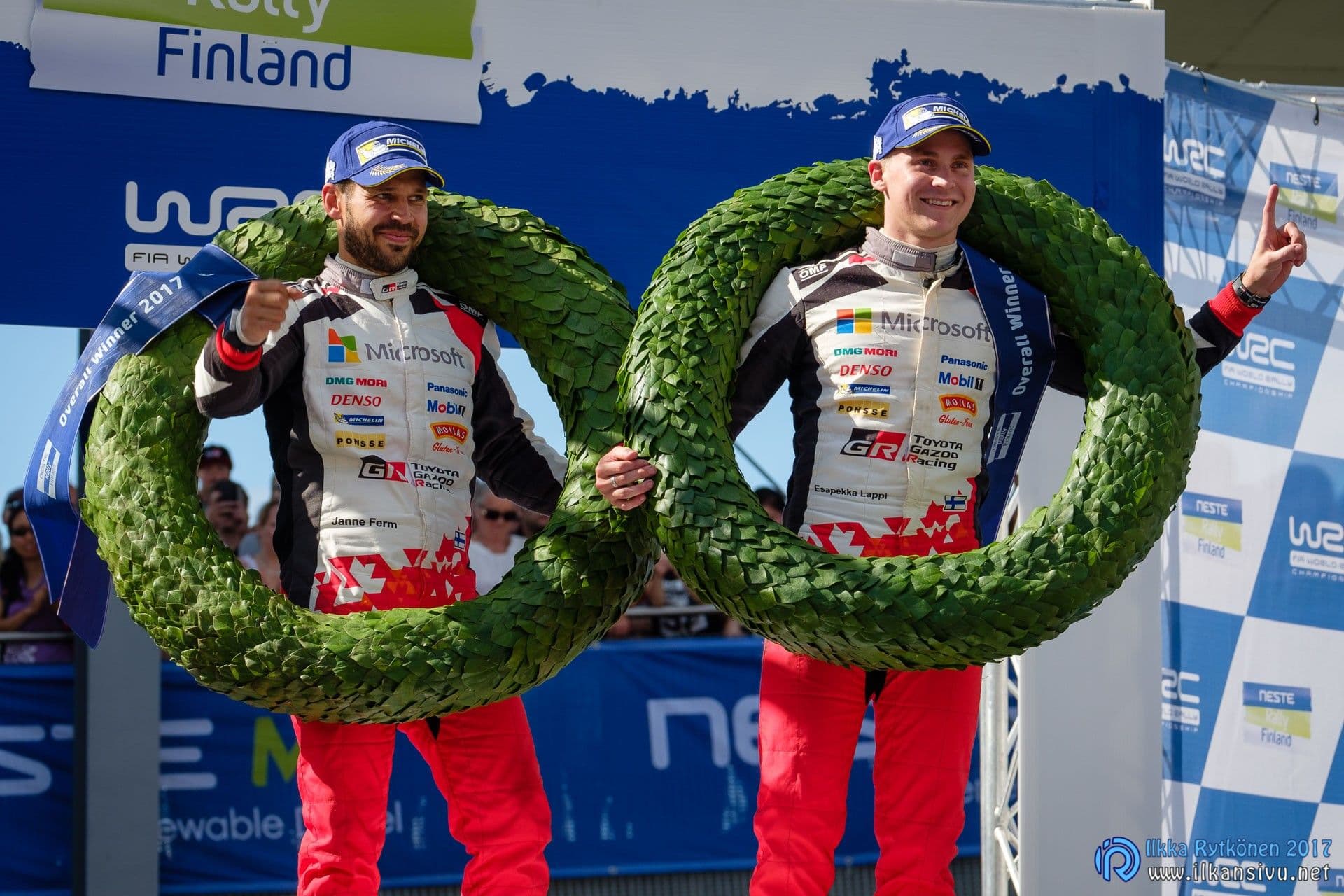
The image stabiliser seemed to work excellently, making slow shutter speeds possible. It reduces the need for a tripod. Even the best stabiliser cannot freeze subject movement, of course: that requires a wider aperture or higher ISO. I would therefore not necessarily take this lens to photograph a wedding ceremony unless the church was particularly bright. In suitable situations, however, stabilisation makes shooting less demanding. Photographs seemed to stay sharp at fairly slow shutter speeds even with poor technique. This was my experience during the Neste Rally prize-giving, when I had to photograph from an awkward position.
At 100 mm, the stabiliser makes sharp photographs easy at 1/15 s … 1/10 s. With a good shooting position and concentration, a successful photograph is possible even at 0,5 seconds. Without stabilisation, photographs start becoming blurred at 1/50 s. At 400 mm, stabilisation gives sharp photographs down to 1/40 s … 1/30 s, with an occasional sharp frame even at 1/8 seconds. Without it, 1/250 s starts producing consistent blur, so I consider the stabiliser very good. The advertised benefit of 5 stops is therefore not far-fetched.
Image quality
The XF100-400mm is a sharp lens. At first glance, photographs looked extremely sharp and excellent in every other respect. What if we look a little closer and do some pixel peeping?
At 400 mm, stopping down a few steps is advisable.
I tried to make chromatic aberrations visible, but they mostly stayed invisible. In some situations, a trace of longitudinal aberration can nevertheless be seen. Backlighting causes no problems.
Sharpness and contrast naturally improve with stopping down, but wide-open sharpness is already good at the wider end. Around aperture 11, diffraction starts softening the photograph. The smallest apertures, meaning high f-numbers, should be avoided because image quality has clearly deteriorated. That is simply physics and not a cause for concern. The further into the telephoto range you go, the more stopping down affects sharpness. At 400 mm, stopping down a few steps is advisable if enough light is available. Edge sharpness is good, but falls slightly relative to central sharpness above 200 mm.
The long focal length naturally softens the background, even though the maximum aperture does not allow strong blur in every situation. Bokeh nevertheless looks reasonably pleasant in many situations.

Extra reach with a teleconverter
It is often said that zoom lenses are used most at their extremes: the longest focal length on telephotos and the widest angle on wide-angle lenses. Out of curiosity, I checked which focal lengths I had used with this lens. The 400 mm setting was by far the most used, followed by 100 mm.
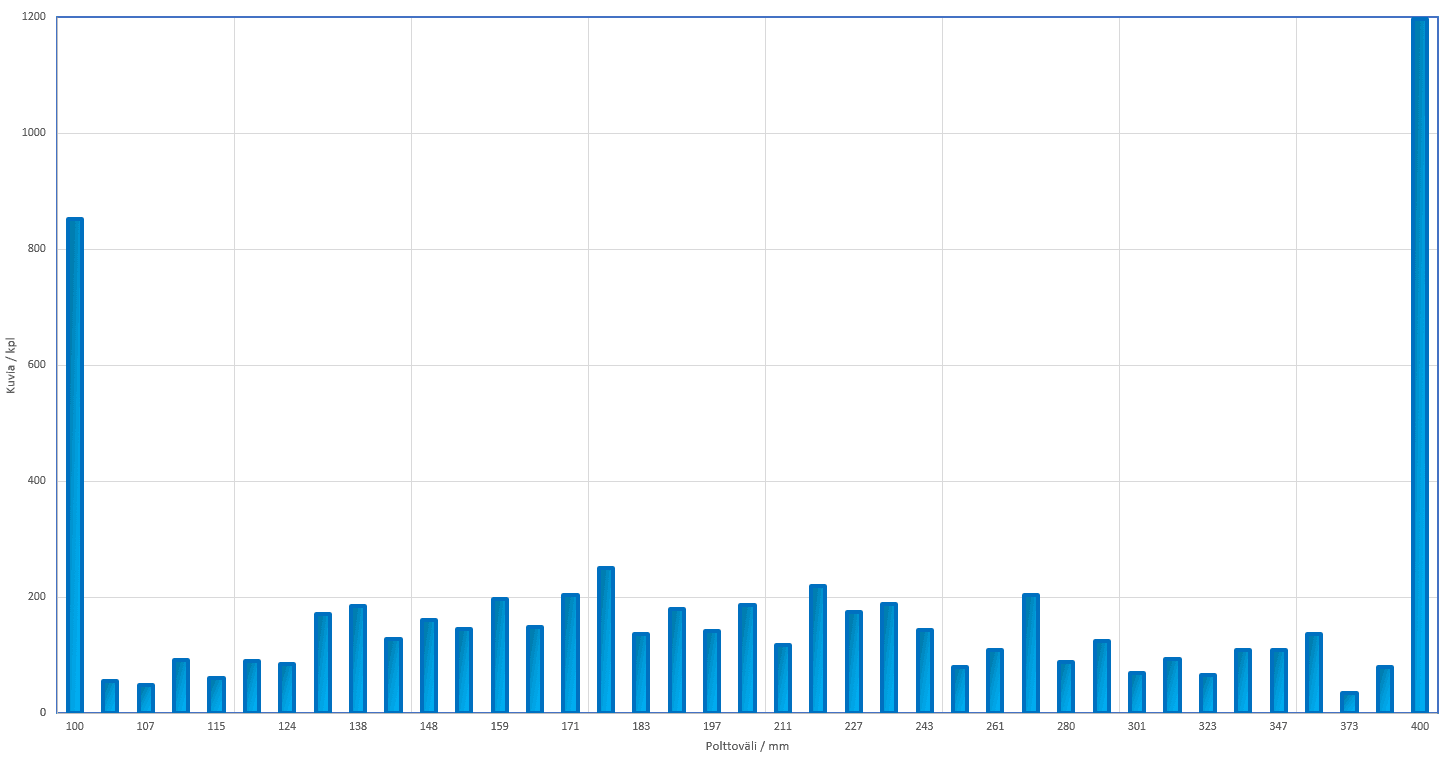
What if 400 mm is not enough? Fuji has both a 1,4x and a longer 2x teleconverter. Extra reach is not free, though: teleconverters reduce maximum aperture and sharpness. Focusing also tends to slow, partly because of the smaller aperture. In my experience, a 1,4x converter still works with good zooms, whereas 2x converters really call for a prime telephoto. Doublers produce rather soft results on zooms, but make excellent companions for prime super-telephotos.

I happen to own Fuji’s smaller converter, the XF1.4X TC WR, so I could try it with the telephoto under test. Multiplying focal length by 1,4 turns this lens into a 140-560 mm f/6,4-8 telephoto, roughly equivalent to 213-850 mm on full frame. That is a great deal of reach and a very narrow angle of view. Such a focal length is not needed everywhere, and not everyone will have a use for it. Very long focal lengths can be impossible in certain weather, because shimmering air turns the photograph into mush. Sometimes, however, that reach is needed.
The image stabiliser also works beautifully with the teleconverter, and at the longest focal length a shutter speed of about 1/20 s can even be used handheld. Using a teleconverter on a mirrorless camera is more pleasant than on a DSLR, because the viewfinder does not darken as maximum aperture falls. Although focusing slows with the converter, it does not become unusable. Far from it: the combination remains useful for rally photography. All Fuji autofocus points and modes also remain available.
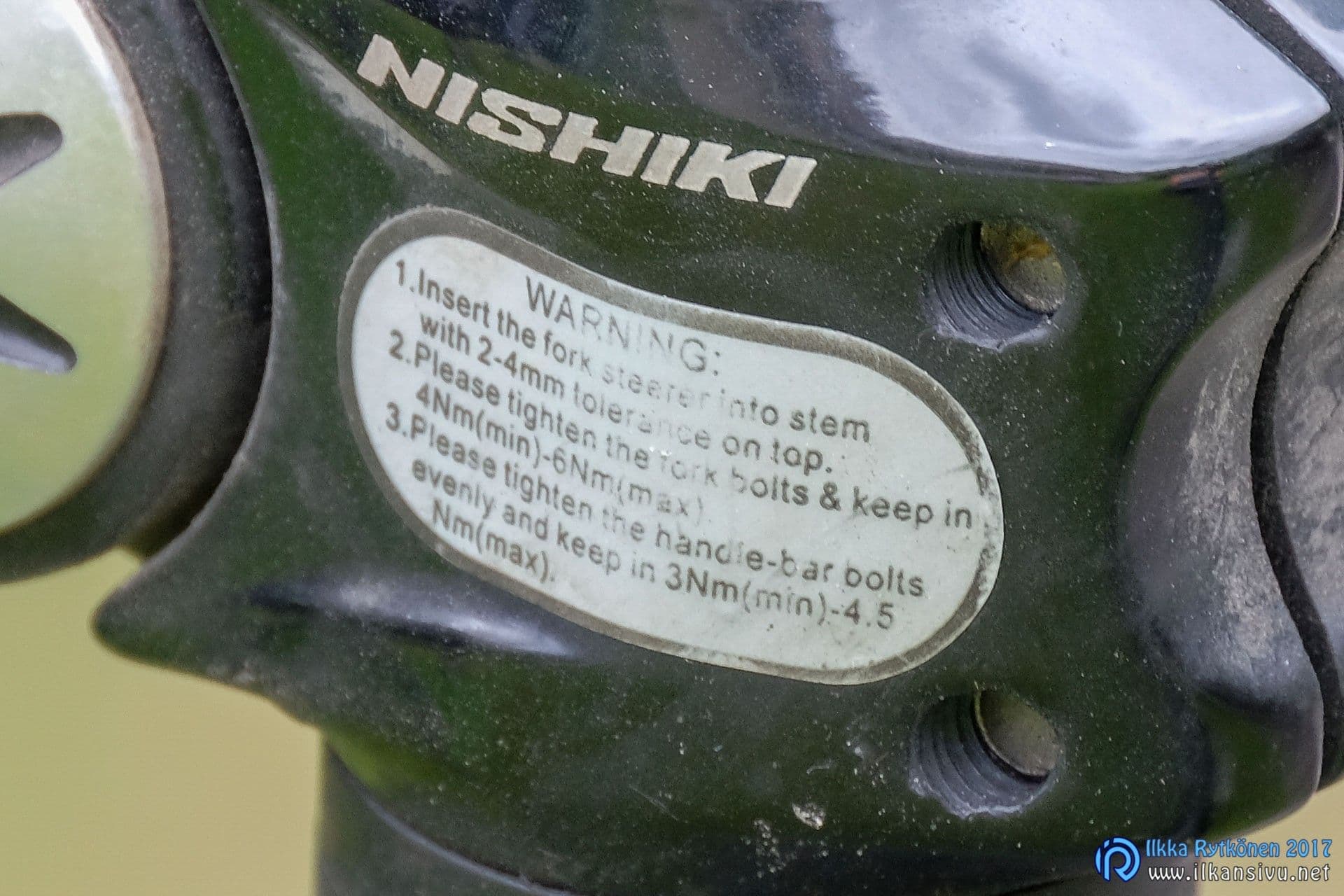
What happens to image quality with the teleconverter? At 140mm, a trace of lateral chromatic aberration appears, but disappears with a little stopping down. Aberration decreases as focal length increases and seems to disappear at the longest focal length.
Sharpness naturally falls with the converter, but remains surprisingly good at different focal lengths. Diffraction starts making it worse around aperture 13. The longest setting, 560 mm, is clearly softer than the rest and needs stopping down for a reasonable result. At other focal lengths, stopping down also improves image quality clearly, as expected. Quality is best in the central area. Bokeh suffers with the converter and becomes somewhat odd-looking. I could not test the 2x converter with this lens, but would not be particularly eager to buy one for any zoom lens myself.
Conclusions
Fuji’s long telephoto zoom is a fine lens that is a pleasure to use. Its balance of focal length and weight makes it easy for an active photographer to carry under their own steam. It is large enough that a battery grip or another additional grip is almost essential. Image quality is very good, although sharpness falls towards the longest focal length. A little stopping down can compensate. Autofocus is extremely fast: with the X-T2, for example, the combination approaches traditional DSLRs in this respect. A good image stabiliser, weather sealing and support for teleconverters round out an excellent package. It costs roughly 2000 euros.