

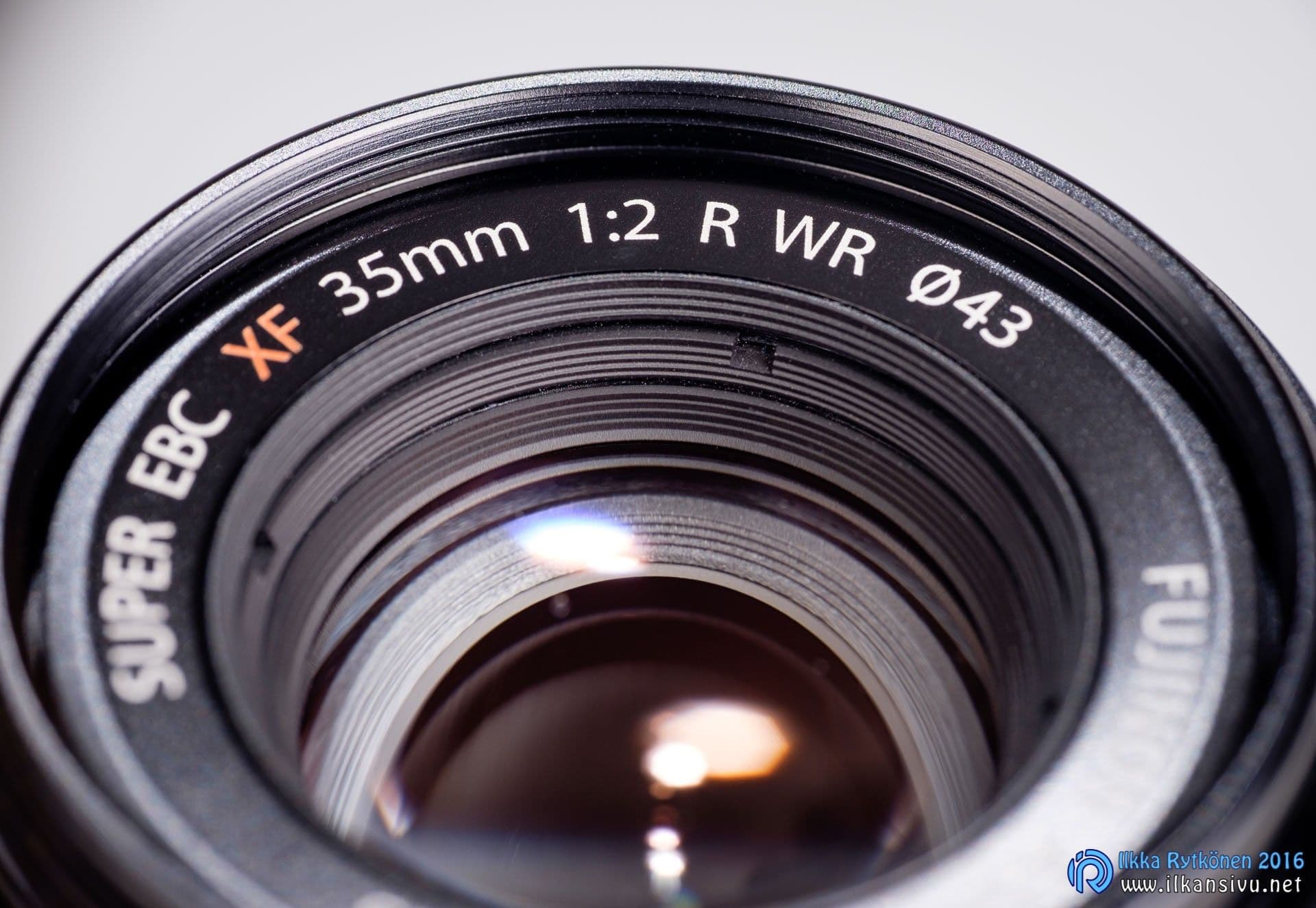
A weather-sealed standard lens
Fuji entered the mirrorless camera market with the X-Pro1 and three basic lenses in 2012. One of the launch lenses was the 35mm f/1.4, equivalent to a standard focal length. Since then, the X-mount lens range has grown at a commendable pace and is now very versatile.
Most lenses announced so far, however, have cost around a thousand euros, which is relatively expensive for an ordinary enthusiast. Most have also lacked weather sealing. Fuji has now introduced a few weather-sealed lenses at the lower end of the price range. Alongside the 35mm standard lens tested here, a corresponding 23 mm wide angle and 50 mm short telephoto are available. Their maximum aperture is f/2: not exceptionally wide for a prime lens, but clearly advantageous compared with zooms.
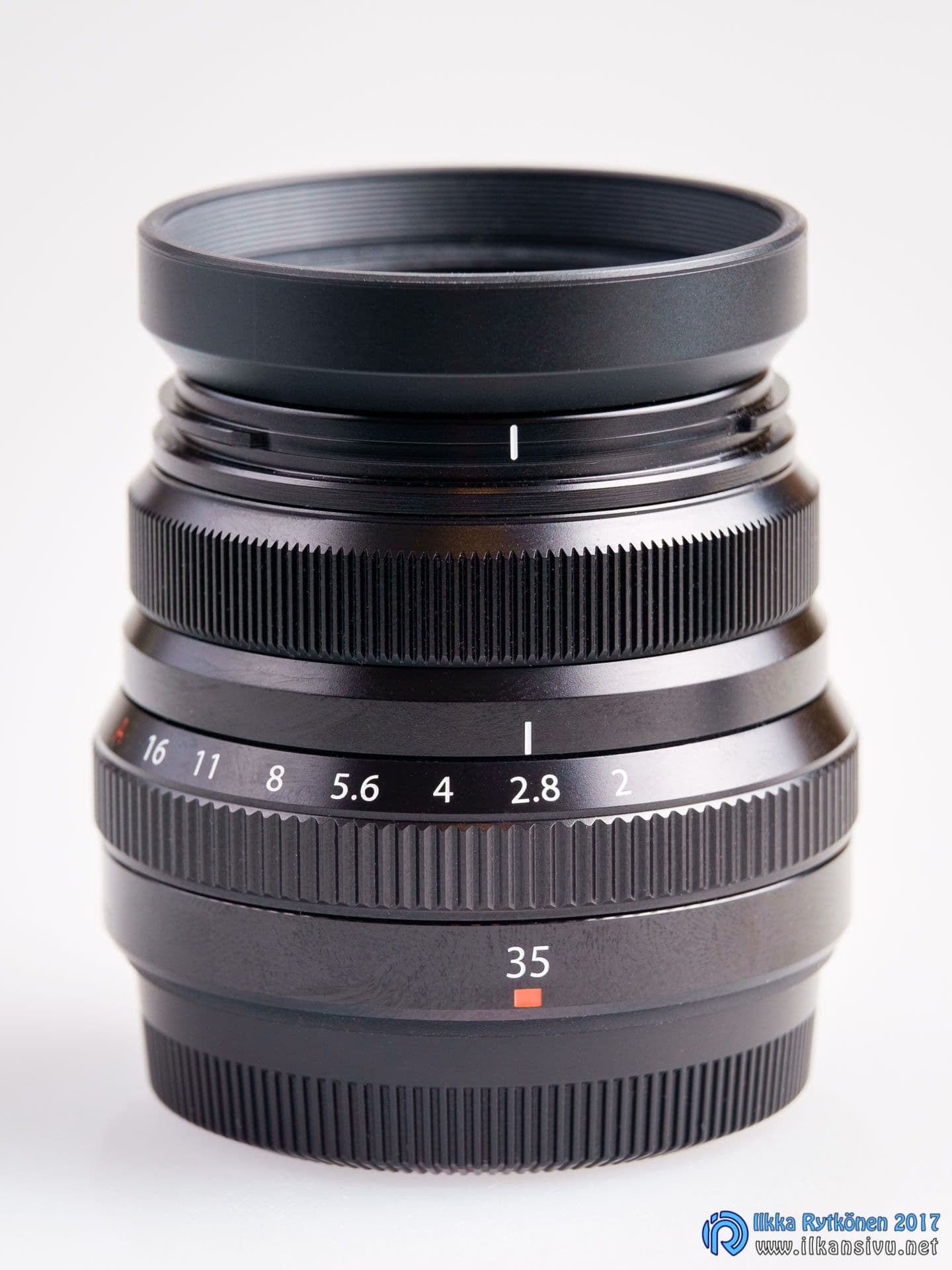
A smaller maximum aperture does not always mean a worse product. Accepting less light-gathering ability allows a lens to be smaller and cheaper. There are many situations where the widest possible aperture is unnecessary. Conversely, some assignments require every last bit of the available aperture.
Handling
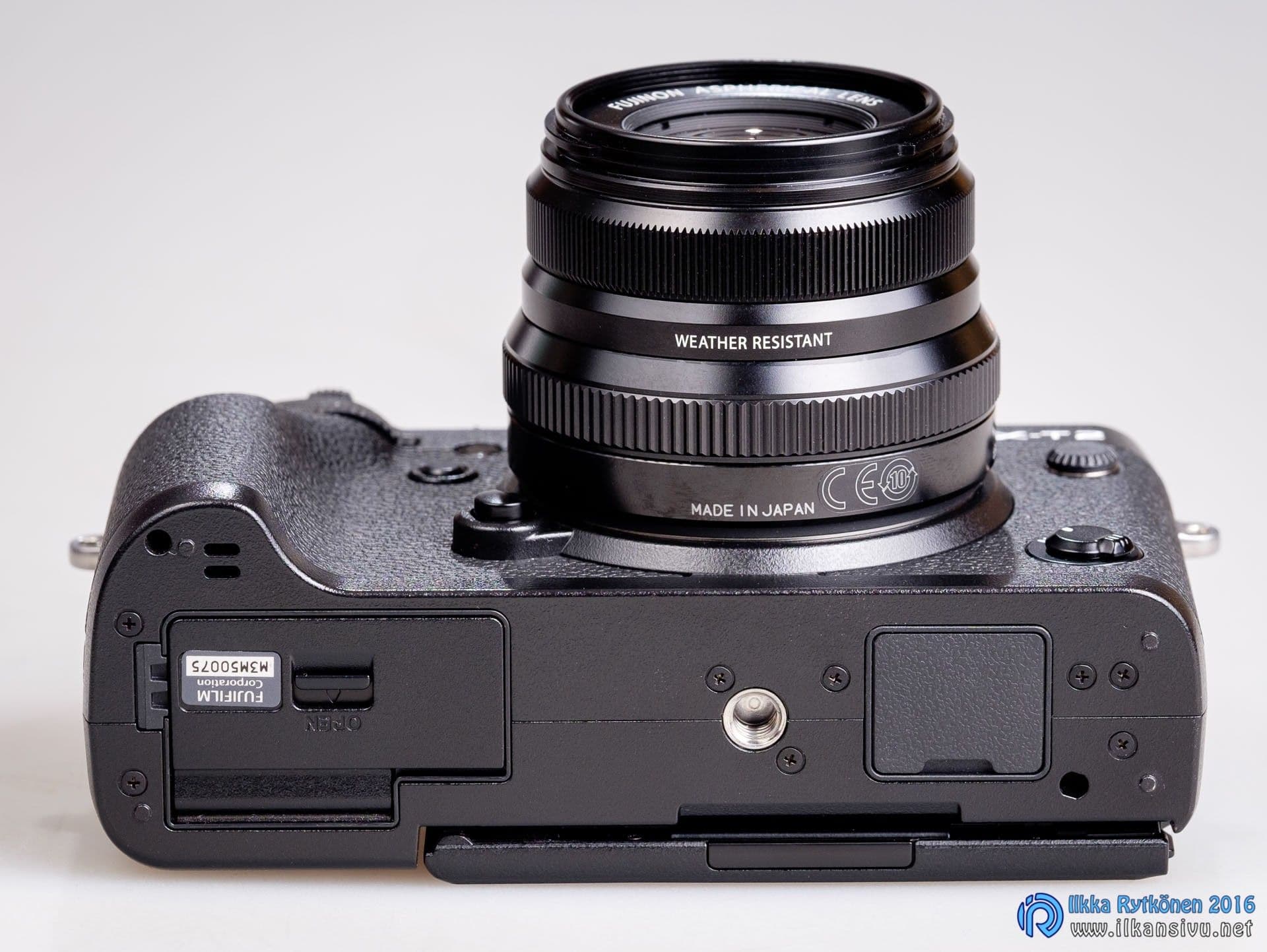
This small lens is easy to carry, and its 170-gram weight is hardly noticeable. Construction feels solid, and a small lens hood is supplied. The hood does not have a typical bayonet fitting: it screws into the filter thread. When the hood is attached, the lens cap fits onto it. This is a slightly unusual solution. The uncommon 43 mm filter thread meant I could not test the arrangement with filters. Presumably the hood screws onto the filter, but this may cause problems with a polarising filter. A larger hood than the supplied one is sold as an accessory. That optional hood probably attaches to the lens’s front bayonet, since it has one. The aperture ring feels precise and firm enough to prevent accidental rotation. That is how it should be.
Focusing is fast in good light but slows as light levels fall. It still works in extremely low light. The focusing motor is also quiet, quieter than in the XF23mmF1.4R, for example. In practical photography, the lens works as it should. Focusing is internal, so its length does not change. In this respect, the new lens is very pleasant compared with the original 35 mm lens.

I first took this lens to a wedding assignment in December 2016, but the trial ended before the ceremony even began. The F/2 aperture simply seemed insufficient for a dim church: shutter speeds were precariously slow despite high ISO settings. I had to reach into my bag for the familiar, reliable XF23mmF1.4 R to get the photographs I wanted. Based on that experience, I cannot recommend this as the only standard or wide-angle lens for the most difficult available-light assignments.
The very next day, I had another opportunity to try the lens during a children’s portrait session. This was indoors, with additional light provided by flashes. I used the 56mm lens for most photographs but also wanted to try this standard focal length. There was no concern about sufficient light here, and the session went smoothly.

I had another opportunity to try the lens at a funeral in spring. Bright spring sunshine outside lit the interior, and this time the aperture was sufficient without turning ISO all the way up.
Image quality
As usual, this lens is not at its sharpest wide open. F/2 produces somewhat soft edges, although the softening begins only very close to the edge of the frame. Contrast starts to improve with a little stopping down, but corner sharpness does not improve at the same rate. The corners remain slightly soft at every aperture, but only at the very edges. This is therefore often no real limitation in use. Sharpness is at its best at f/8 - f/10. At smaller apertures, diffraction starts softening the whole photograph.

Lateral chromatic aberration normally stays invisible, but it can be provoked by photographing scrub with the sun shining directly towards you from behind it, for example. At f/4 it has clearly diminished, and at f/8 it is still detectable. Longitudinal chromatic aberration, on the other hand, is almost unknown here, with only an occasional trace. Aberrations have not been troublesome outside test photographs.
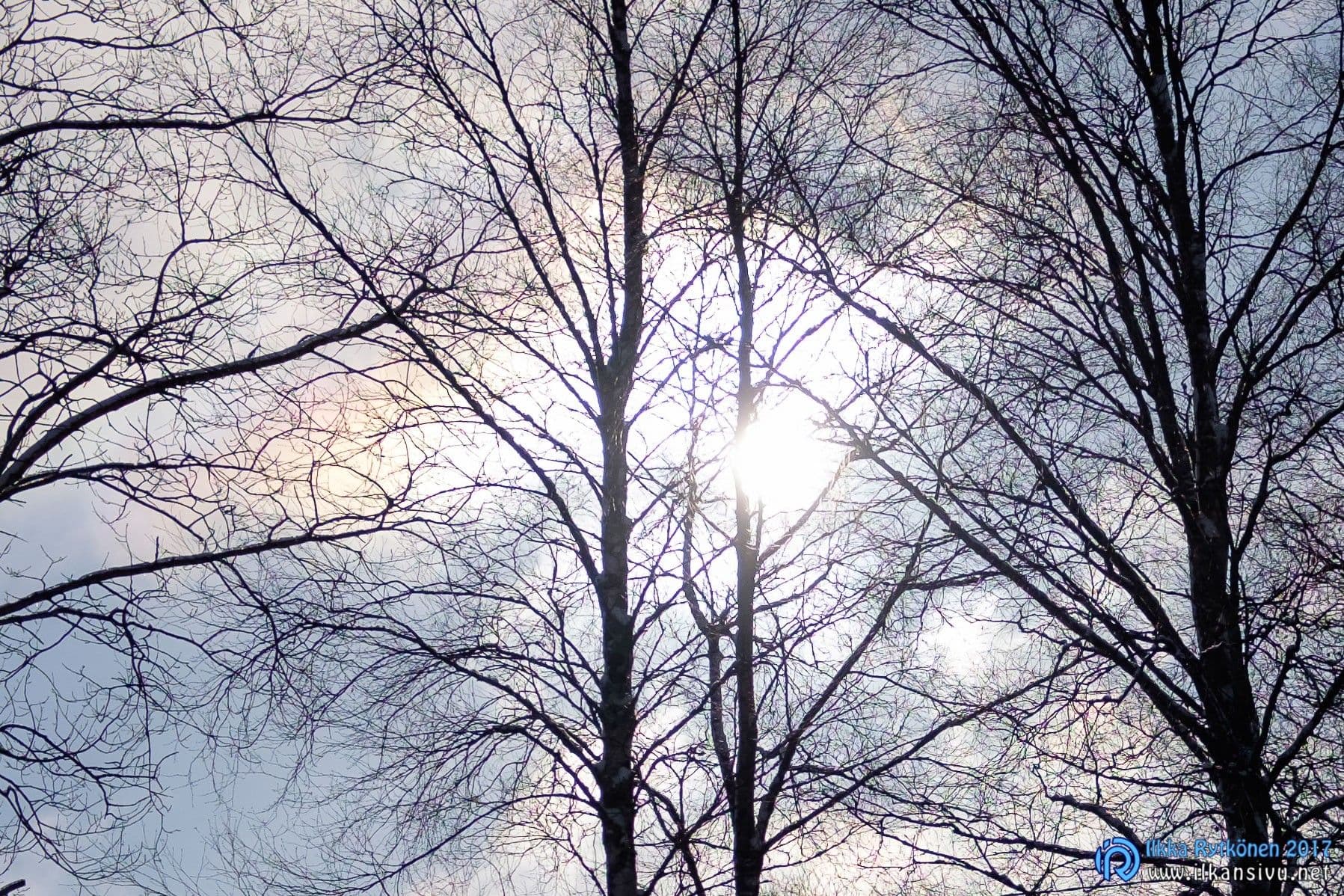
The XF35F2 handles backlighting very well, although light from certain angles reduces contrast a little. Distortion and vignetting are minimal, though this is somewhat difficult to assess. Fuji RAW files contain a built-in profile, so the correction information comes with the file. While Lightroom loads a RAW file, you can sometimes briefly see the correction being applied.
The bokeh is pleasant, perhaps even creamy. This is a matter of taste, of course, and the test photographs should give at least some impression.

This or the XF35mmF1.4R?
Anyone considering a standard lens may find the choice difficult, because Fuji also offers the XF35mmF1.4R mentioned earlier. The original, faster version costs only a hundred euros more than the version tested here. The 1.4-aperture lens arrived when Fuji announced its mirrorless system in 2012.
Considering only maximum aperture, I would happily pay another hundred euros for the faster lens. The original standard lens could perhaps use an update, though. It was not particularly quick to focus originally, but is now respectable in that regard. More annoying is that its length changes during focusing. This is somewhat irritating when you normally hold the camera with your left hand beneath the lens. The hood is also rather unusual, and a normal lens cap cannot be used with it. A rubber cover is supplied for that purpose, but it does not stay in place well.

Image quality seems to improve more consistently when stopping down the original 35mm lens than the new one. The same goes for contrast. At f/2, the new version has better corner sharpness and contrast, but the older lens wins in the more important central area. The differences start to even out at f/2.8. Beyond that, the XF35mmF1.4R begins to distinguish itself and leaves the newer version behind, even in corner sharpness.
Weather sealing is the newer version’s strength. A weather-sealed body really calls for a weather-sealed lens, which tips the balance towards the cheaper model. Its smaller size and solid construction, including the aperture ring, also favour the newer option. Pixel peepers and those needing a wider aperture would be better served by the original version. In some situations, the F/2 version’s bokeh is even more pleasant than the original’s, and its rendering is generally attractive.
Summary
The XF35mmF2 R WR is a pleasant, well-built standard lens. Alongside traditional black, it is available in silver. It costs around 450 €, not a trivial sum but still within an ordinary consumer’s reach. Maximum aperture is a compromise with size and price. Wedding photographers working in available light should nevertheless invest in faster lenses, because f/2 is insufficient in the most demanding conditions. With enough light, this is a very pleasant companion that is not afraid of moisture either. Overall, it is an excellent addition to Fuji’s lens range and may well find its way into my own bag eventually.