

A travel lens for all weather
Beginning photographers often want a lens with the widest possible range, covering everything from wide angle to long telephoto. People who take the hobby more seriously, on the other hand, tend to avoid these lenses. The bigger the zoom ratio, the more attention they attract in certain circles. At the same time, optical design inevitably involves compromises in size, maximum aperture and quality.
The focal range covers the familiar full-frame equivalents from 27 - 206 mm.
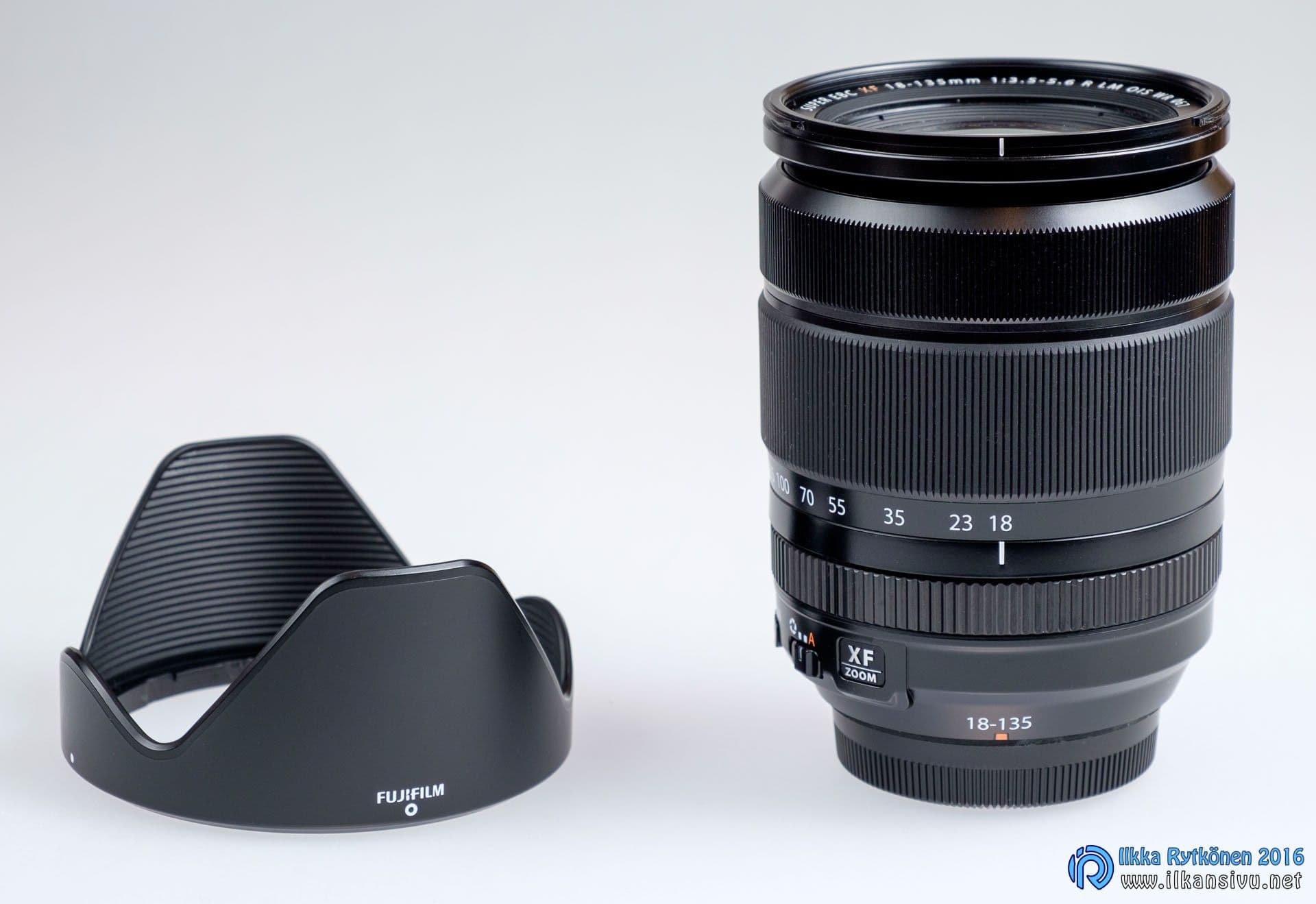
Fuji's first weather-sealed lens has a moderate optical zoom of 7,5 times and image stabilisation. Its maximum aperture of f/3,5-5,6 is typical for this kind of lens, and focusing is handled by a linear motor. The focal range covers the familiar full-frame equivalents from 27 - 206 mm. I had a chance to find out how it works in practice while travelling. Travel is probably where these lenses are at their best, if you do not want to, or cannot be bothered to, carry fast lenses everywhere.
Build and handling
The lens feels like a familiar Fuji product: the finish is good and the construction feels durable. The XF18-135mm is a little smaller and lighter than the XF16-55mm. Zooming is not as smooth as on that professional zoom, but it is not particularly stiff either. The 100-135 mm range does feel stiffer than the rest, though.
The lens feels like a familiar Fuji product: the finish is good and the construction feels durable.
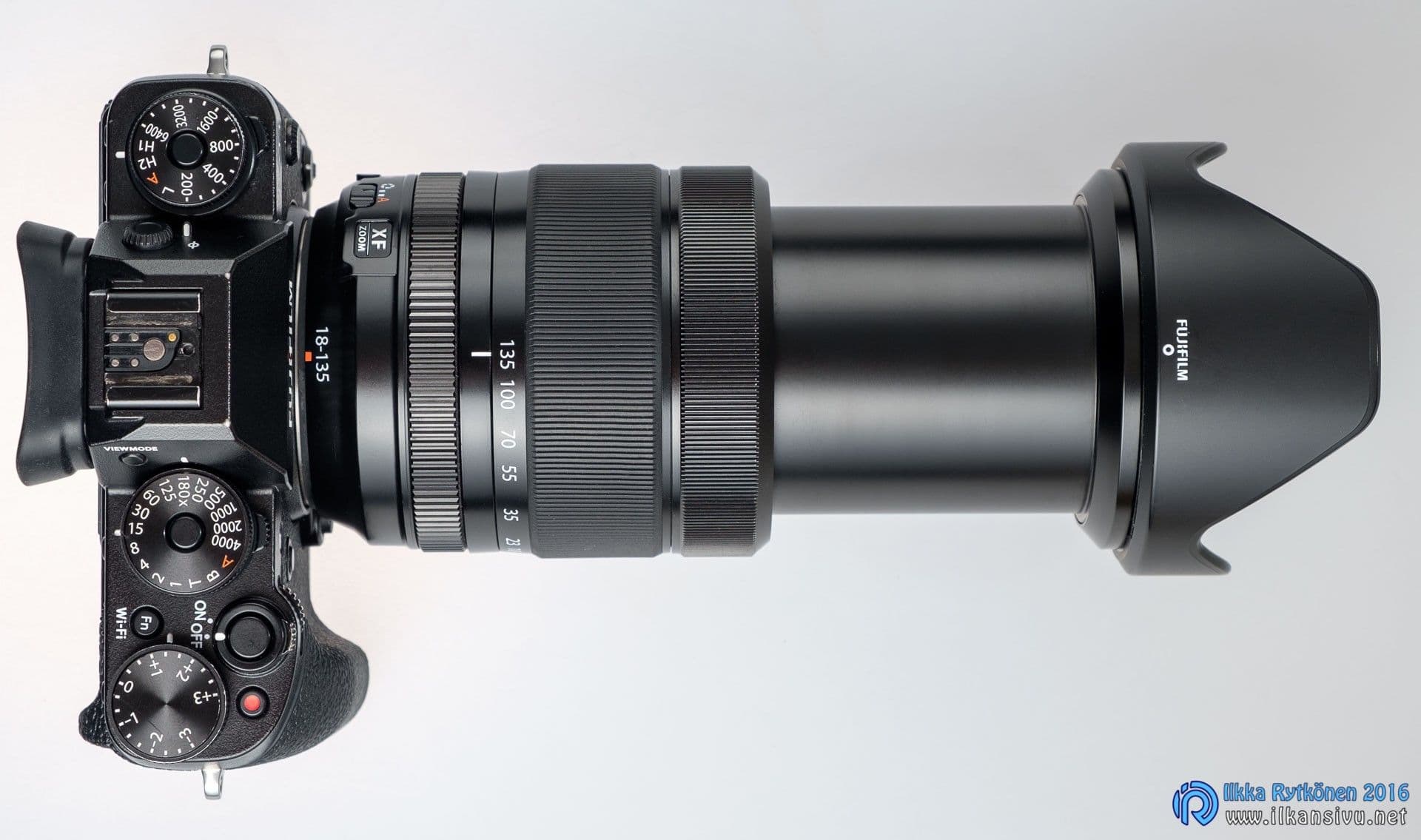
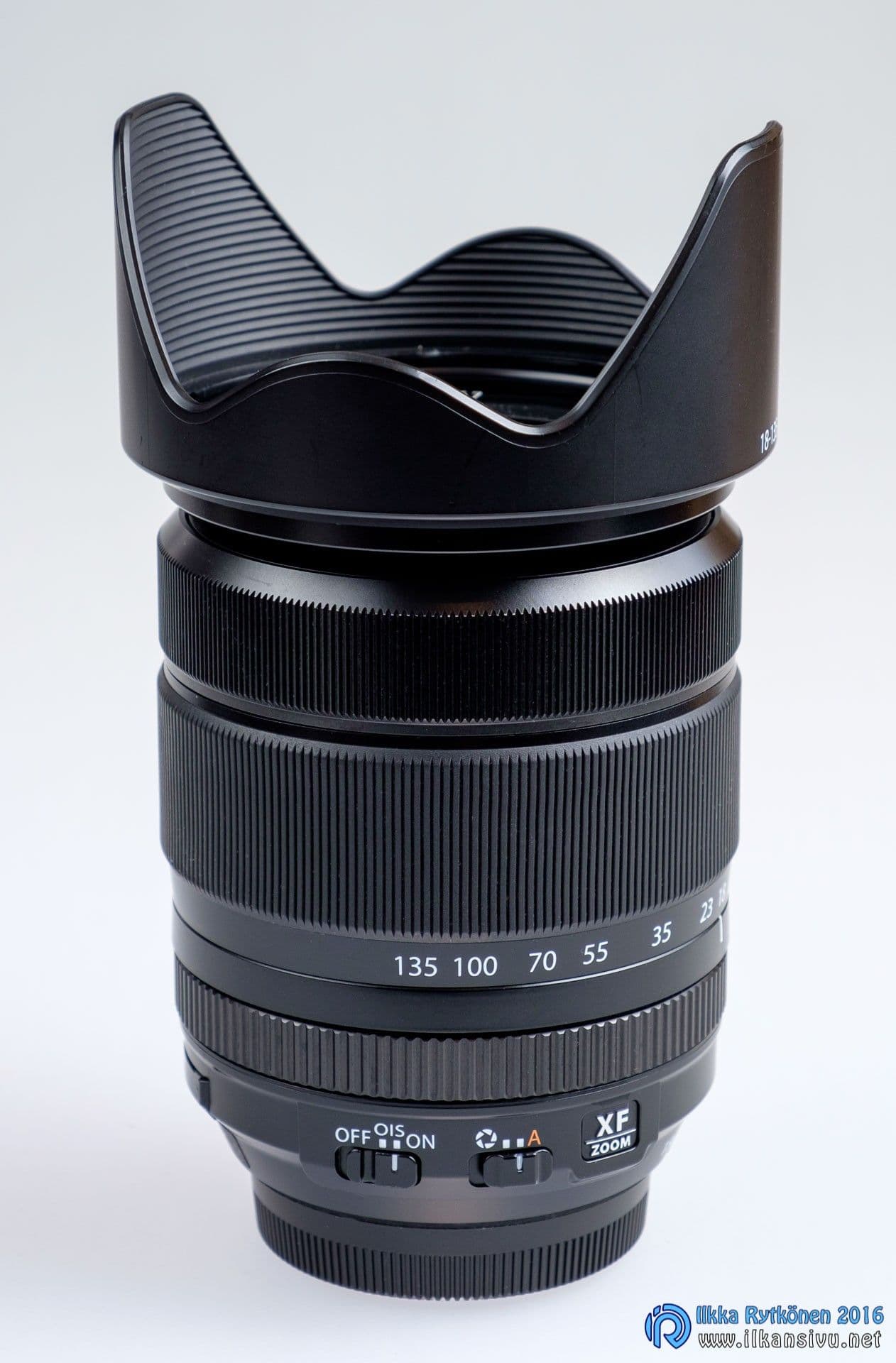
The lens doubles in length when zoomed to the telephoto end. The filter thread is 67 mm. A lens hood is included in the box. The hood could be better, because it is easy to fit it incorrectly on the bayonet mount. If you force it into place in the wrong position, plastic tends to get shaved off the hood's mount.
The hood could be better, because it is easy to fit it incorrectly on the bayonet mount.
Because the maximum aperture varies across the focal range, aperture values are not marked on the aperture ring. The selected value appears on the camera screen and in the viewfinder. The aperture ring has the right amount of resistance. There are two switches: one selects manual aperture control or leaves it to the camera, and the other turns image stabilisation on or off.
In use
Fuji's XF18-135mm works well when shooting and is pleasant to handle with the X-T1. Its weight of 490 grams does, of course, feel much greater than that of a prime lens. If you want the lightest possible kit, alternatives include the 27mm pancake, the excellent 23mm, or either of the 35mm lenses.
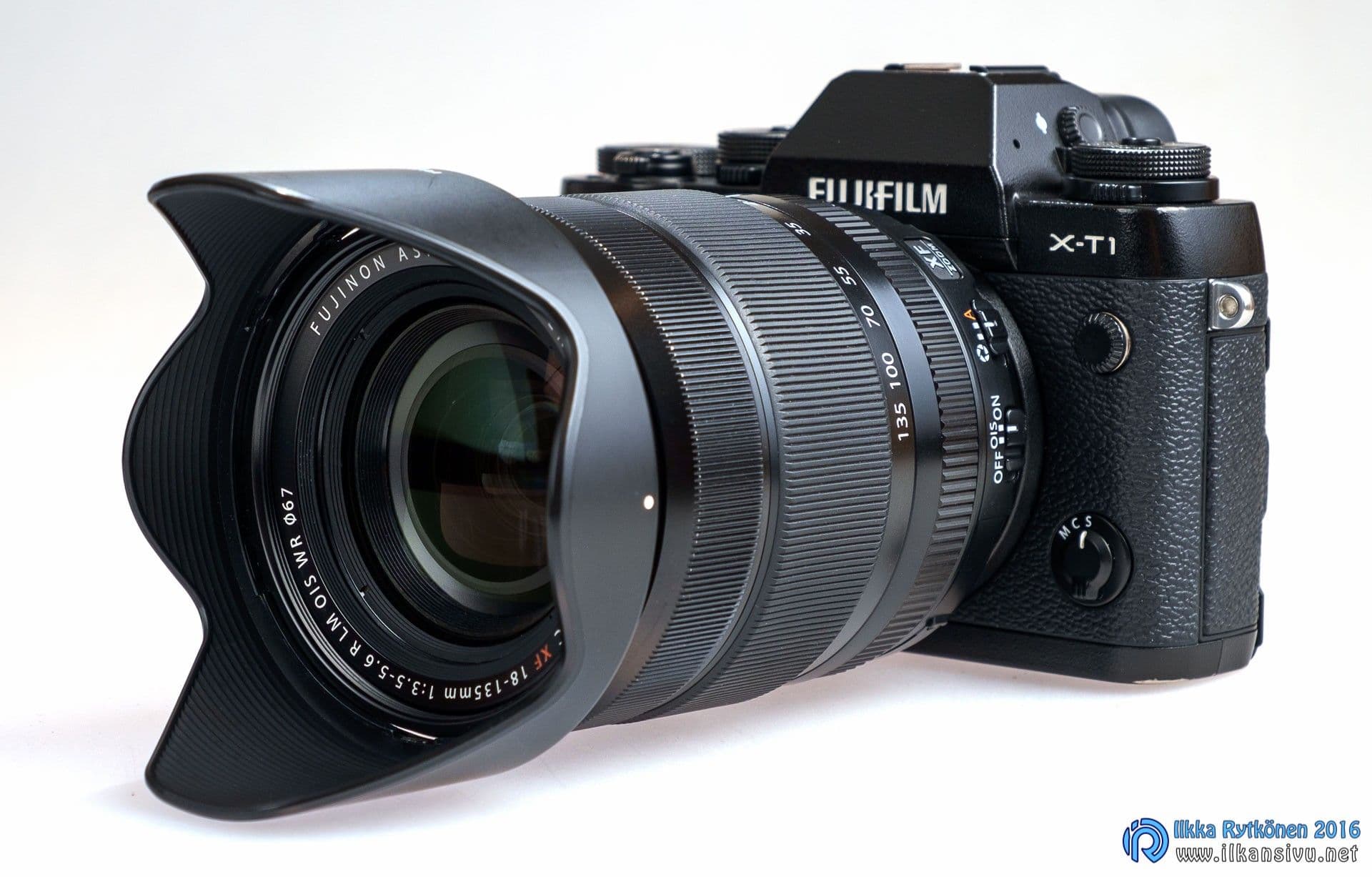
There are no major shortcomings in operation, and focusing is quick and quiet. I did not notice the aperture ring accidentally turning to the wrong setting, which is a plus. Weather sealing is an excellent addition, especially with the weather-sealed X-T1, so small rain showers are nothing to worry about.
I did not notice the aperture ring accidentally turning to the wrong setting.
The maximum aperture limits use in low light, although image stabilisation helps a great deal. Stabilisation cannot freeze moving subjects, though: that calls for a faster lens. As it stands, this lens works well if you need one lens for different situations and want a wide range from wide angle to telephoto in the same lens.
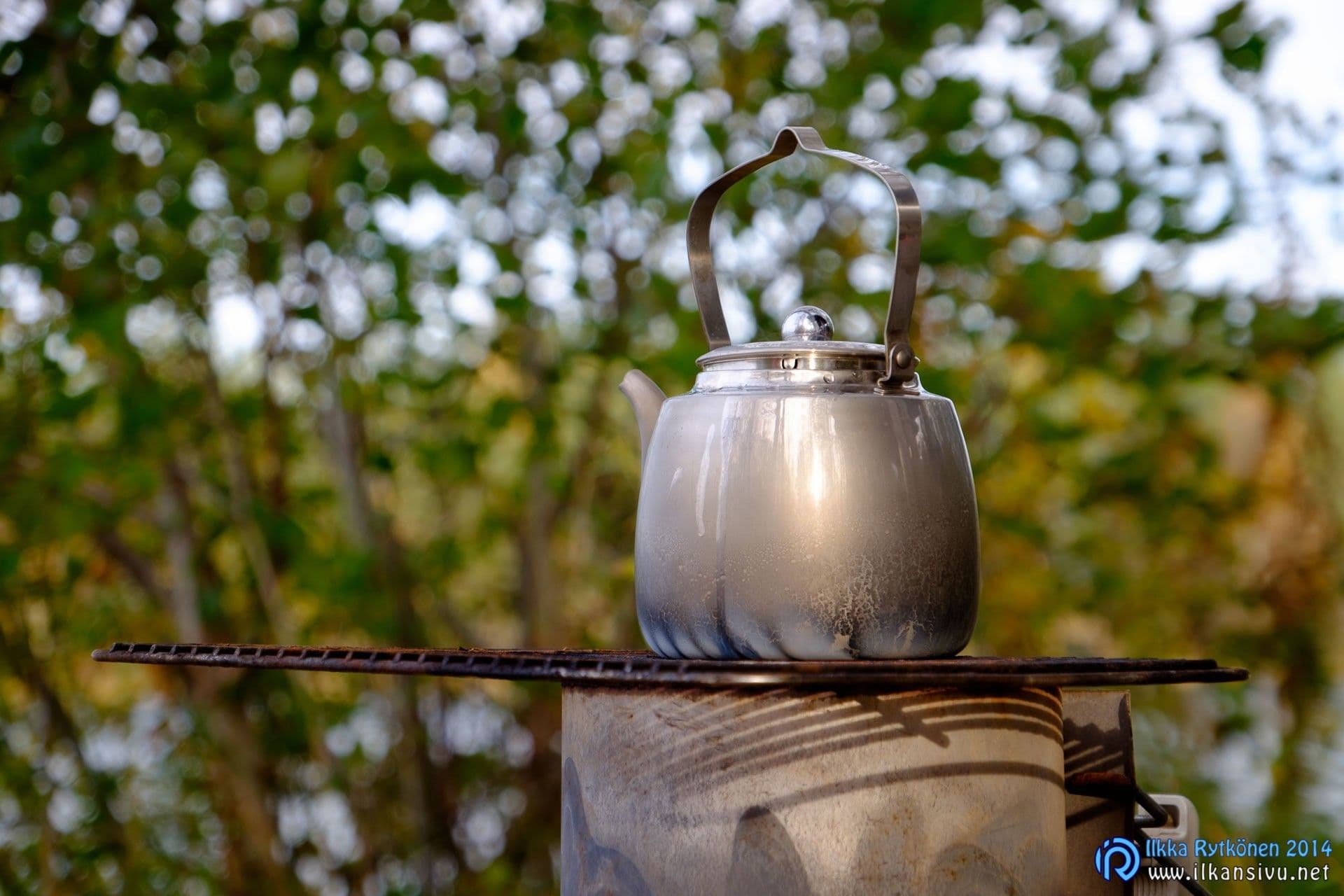
Thanks to image stabilisation, exposure times at the wide-angle end can increase from 1/15 of a second to ¼ of a second when the subject is about a metre away. If the subject is farther away, such as a landscape, exposure times can be considerably longer. Without stabilisation, it is possible to get a sharp shot even at ¼ of a second, but the success rate is better at 1/8 s. With stabilisation, distant subjects remain sharp even at a shutter speed of one second. In other words, the stabiliser gives an advantage of about 2-3 stops with a steady shooting stance.
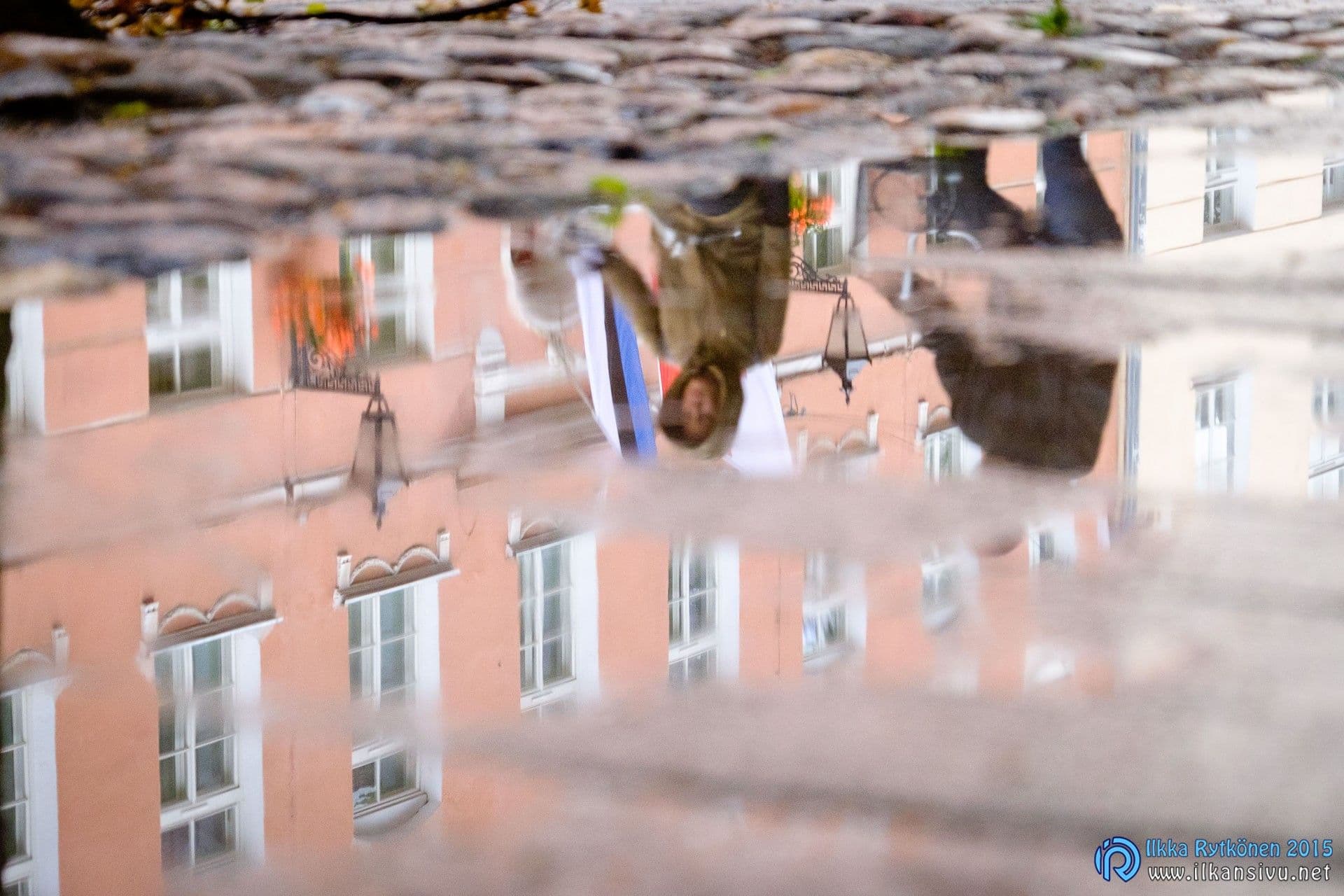
At the telephoto end, acceptable shots of a nearby subject are easy to get without stabilisation at 1/160 s, and sometimes even at 1/40 s. With stabilisation, sharp shots are still easy at 1/13 s, and occasionally down to ½ a second. More distant subjects are sharp without stabilisation at 1/100s and with stabilisation down to about ¼ of a second. An occasional sharp frame may even be possible at a shutter speed of one second.
Image quality
Just looking at the pictures gives me the impression that this lens cannot compete in quality with Fuji's primes or zooms with a more modest zoom ratio. The results are not bad, but there is room for better image quality.
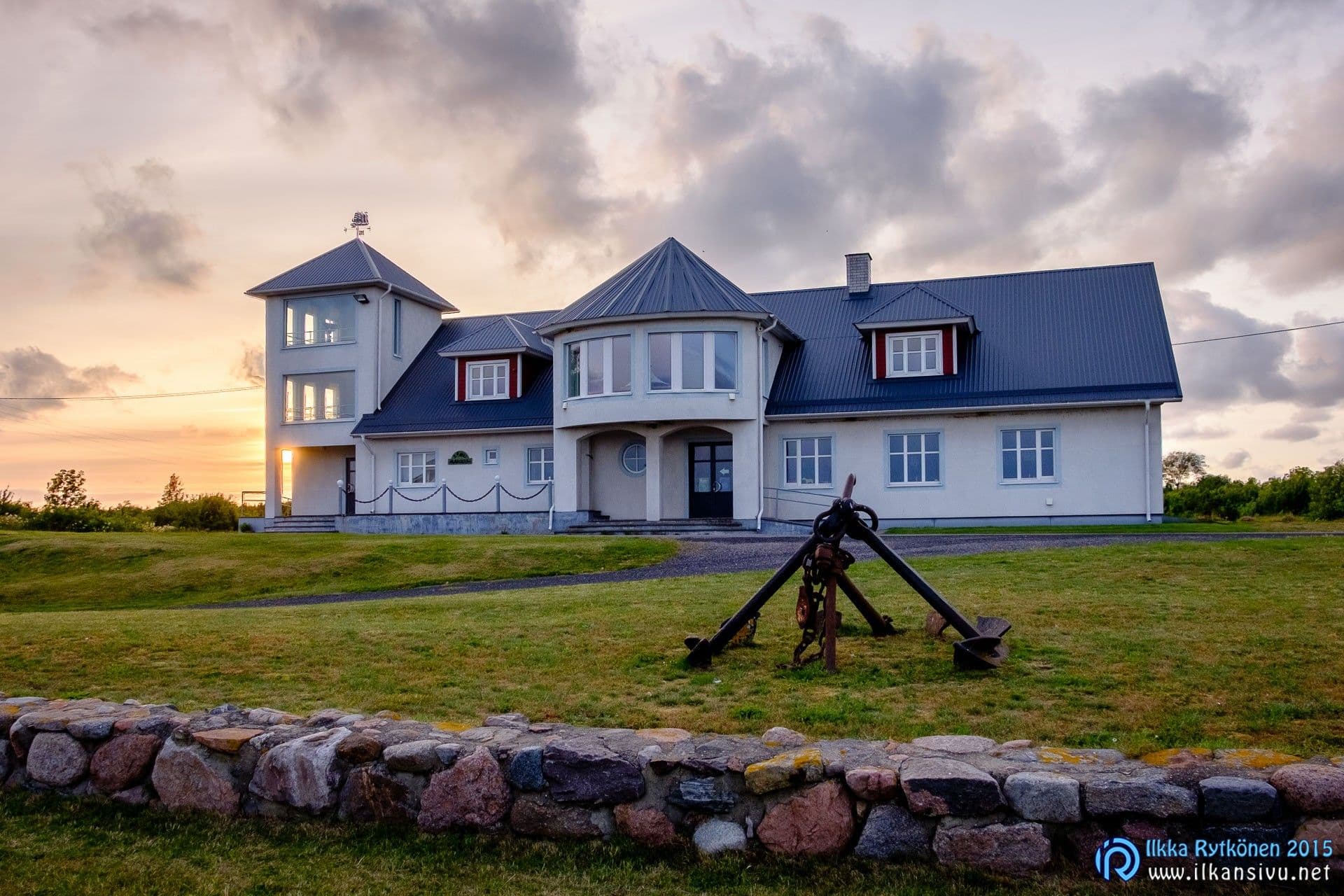
Looking at a test chart, there seems to be noticeable barrel distortion at the wide-angle end. It disappears quickly as you zoom towards the middle of the range. Sharpness and contrast in the centre are good. The edges are softer and do not seem to improve when stopping down.
At 23 mm, edge sharpness improves when stopping down a stop or two, and the aberration at the edges disappears at the same time. Sharpness in the centre is also better than at the wide-angle end. At 35 mm, there is noticeably less aberration. Aberrations, edge sharpness and edge contrast improve even with a little stopping down. At about 50 mm, no aberration is visible, but stopping down still improves edge sharpness and contrast. At the longest focal length, the image is soft even in the centre, but improves when stopping down.

Lightroom automatically corrects optical shortcomings using the profile embedded in the RAW image, so some faults may never be visible. JPG files have already been corrected in the camera.
This lens will certainly not satisfy pixel peepers, but otherwise it earns its place in Fuji's line-up.
This lens will certainly not satisfy pixel peepers, but otherwise it earns its place in Fuji's line-up. These pictures are perfectly suitable for web use and reasonably sized prints, for example. In the gallery below, you can judge the shortcomings in sharpness for yourself and see how visible they are in web images.
Conclusions
The Fujinon XF18-135mm is a pleasant travel lens, although its image quality does not reach the level of other XF lenses. Maximum aperture is another area where you have to accept a little less. In practice, that means photographing moving people indoors under normal lighting without a flash is difficult.
Still, I could recommend this lens if you are willing to compromise a little on image quality and want a broad focal range in one package. The image stabiliser, which compensates for the limited maximum aperture, and the weather sealing are plus points.